
Table of Contents
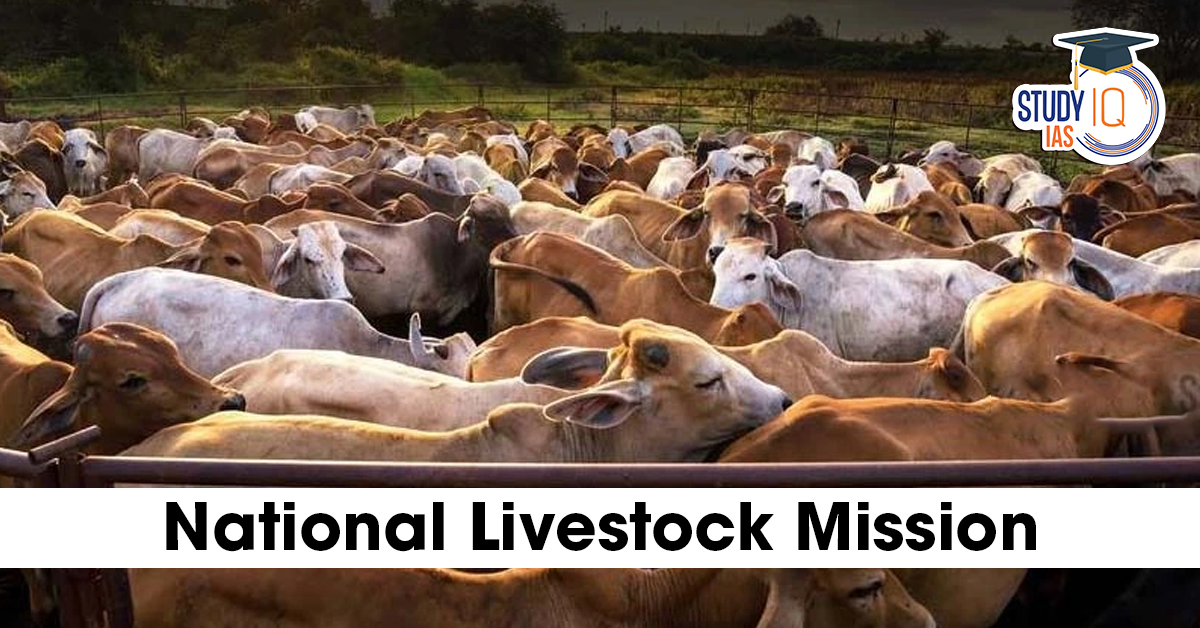
The National Livestock Mission (NLM) is a flagship scheme of the Government of India aimed at sustainable livestock development. Launched in 2014–15 and revamped in 2021, NLM promotes entrepreneurship, employment generation, fodder development, animal health, and productivity enhancement. The scheme plays a critical role in strengthening India’s livestock sector, which contributes nearly 30% to agriculture GDP and supports millions of farmers.
NLM provides credit-linked subsidies, financial assistance, and training to improve dairy, poultry, sheep–goat farming, feed production, and fodder cultivation.
Objectives of National Livestock Mission
The major objectives include:
-
Promote entrepreneurship in the livestock and fodder sectors.
-
Generate rural employment, especially for small and marginal farmers.
-
Increase availability of quality fodder and feed.
-
Improve livestock productivity through scientific rearing practices.
-
Strengthen animal health infrastructure and reduce disease burden.
-
Encourage private sector investments in livestock value chains.
-
Support women farmers and FPOs (Farmer Producer Organizations).
Key Components of National Livestock Mission (2021–25)
The revamped NLM consists of three major sub-missions:
1. Sub-Mission on Breed Development of Livestock & Poultry
Supports genetic improvement and quality livestock production through:
-
Establishment of breeding farms
-
Nucleus breeding centres for goat, sheep, pig, and poultry
-
Assistance for backyard poultry units
-
Conservation of indigenous breeds
-
Setting up hatcheries and breeding infrastructure
Subsidy:
-
Up to 50% for individuals
-
Up to 60% for FPOs, SHGs, and cooperatives
2. Sub-Mission on Feed & Fodder Development
Aims to address India’s chronic fodder shortage through:
-
Establishment of fodder cultivation units
-
Hydroponic fodder systems
-
Silage-making units
-
Fodder seed distribution
-
Pasture development and grassland management
Subsidy:
-
50% subsidy, enhanced for FPOs and cooperatives
3. Sub-Mission on Innovation & Extension
Enhances innovation and capacity building:
-
Support for innovative livestock projects
-
Training programs for farmers
-
Digital extension services and ICT tools
-
Projects improving animal health and productivity
Subsidy Structure under National Livestock Mission (NLM)
| Beneficiary Category | Subsidy (%) | Purpose |
|---|---|---|
| Individual Farmers | 40–50% | Livestock units, fodder units, breeding farms |
| FPOs / SHGs / Cooperatives | 50–60% | Large-scale projects |
| Start-ups / Agri-Entrepreneurs | Up to 50% | Innovative livestock business |
| Government Agencies | 100% | Training & extension |
Who Can Apply for NLM?
Eligible beneficiaries include:
-
Small & marginal farmers
-
FPOs and cooperatives
-
Self-Help Groups (SHGs)
-
Start-ups and agri-entrepreneurs
-
Private companies engaged in livestock farming
-
NGOs and institutions
How to Apply for National Livestock Mission
Follow these steps:
-
Visit the official portal: https://nlm.gov.in
-
Register as a beneficiary/entrepreneur
-
Select your desired component (e.g., poultry unit, fodder unit)
-
Upload required documents (ID proof, land documents, project report)
-
Submit the application for approval
-
Bank processes credit-linked subsidy
-
Subsidy is released after project completion and verification
Benefits of National Livestock Mission
-
Boosts rural livelihoods and income.
-
Reduces dependency on rain-fed fodder and enhances feed quality.
-
Encourages commercial livestock farming.
-
Helps reduce import dependency for feed and animal products.
-
Promotes climate-resilient livestock practices.
-
Supports indigenous breeds and sustainable farming.
-
Creates value chain opportunities: meat, milk, eggs, feed, fodder, bio-products.
Impact of National Livestock Mission (2021–2025)
-
Strengthened livestock infrastructure across states
-
Improved availability of quality chicks, goats, pigs, and sheep
-
Growth in rural start-ups and FPO-driven enterprises
-
Significant rise in silage and fodder production
-
Enhanced income for women-led poultry and goat-rearing units
Challenges in Implementation
Despite progress, some issues remain:
-
Low awareness among small farmers
-
Difficulty in accessing bank credit
-
Fodder cultivation limited in drought-prone regions
-
Need for more training in scientific farming
Conclusion
The National Livestock Mission is a transformative step toward modernizing India’s livestock sector. With a focus on entrepreneurship, sustainability, and productivity enhancement, NLM empowers farmers, improves rural incomes, and strengthens the agricultural economy. As demand for quality milk, meat, and eggs rises, NLM will play a central role in ensuring food security and boosting India’s livestock value chain.
 Species in News for UPSC Prelims 2026: C...
 Central India’s Jumbo Crisis: Human-El...
 UN Road Safety Project: Objectives, Impl...











 WhatsApp





