
Table of Contents
Context
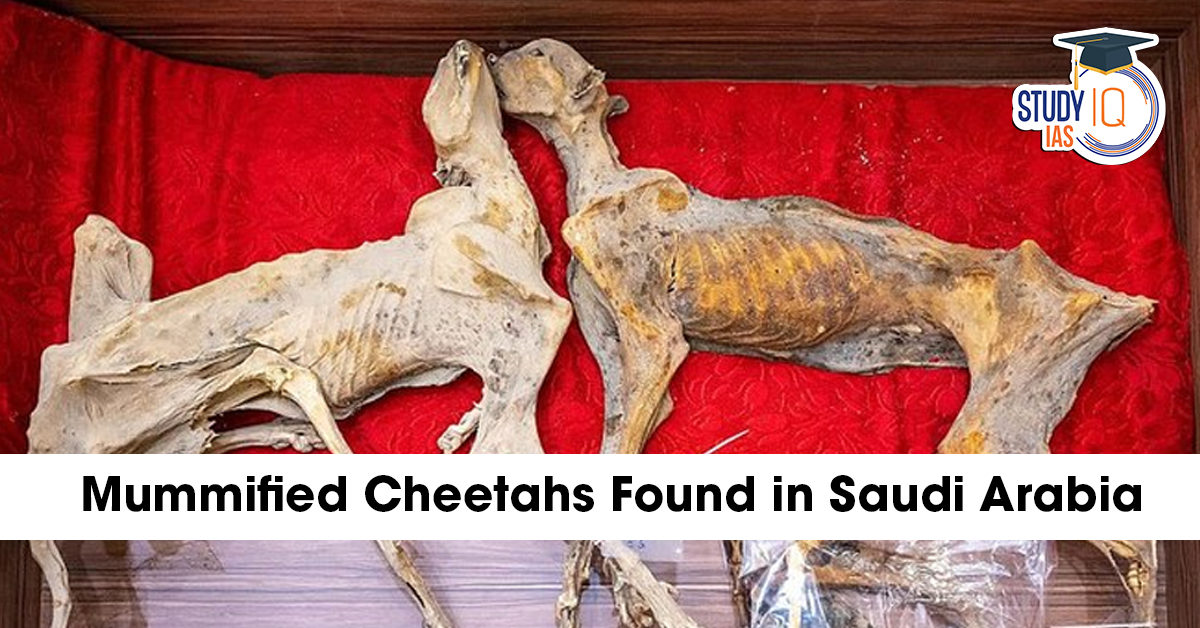
A groundbreaking study published in January 2026 in the journal Communications Earth & Environment has provided the first physical and genetic evidence of cheetahs inhabiting the Arabian Peninsula over the last 4,000 years.
Key Highlights of the Study
- Location: 134 underground caves in Northern Saudi Arabia (near the city of Arar).
- Findings: Researchers discovered 7 naturally mummified cheetahs and skeletal remains of 54 others.
- Preservation: The arid, stable, and dark microclimate of the caves prevented bacterial decay, creating “natural mummies”—a rarity for large mammals outside of permafrost.
- Timeline: Radiocarbon dating shows the remains range from 4,000 years ago to as recently as 120 years ago (late 19th/early 20th century).
- The most significant finding is that Saudi Arabia was historically home to two different subspecies of cheetah:
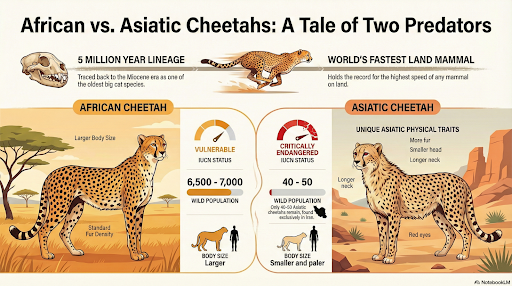
- Asiatic Cheetah : The most recent mummified specimens (approx. 130 years old) are genetically closest to this subspecies.
- Northwest African Cheetah: Surprisingly, the older mummified remains (approx. 2,000–4,000 years old) are genetically linked to this African lineage.
 India-China Trade Relations, Border Disp...
 Digital Arrest Scams, Key Measures and I...
 World Meteorological Day 2026: Theme, Hi...











 WhatsApp





