
Table of Contents
Menstrual health is no longer a peripheral welfare concern but a core public health, education, and constitutional issue. In India, where millions of adolescent girls face menstrual poverty, stigma, and inadequate facilities in schools, denial of menstrual hygiene management (MHM) directly undermines their right to health, dignity, and education. Recent judicial and policy developments have reinforced that menstrual health in schools is integral to the right to health under Article 21 of the Constitution.
Understanding Menstrual Health in the School Context
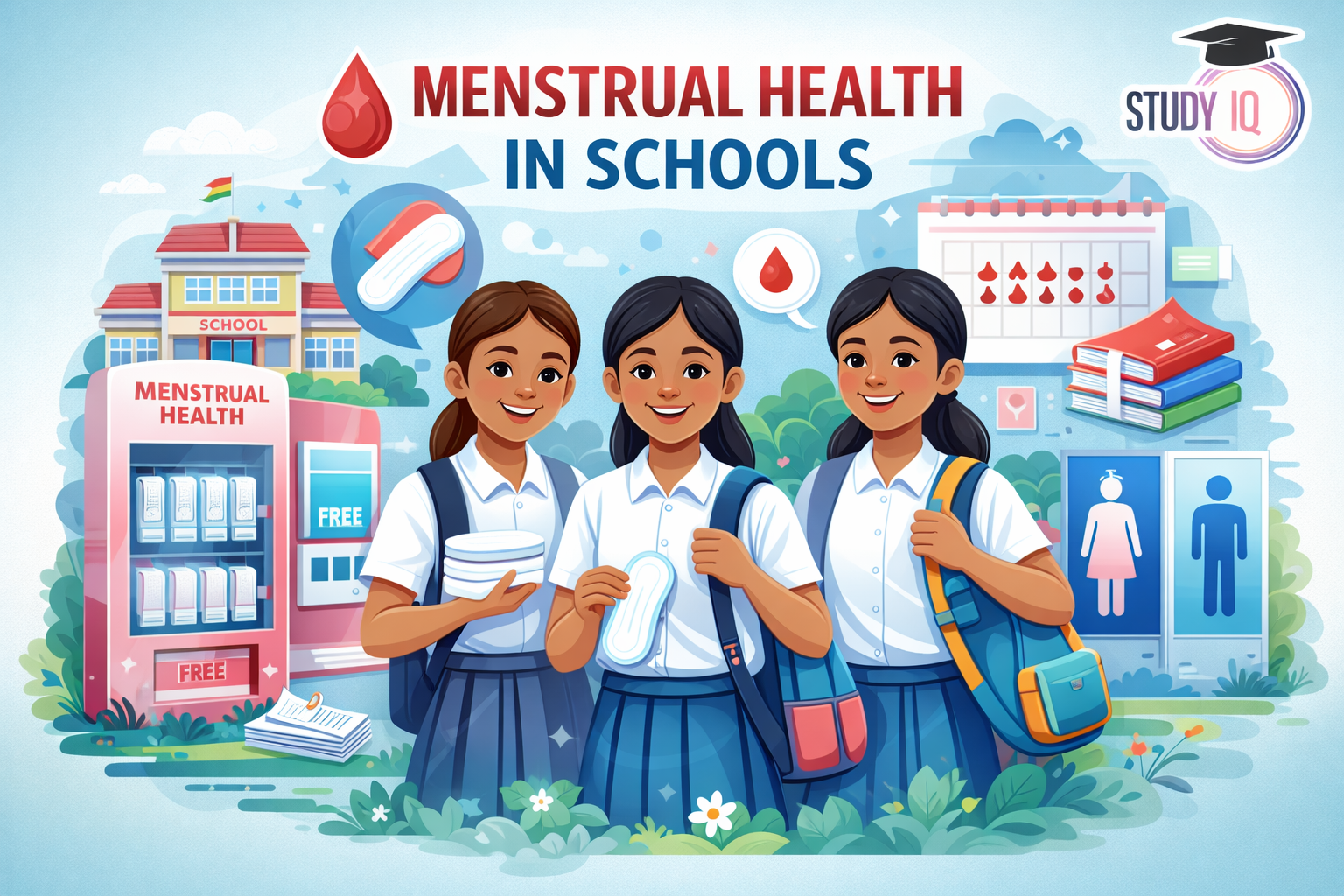
Menstrual health goes beyond access to sanitary products. It includes:
-
Availability of safe, affordable menstrual products
-
Functional toilets, water supply, and disposal mechanisms
-
Privacy and dignity during menstruation
-
Accurate information and menstrual literacy
-
A stigma-free, supportive school environment
In schools, these elements are essential for ensuring adolescent girls’ physical, mental, and social well-being, which together constitute the right to health.
Constitutional Basis: Menstrual Health as a Right
Article 21 – Right to Life and Health
The scope of Article 21 has been judicially expanded to include:
-
Right to health
-
Right to dignity
-
Right to bodily autonomy
-
Right to privacy
The Supreme Court of India has affirmed that denial of menstrual hygiene facilities subjects girls to humiliation, exclusion, and avoidable suffering, thereby violating Article 21.
Article 21A – Right to Education
-
Menstrual poverty leads to absenteeism and dropouts, especially at the secondary level.
-
Gender-specific barriers created by lack of MHM defeat the substantive equality promised by free and compulsory education.
Why Menstrual Health Is Central to the Right to Health
1. Physical Health Implications
-
Use of unsafe menstrual materials increases risk of reproductive tract infections (RTIs).
-
Poor sanitation and disposal facilities compromise hygiene and safety.
2. Mental and Emotional Well-being
-
Stigma, shame, and fear of leakage cause anxiety, stress, and low self-esteem.
-
Adolescents often internalise menstruation as something to be hidden, affecting mental health.
3. Bodily Autonomy and Privacy
-
Managing menstruation without adequate facilities forces girls to adapt their bodies to circumstances rather than choice.
-
Lack of privacy violates decisional freedom and bodily autonomy.
Menstrual Health, Gender Equality, and Social Justice
-
Menstrual inequity reflects structural gender discrimination.
-
Girls from poorer households, rural areas, and marginalised communities are disproportionately affected.
-
Menstrual health is therefore linked to substantive equality, not merely formal equality.
Ensuring MHM in schools is essential to breaking intergenerational cycles of:
-
Educational disadvantage
-
Poor health outcomes
-
Reduced economic participation
Policy and Institutional Framework in India
Existing Initiatives
-
Menstrual Hygiene Scheme (MoHFW)
-
School Health Programme under Ayushman Bharat
-
Swachh Bharat Mission (school sanitation)
Gaps
-
Uneven implementation across states
-
Inadequate focus on privacy, disposal, and education
-
Limited engagement of male teachers and students
Role of Schools in Advancing the Right to Health
Schools act as the first institutional interface between adolescent girls and the state. They must ensure:
-
Free or affordable access to menstrual products
-
Functional, gender-segregated toilets with water
-
Safe disposal mechanisms
-
Menstrual education integrated into the curriculum
-
Sensitisation of boys and male teachers to reduce stigma
Way Forward
1. Rights-Based Policy Approach
-
Treat menstrual health as a non-negotiable health entitlement, not a charity measure.
2. Infrastructure and Financing
-
Dedicated budgetary allocation for MHM in schools.
-
Monitoring compliance with health and education norms.
3. Behavioural and Social Change
-
Community and school-based awareness programmes.
-
Inclusion of men and boys in menstrual education.
4. Accountability Mechanisms
-
Linking MHM compliance with school recognition and quality standards.
-
Data-driven monitoring of absenteeism and dropout rates.
Conclusion
Menstrual health in schools lies at the intersection of health, education, dignity, and gender justice. Denial of adequate menstrual hygiene management undermines the right to health by exposing girls to physical harm, mental distress, and educational exclusion. Recognising and operationalising menstrual health as a constitutional and public health imperative is essential for achieving inclusive human development and fulfilling India’s constitutional promise of dignity for all.
|
Read More Notes |
|
| Environment Notes | Art and Culture Notes |
| Science and Tech | History Notes |
| Geography Notes | Indian Polity Notes |
| General Knowledge | International Relation |
|
Explore StudyIQ Courses |
|
 Right to Die with Dignity: Passive Eutha...
 Distinct Enumeration of DNTs in Census 2...
 Top 10 Richest Indians 2026 Full List Ne...









 WhatsApp





