
Table of Contents
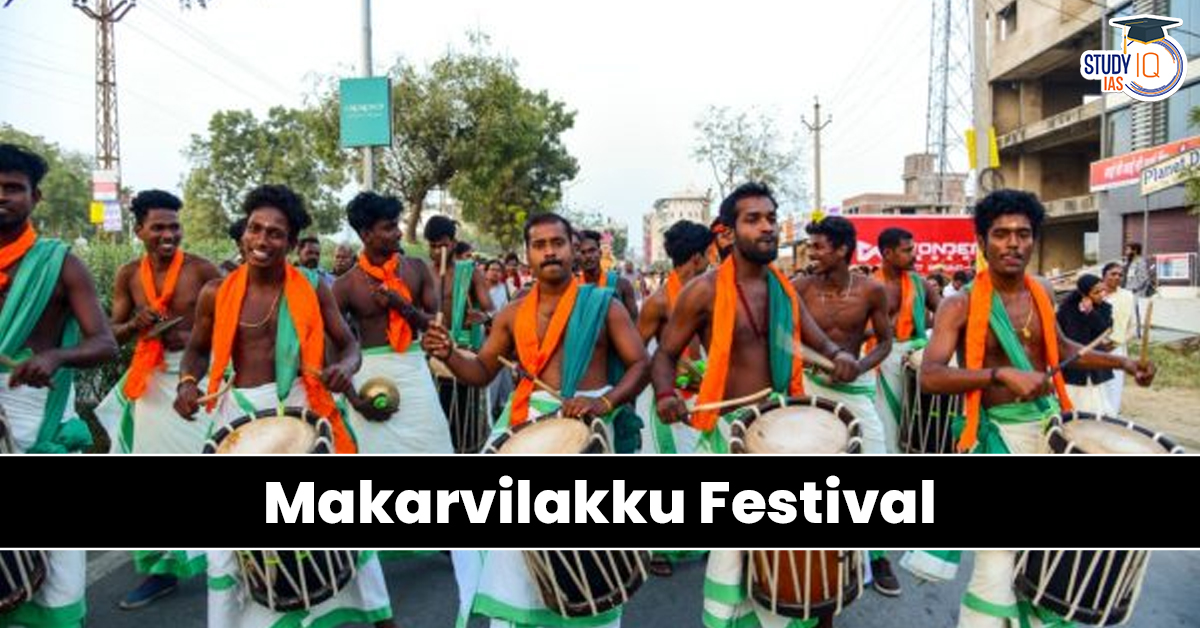
The Makaravilakku Festival is one of the most sacred and spiritually significant Hindu festivals in India, celebrated annually at the Sabarimala Sree Ayyappa Temple in Kerala. Marking the culmination of the Mandala–Makaravilakku pilgrimage season, the festival attracts millions of Ayyappa devotees from across India and abroad.
Held on Makara Sankranti (January 14/15), Makaravilakku symbolises spiritual illumination, discipline, and devotion, representing the final and most auspicious phase of the Sabarimala pilgrimage.
What is the Makaravilakku Festival?
Makaravilakku refers to the ceremonial lighting of a sacred flame (vilakku) on the Makara Jyothi hill (Ponnambalamedu), which devotees believe is a divine sign visible from Sabarimala. The event marks the end of the 41-day Mandala Vratham, a period of intense spiritual discipline observed by pilgrims.
The festival coincides with the sun’s transition into the Makara (Capricorn) zodiac sign, making it astronomically and spiritually significant.
Historical and Religious Significance
-
The festival is dedicated to Lord Ayyappa, the celibate deity symbolising Dharma, discipline, and equality.
-
Tradition links Makaravilakku to Lord Ayyappa’s ascetic life and enlightenment.
-
The Makara Jyothi sighting is considered a moment of divine blessing and spiritual fulfilment.
-
The festival reinforces ideals of social equality, as devotees from all backgrounds undertake the same austere pilgrimage.
Key Rituals of the Makaravilakku Festival
1. Mandala Puja
The Mandala season concludes with the Mandala Puja, after which the temple briefly closes before reopening for Makaravilakku.
2. Thiruvabharanam Procession
-
The sacred ornaments of Lord Ayyappa, known as Thiruvabharanam, are carried from Pandalam Palace to Sabarimala.
-
The procession symbolises the divine journey of the deity.
-
Traditional rituals, chanting, and offerings accompany the journey.
3. Pathinettam Padi Darshan
Devotees ascend the holy 18 sacred steps after observing strict vratham, marking spiritual purification.
4. Makara Jyothi Darshan
The highlight of the festival, when the sacred flame is lit on the distant hill and viewed from Sabarimala.
Massive Pilgrimage and Crowd Management
The Makaravilakku festival witnesses one of the largest annual religious gatherings in India.
-
Over 35 million pilgrims visit Sabarimala during the Mandala–Makaravilakku season.
-
Advanced crowd-control mechanisms, virtual queue systems, and spot booking arrangements are deployed.
-
Strict darshan schedules and route management ensure safety and smooth movement.
Health, Safety and Administrative Arrangements
Medical Preparedness
-
Government hospitals and temporary medical camps operate at Pamba, Nilackal, Neelimala, Appachimedu, and Sannidhanam.
-
Dozens of ambulances, mobile medical units, and emergency response teams are stationed along trekking routes.
-
Special medical facilities cater to elderly devotees and those with chronic conditions.
Food Safety and Sanitation
-
Continuous inspections by the Food Safety Department.
-
Safe drinking water, sanitation facilities, and waste-management systems are strengthened.
-
Strict enforcement against unhygienic food practices.
Security Measures
-
Kerala Police, Forest Department, and Disaster Response Forces coordinate to manage crowd safety.
-
Surveillance and emergency control rooms operate round-the-clock.
Cultural and Social Importance
The Makaravilakku festival is not just a religious event but a cultural phenomenon:
-
It promotes values of discipline, simplicity, and equality.
-
Reinforces Kerala’s syncretic traditions and spiritual heritage.
-
Plays a significant role in regional tourism and the local economy.
Environmental Concerns and Sustainable Pilgrimage
With rising pilgrim numbers, environmental sustainability has become a key focus:
-
Plastic-free pilgrimage drives.
-
Eco-friendly offerings and waste segregation.
-
Protection of the fragile Western Ghats ecosystem surrounding Sabarimala.
Conclusion
The Makaravilakku Festival stands as a powerful symbol of faith, austerity, and spiritual enlightenment. As millions of devotees gather at Sabarimala each year, the festival also highlights the evolving challenge of managing mega religious events in a modern, democratic state. Balancing devotion with sustainability, safety, and inclusivity will define the future of this sacred pilgrimage.
 Viksit Bharat Shiksha Adhishthan Bill 20...
 Cyclone Maila Intensifies Over Solomon S...
 List of Military Exercises of India 2026...










 WhatsApp





