
Table of Contents
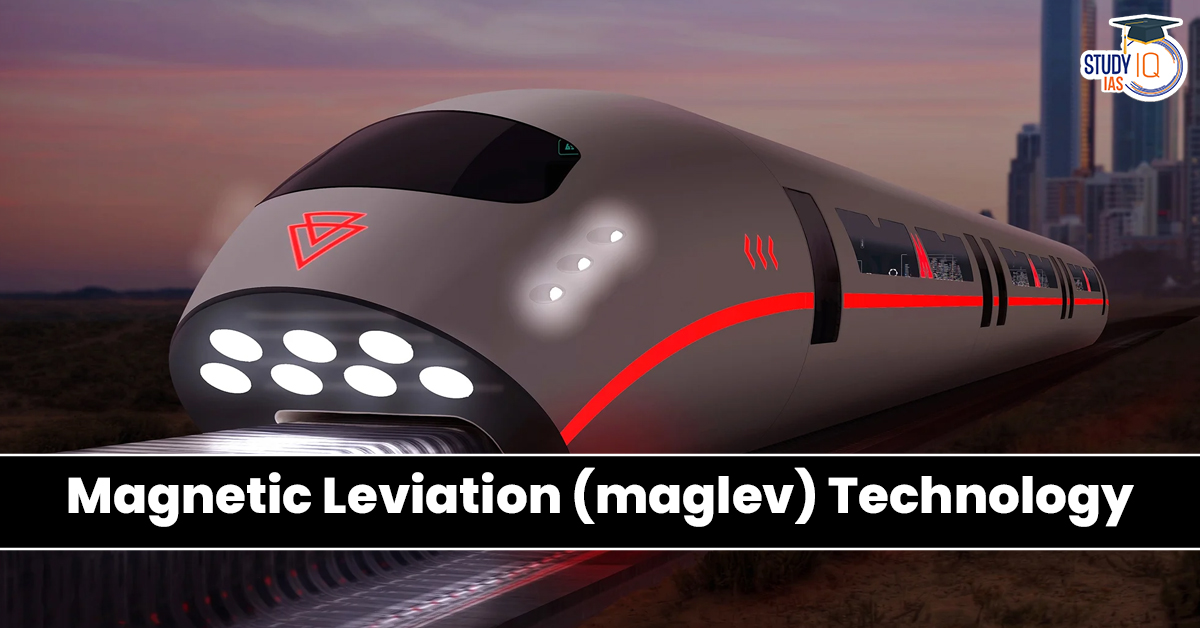
Magnetic Levitation (Maglev) technology represents a revolutionary leap in transportation by enabling vehicles—primarily trains—to float above tracks using magnetic forces, eliminating physical contact and friction. By removing wheel–rail interaction, maglev systems achieve exceptionally high speeds, low energy loss, minimal noise, and reduced maintenance. With recent breakthroughs like China’s 700 km/h superconducting maglev test, the technology has regained global attention as a potential foundation for ultra-high-speed ground transport and futuristic mobility systems.
What is Magnetic Levitation (Maglev) Technology?
Maglev technology uses electromagnetic forces to lift, guide, and propel vehicles along a specially designed track or guideway. Instead of wheels, magnetic fields counteract gravity, allowing the train to hover a few centimetres above the track.
The absence of mechanical friction enables:
-
Extremely high speeds
-
Smooth and stable travel
-
Higher energy efficiency at high velocities
How Does Maglev Technology Work?
Maglev systems operate on two core principles:
1. Levitation
Magnetic forces lift the train above the guideway, preventing physical contact.
2. Propulsion
A linear motor (rather than a rotary engine) pushes the train forward by creating a moving magnetic field along the track.
3. Guidance
Magnetic forces keep the train centred and stable even at very high speeds.
Types of Maglev Technology
1. Electromagnetic Suspension (EMS)
-
Uses electromagnets to attract the train toward the guideway
-
Train wraps around the track
-
Requires continuous electronic control
Examples:
-
Shanghai Maglev (China)
-
Transrapid system (Germany)
Speed Range: Up to 430 km/h
2. Electrodynamic Suspension (EDS)
-
Uses superconducting magnets
-
Produces repulsive magnetic forces
-
More stable at very high speeds
Key Feature:
-
Requires cooling to extremely low temperatures
Used in:
-
Japan’s SCMaglev (L0 Series)
Speed Record:
-
603 km/h (Japan, manned test)
3. Superconducting Vacuum Maglev (Future Systems)
-
Combines:
-
Superconducting magnets
-
Low-vacuum or vacuum tubes
-
-
Minimises air resistance
Target Speed:
-
800–1,000 km/h (China experiments)
Applications:
-
Hyperloop-like transport
-
Aerospace launch assistance
Major Advantages of Maglev Technology
1. Ultra-High Speed
-
Capable of exceeding 600 km/h
-
Faster than conventional high-speed rail and competitive with short-haul flights
2. Energy Efficiency at High Speeds
-
No rolling friction
-
Lower wear and tear
3. Low Maintenance
-
No wheels, axles, or rails in contact
-
Reduced mechanical degradation
4. Environmental Benefits
-
Zero direct emissions
-
Lower noise pollution
-
Suitable for green energy integration
5. High Safety Standards
-
Derailment risks are extremely low
-
Automated control systems reduce human error
Key Challenges and Limitations
1. High Initial Cost
-
Specialised tracks
-
Advanced power and control systems
-
Superconducting materials are expensive
2. Infrastructure Compatibility
-
Maglev tracks are not compatible with conventional rail
-
Requires entirely new corridors
3. Energy Demand During Acceleration
-
High power consumption during start and acceleration phases
4. Technological Complexity
-
Precision control
-
Cooling systems for superconductors
-
High-end materials and electronics
Maglev Technology Around the World
China
-
Shanghai Maglev (430 km/h commercial)
-
Recent 700 km/h superconducting test
-
Targeting 1,000 km/h vacuum maglev
Japan
-
SCMaglev (L0 Series)
-
Planned Tokyo–Nagoya line
-
World record holder for manned maglev speed
Germany
-
Transrapid technology pioneer
-
No commercial operations currently
India
-
No operational maglev
-
Focus on semi-high-speed rail (Vande Bharat)
-
Hyperloop remains experimental
Strategic and Non-Transport Applications
Maglev technology is no longer limited to passenger trains.
1. Hyperloop Systems
-
City-to-city travel in minutes
-
Vacuum-sealed tube transport
2. Aerospace Launch Assistance
-
Ground-based acceleration for rockets
-
Reduced fuel consumption during launch
3. Defence and Research
-
Testing hypersonic systems
-
High-speed simulation environments
Maglev Technology and India: UPSC Perspective
India faces challenges such as:
-
High capital cost
-
Energy infrastructure limitations
-
Land acquisition hurdles
However, maglev research could be strategically useful for:
-
Indigenous R&D
-
Defence applications
-
Long-term freight corridors
UPSC GS-III Linkages:
-
Science & Technology
-
Infrastructure development
-
Energy efficiency
-
Strategic technologies
Future of Maglev Technology
The future of maglev lies in:
-
Integration with renewable energy
-
Development of vacuum maglev corridors
-
Reduced costs through material innovation
-
Civil–military dual-use applications
Countries investing today aim to dominate next-generation mobility, much like aviation dominance in the 20th century.
Conclusion
Magnetic Levitation (Maglev) technology is more than a transportation upgrade—it represents a paradigm shift in how speed, energy, and infrastructure interact. While high costs and complexity remain barriers, rapid advancements in superconductors, power electronics, and automation suggest that maglev systems could define the future of ultra-fast, sustainable, and strategic mobility. For countries like India, timely investment in research and selective deployment could offer long-term technological dividends.
 Viksit Bharat Shiksha Adhishthan Bill 20...
 Cyclone Maila Intensifies Over Solomon S...
 List of Military Exercises of India 2026...













 WhatsApp





