
Table of Contents
The Kaziranga Elevated Corridor Project is a major step towards building eco-friendly infrastructure in India. Recently, the Prime Minister performed the Bhoomi Pujan for this ambitious project, highlighting its importance for both development and wildlife conservation. Officially, it is the 4-laning of the Kaliabor–Numaligarh section of NH-715, with a total cost of more than ₹6,950 crore.
This project is special because it shows how modern development and environmental protection can go hand in hand. Instead of cutting through wildlife habitats, the highway is being built in a way that allows animals to move freely underneath.
What is the Kaziranga Elevated Corridor Project?
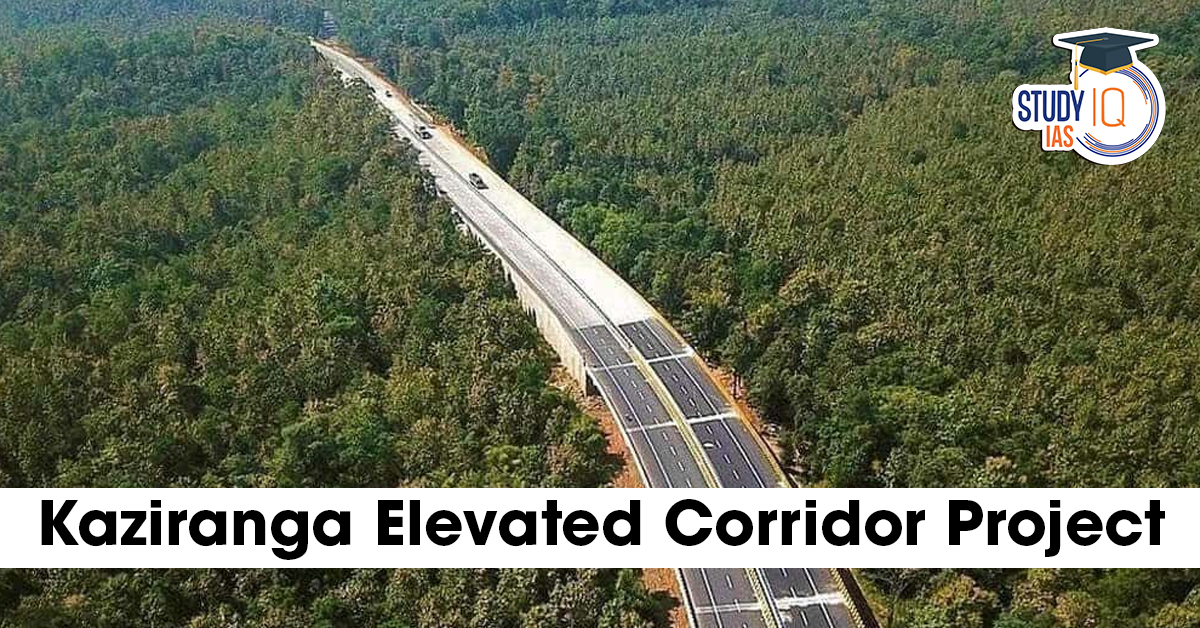
The project aims to upgrade an important highway in Assam into a four-lane road while protecting the sensitive ecosystem of Kaziranga. A large portion of the road will be constructed as an elevated corridor, meaning vehicles will run on a raised structure supported by pillars, and wildlife will be able to cross safely below.
It is one of the first projects in India where a highway is designed mainly to protect animal movement.
Key Features of the Project
The project includes three major components:
-
35 km Elevated Wildlife Corridor through the Kaziranga landscape
-
21 km Bypass Section to divert heavy traffic
-
30 km Widening of Existing Highway from two lanes to four lanes
The corridor will pass through the districts of Nagaon, Karbi Anglong, and Golaghat in Assam.
Why is This Project Needed?
Kaziranga National Park lies close to busy highways, which has often resulted in:
-
Wildlife road accidents
-
Traffic jams
-
Human–wildlife conflicts
During floods, animals move towards higher ground and are forced to cross roads, making them vulnerable. This project solves this problem by giving animals a safe and uninterrupted passage.
Main Objectives
The Kaziranga Elevated Corridor Project has four major goals:
-
Improve Connectivity
It will reduce travel time and improve road transport within Assam and towards Northeast India, helping trade, tourism, and economic growth. -
Protect Wildlife Movement
The elevated structure allows animals to cross naturally without any disturbance. -
Reduce Human–Wildlife Conflict
Fewer animals on roads means fewer accidents and safer conditions for both humans and wildlife. -
Support Sustainable Development
It sets an example of how development projects can be environment-friendly.
About Kaziranga National Park
Kaziranga is one of the most important wildlife areas in the world.
-
Status: National Park, Tiger Reserve, UNESCO World Heritage Site
-
Speciality: Home to about 2/3rd of the world’s One-horned Rhinoceros
Rivers
-
Brahmaputra
-
Diphlu
-
Mora Diphlu
-
Mora Dhansiri
Flora
-
Silk Cotton Tree
-
Elephant Apple
-
Cluster Fig
Fauna
-
Indian Rhinoceros
-
Tiger
-
Wild Water Buffalo
Tribes
-
Mising
-
Karbi
These tribes live around Kaziranga and have a close cultural and economic connection with the forest.
Environmental Importance of the Project
Unlike normal highways, this project follows a “build above, protect below” model.
Its benefits include:
-
Safe wildlife corridors
-
Less habitat disturbance
-
Reduced roadkill
-
Protection of endangered species
-
Better ecological balance
Conclusion
The Kaziranga Elevated Corridor Project is a perfect example of how India is moving towards sustainable and responsible development. It not only improves connectivity in Assam but also protects one of the world’s richest wildlife habitats. This project shows that economic growth and environmental conservation can move forward together.
 Shia Politics in India: History, Influen...
 Future of Chipmaking: Trends, Technologi...
 Nucleic Acid Testing (NAT): Meaning, Wor...











 WhatsApp





