
Table of Contents
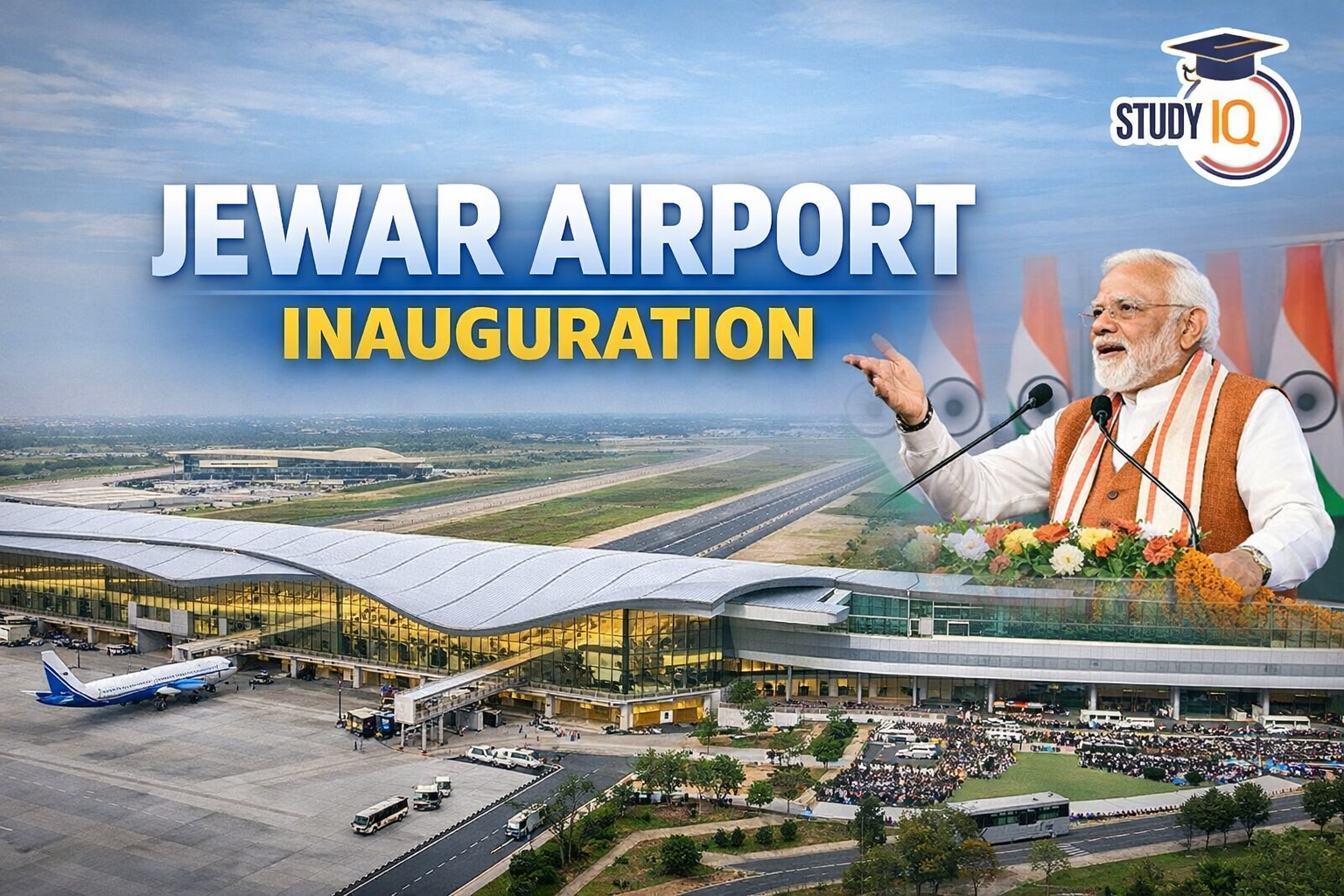
The much-awaited inauguration of the Noida International Airport at Jewar marks a transformative milestone in India’s aviation and infrastructure journey. Prime Minister Narendra Modi formally inaugurated Phase 1 of the Jewar Airport on March 28, 2026, positioning it as a major international gateway for the Delhi-NCR region.
The airport is expected to significantly reduce congestion at Indira Gandhi International Airport while unlocking new economic opportunities across western Uttar Pradesh.
Key Highlights of Jewar Airport Inauguration
- Phase 1 inaugurated with world-class infrastructure
- Capacity: 1.2 crore passengers annually
- Investment: Approx. ₹11,200 crore
- Runway: 3.9 km (wide-body aircraft compatible)
- Strategic location near Yamuna Expressway
- Commercial flights likely to begin from May 2026 (post regulatory approvals)
Read: Daily Current Affairs
Why Noida Jewar Airport is a Game-Changer
1. Boost to Delhi-NCR Aviation Capacity
With Delhi airport nearing saturation, Jewar Airport acts as a second aviation hub for NCR, easing pressure and enabling expansion of domestic and international routes.
2. Strengthening Cargo & Logistics Ecosystem
The airport is designed not just for passengers but also as a major cargo hub, benefiting sectors like:
- Pharmaceuticals
- Textiles
- Leather goods
- Handicrafts
It will serve an industrial catchment of nearly 800 sq km
3. Economic Growth & Employment Generation
The Jewar airport is expected to:
- Generate thousands of direct and indirect jobs
- Boost MSMEs and local businesses
- Attract domestic and foreign investment
PM Modi highlighted that the airport will create new opportunities for farmers, youth, and small traders in western Uttar Pradesh.
Infrastructure & Connectivity Push
Road Connectivity
- Linked to Yamuna Expressway
- Upcoming connection to Delhi-Mumbai Expressway
Last-Mile Transport (Initial Phase)
- Electric taxis
- Ride-sharing services
Future plans include metro connectivity and rapid transit systems.
Massive Security & Event Arrangements
The inauguration witnessed one of the most extensive security deployments in the region:
- 5-tier security system
- Over 5,000 personnel deployed
- Anti-drone systems and bomb squads active
- Area declared a high-security red zone
Additionally:
- 60+ ambulances deployed
- 16 hospitals on alert
Comparison with Other Indian Airports
As India’s aviation sector expands rapidly, comparing major airports helps understand capacity constraints, regional balance, and future growth hubs. While some airports are nearing saturation due to rising passenger traffic, new greenfield projects are being developed to handle demand and boost connectivity across regions.
| Airport | Location | Status |
|---|---|---|
| IGI Airport | Delhi | Saturated |
| Jewar Airport | Noida | Emerging hub |
| Navi Mumbai Airport | Maharashtra | Upcoming |
Key Statements from PM Modi
During the inauguration, PM Modi emphasized:
- Strengthening Atmanirbhar Bharat
- India’s resilience in handling global crises
- Uttar Pradesh’s emergence as a growth engine
He described the airport as a symbol of “New India’s infrastructure strength and global ambition.”
Challenges & Concerns
Despite the grand launch, a few issues remain:
1. Delay in Flight Operations
- Awaiting Aerodrome Security Programme (ASP) clearance
- Ticket bookings yet to begin
2. Last-Mile Connectivity Gap
- No metro or direct bus service yet
- Dependence on private transport
3. Local Expectations
- Concerns over employment promises
- Land acquisition-related grievances
Global Context & Strategic Importance
The inauguration comes at a time when global supply chains and aviation are under stress due to geopolitical tensions. Strengthening domestic aviation infrastructure ensures:
- Better connectivity
- Economic resilience
- Reduced dependency on limited hubs
Future Expansion Vision
Jewar Airport is planned as a multi-phase mega project.
Long-Term Plans:
- Multiple runways
- Passenger capacity expansion to several crores annually
- Development of an aerotropolis (airport city)
This aligns with India’s long-term infrastructure vision.
Conclusion
The inauguration of Jewar Airport signals a major leap in India’s aviation infrastructure, with the potential to transform the Delhi-NCR region into a global transit hub. While operational and connectivity challenges remain, the project represents a long-term investment in economic growth, connectivity, and strategic capacity building.
|
Read More Notes |
|
| Environment Notes | Art and Culture Notes |
| Science and Tech | History Notes |
| Geography Notes | Indian Polity Notes |
| General Knowledge | International Relation |
|
Explore StudyIQ Courses |
|
 Excise Duty on Petrol: Impact on Petrol ...
 Earth Hour 2026: Date, Time, Meaning, He...
 Petrol Prices in India: Comprehensive Li...













 WhatsApp





