
Table of Contents
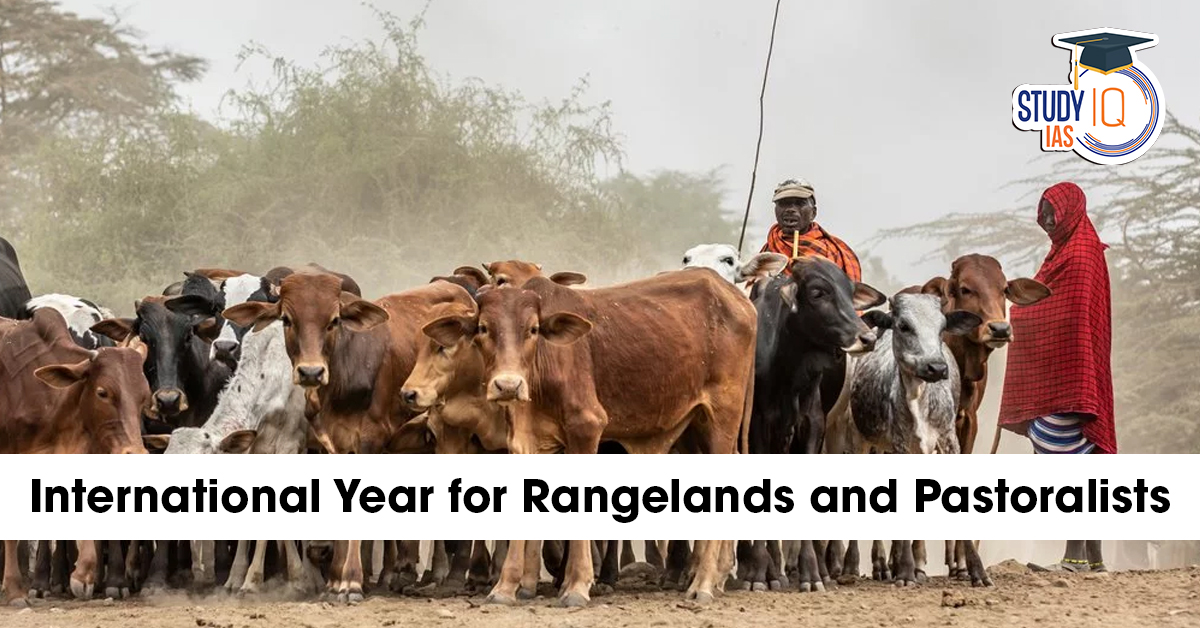
The United Nations has officially declared 2026 as the International Year for Rangelands and Pastoralists, marking a significant global effort to bring long-overdue attention to grasslands, savannahs, and pastoral communities. These ecosystems, often overshadowed by forests in climate discourse, are now being recognized for their crucial role in carbon sequestration, biodiversity conservation, food security, and climate resilience.
This declaration is especially important as it addresses a persistent imbalance in global climate policy, where forest-centric approaches have dominated negotiations, funding, and climate action frameworks.
What Are Rangelands and Why Are They Important?
Rangelands include grasslands, savannahs, shrublands, and open woodlands that are primarily used for grazing livestock and sustaining pastoral livelihoods. They cover nearly half of the Earth’s terrestrial surface and support millions of people, particularly in arid and semi-arid regions.
From an ecological perspective, rangelands:
-
Store large amounts of carbon in soils and root systems
-
Support unique and diverse species of flora and fauna
-
Regulate water cycles and prevent land degradation
-
Enhance climate resilience in drought-prone regions
Despite these benefits, rangelands remain among the most threatened and least protected ecosystems worldwide.
Addressing the Forest-Centric Bias in Climate Policy
Global climate action under the UN Framework Convention on Climate Change (UNFCCC) has historically focused on forests as the primary natural climate solution. While forests are undeniably important, this narrow focus has resulted in:
-
Disproportionate allocation of climate finance to forest projects
-
Limited policy recognition for grasslands and savannahs
-
Marginalization of pastoral and Indigenous communities
The UN’s declaration of 2026 seeks to rebalance this approach by promoting ecosystem-wide climate action, grounded in scientific evidence.
Scientific Evidence Supporting Grasslands
In 2022, leading international scientists published an open letter in the journal Science, urging climate negotiators to broaden climate goals beyond forests. The letter highlighted that grasslands and savannahs function as effective carbon sinks, often matching or exceeding forests in long-term carbon storage due to deep soil carbon reserves.
However, despite strong scientific consensus, policy frameworks have been slow to adapt—making the International Year for Rangelands and Pastoralists a critical corrective step.
COP30 and the Continuing Policy Gap
The imbalance in climate priorities was evident during COP30 held in Belém, Brazil. With the Amazon rainforest at the center of negotiations, major initiatives like the Tropical Forest Forever Facility (TFFF) were launched to support forest conservation.
In contrast, grasslands and rangelands received little direct attention, reinforcing concerns that these ecosystems remain excluded from mainstream climate strategies and funding mechanisms.
Threats Facing Grasslands and Pastoral Systems
Grasslands worldwide are under increasing pressure due to:
-
Conversion to agriculture and commercial plantations
-
Invasive species altering native ecosystems and fire regimes
-
Mining, energy projects, and infrastructure development
-
Fire suppression policies that increase catastrophic wildfire risks
Additionally, traditional land management practices such as controlled burning and adaptive grazing, developed over centuries by Indigenous and pastoral communities, have been sidelined. This has paradoxically worsened ecosystem degradation and carbon emissions.
Regional Examples of Grassland Stress
Australian Grasslands
Indigenous-managed grasslands in Australia are facing severe droughts, flash floods, and the spread of invasive buffel grass, which increases wildfire intensity and ecological damage.
Brazil’s Cerrado Savannah
The Cerrado, South America’s largest savannah, supports major river systems but experiences higher land-use pressure than the Amazon. Despite its importance, it receives far less conservation funding and international attention.
Policy Implications and Global Significance
Experts argue that rangelands must be fully integrated into:
-
Nationally Determined Contributions (NDCs) under the Paris Agreement
-
Climate finance frameworks and carbon markets
-
Biodiversity conservation and land degradation neutrality goals
Better coordination between the UNFCCC and the UN Convention to Combat Desertification (UNCCD) is essential to mainstream grassland conservation globally.
India’s Perspective
In India, grasslands fall under multiple ministries with overlapping and sometimes conflicting mandates, leading to governance fragmentation. Recognizing grasslands as carbon sinks within India’s climate commitments could:
-
Strengthen climate mitigation efforts
-
Protect pastoral livelihoods
-
Align environmental sustainability with social justice
Significance of the International Year 2026
The International Year for Rangelands and Pastoralists (2026) represents a decisive shift toward science-based, inclusive, and ecosystem-wide climate action. It acknowledges that sustainable climate solutions must protect not only forests but also grasslands and the communities that depend on them.
By elevating rangelands to the global agenda, the United Nations has taken an important step toward correcting policy blind spots and ensuring that global climate action reflects ecological reality rather than long-standing biases.
Sharing is caring!
 Viksit Bharat Shiksha Adhishthan Bill 20...
 Cyclone Maila Intensifies Over Solomon S...
 List of Military Exercises of India 2026...













 WhatsApp





