
Table of Contents
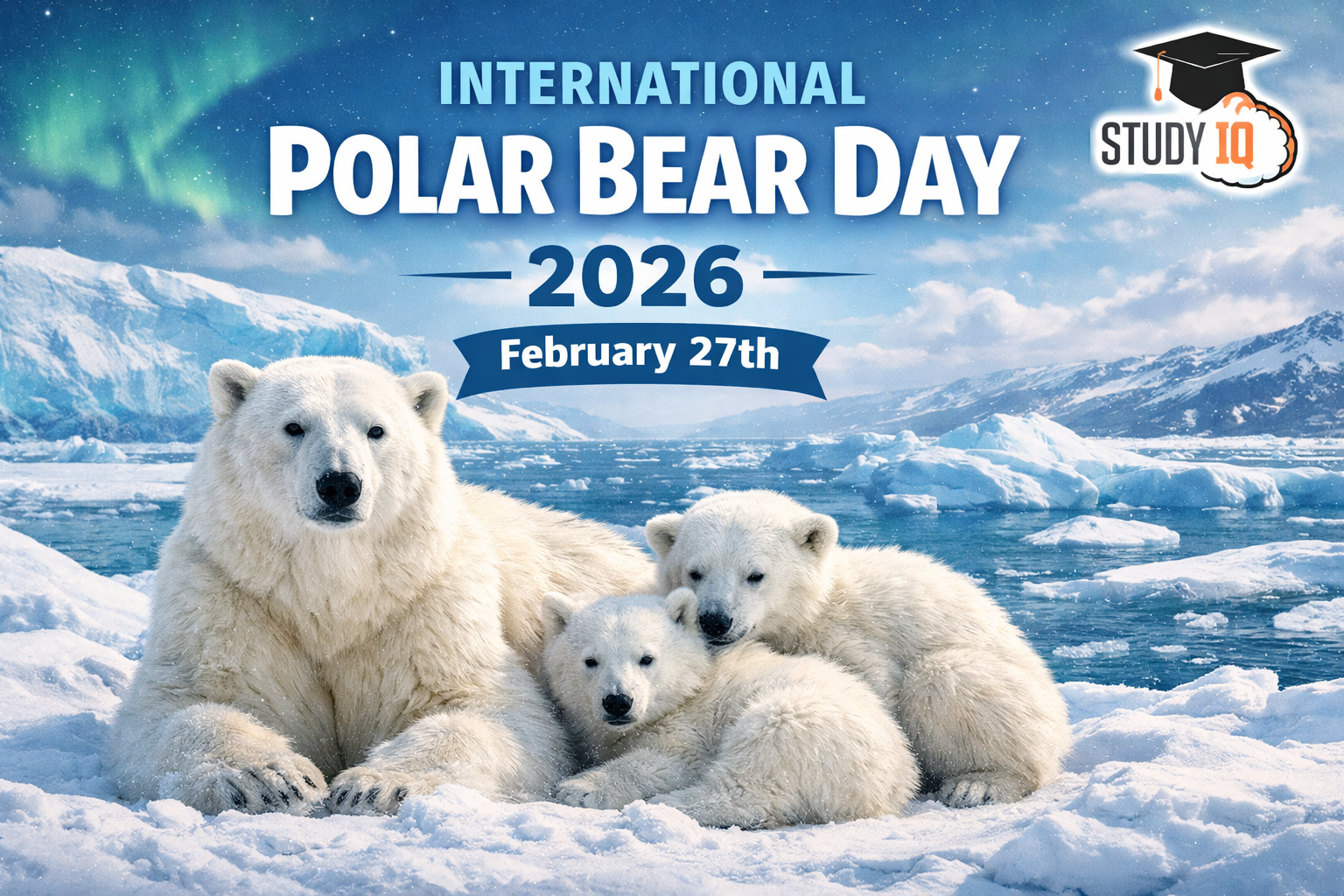
International Polar Bear Day 2026 is observed on February 27 to spread awareness about the conservation of polar bears and the impact of climate change on Arctic ecosystems. The day is organized by Polar Bears International, a global conservation organization dedicated to protecting polar bears and their sea ice habitat.
The observance highlights the challenges faced by polar bears due to shrinking sea ice, habitat loss, and declining food availability, while also emphasizing the need to protect polar bear mothers and cubs during the denning season.
International Polar Bear Day 2026 – Overview
| Feature | Details |
|---|---|
| Date | 27 February 2026 |
| Observed By | Worldwide |
| Organizer | Polar Bears International |
| Scientific Name | Ursus maritimus |
| Habitat | Arctic Region |
| Major Threat | Climate Change |
| Primary Food | Seals |
| Key Focus | Protection of mothers and cubs |
What is International Polar Bear Day?
International Polar Bear Day is an annual global awareness event dedicated to the protection of polar bears and Arctic ecosystems.
The day focuses on:
-
Climate change awareness
-
Sea ice conservation
-
Polar bear habitat protection
-
Scientific research promotion
-
Arctic biodiversity protection
The date of February 27 is significant because it coincides with the denning period, when pregnant polar bears give birth and raise newborn cubs inside snow dens.
Why Polar Bears Are Important
Polar bears are among the largest carnivores on Earth and serve as apex predators in the Arctic ecosystem.
They play an important role in:
-
Maintaining ecological balance
-
Regulating seal populations
-
Indicating climate change impacts
-
Preserving Arctic biodiversity
Polar bears are also considered a symbol of climate change awareness worldwide.
Adaptations That Help Polar Bears Survive
Polar bears are specially adapted to survive extreme Arctic conditions.
Key Adaptations
Transparent Fur
-
Polar bear fur is not white.
-
Each hair is transparent and reflects light.
-
Helps in camouflage.
Black Skin
-
Skin absorbs solar heat.
-
Helps maintain body temperature.
Thick Fat Layer
-
Provides insulation
-
Stores energy
-
Helps survival during food shortages
Large Paws
-
Act like snowshoes
-
Prevent slipping
-
Help in swimming
Threats to Polar Bears
Polar bears face serious threats due to global warming and environmental change.
Major Threats
-
Melting Arctic sea ice
-
Habitat destruction
-
Reduced hunting grounds
-
Food shortages
-
Human disturbances
-
Industrial activities in the Arctic
Sea ice loss is considered the biggest threat to polar bear survival.
Importance of the Denning Season
International Polar Bear Day highlights the importance of protecting pregnant females and newborn cubs during the denning period.
Key Facts About Cubs
-
Cubs are born blind
-
Weight at birth is about 0.5 kg
-
Cubs remain in dens for several months
-
Survival depends completely on mothers
-
Only about half survive to adulthood
Disturbances near denning sites can threaten cub survival.
How International Polar Bear Day is Celebrated
Awareness Activities
-
Wildlife education programs
-
Zoo exhibitions
-
School awareness campaigns
-
Online educational sessions
-
Social media campaigns
Climate Action Activities
Many organizations observe the day by:
-
Reducing carbon emissions
-
Promoting renewable energy
-
Supporting conservation projects
These activities connect climate action with wildlife protection.
How Individuals Can Help
People can contribute to polar bear conservation in several ways:
-
Support conservation organizations
-
Reduce carbon footprint
-
Spread awareness
-
Participate in environmental campaigns
-
Learn about Arctic ecosystems
Small actions can collectively help protect polar bears.
Relevance for UPSC Preparation
International Polar Bear Day is important for Environment and Ecology topics.
Important Points for Exams
-
Polar Bear Scientific Name → Ursus maritimus
-
Habitat → Arctic sea ice
-
Major threat → Climate change
-
Apex predator
-
Observed on → 27 February
-
Organizer → Polar Bears International
Questions related to species adaptation and climate change impacts are frequently asked in UPSC Prelims.
|
Read More Notes |
|
| Environment Notes | Art and Culture Notes |
| Science and Tech | History Notes |
| Geography Notes | Indian Polity Notes |
| General Knowledge | International Relation |
|
Explore StudyIQ Courses |
|
 Recent Defence Expansion in India: Moder...
 What is El Niño Labelling and Why It Ma...
 US Duties on Solar Exports: Impact on In...











 WhatsApp





