
Table of Contents
Every year, India churns out 25–30 lakh STEM graduates — second only to China. On paper, this should make India an unstoppable science and technology superpower. Yet, the reality is starkly different: only ~260 researchers per million population, R&D spending stuck at 0.67% of GDP, and over 90% of top AI PhDs leaving the country.
So, is India’s much-touted demographic dividend turning into a demographic disappointment in STEM?
The Paradox of Plenty
- India has one of the highest female STEM graduation rates in the world (43%).
- But women occupy only 14% of research roles and barely 9–11% of faculty positions in IITs/IISc.
- The country produces more engineers annually than the US and Europe combined, yet core research fields like material science, biotechnology and fundamental physics face severe talent shortages.
The infamous “leaky pipeline” and massive brain drain are eating away the potential.
Why STEM Strength = National Strength
A robust STEM ecosystem is no longer optional for India. It is existential.
- Strategic autonomy in semiconductors, defence, space and rare-earth processing
- Leadership in emerging technologies: AI, Quantum Computing, Green Hydrogen, 6G
- Transition from an IT-services economy to an innovation-driven $5–10 trillion economy
- Preventing large-scale youth under-employment in a country with median age 28
Countries that ignored deep-tech capabilities (even with large populations) have remained middle-income forever. India cannot afford that fate.
Bright Spots: What Is Actually Working in 2025
Despite the gloom, pockets of excellence are emerging:
- IndiaAI Mission (₹10,372 crore) – Over 18,000 GPUs already allocated; several top AI researchers are returning on dual-affiliation models.
- National Quantum Mission (₹6,000 crore) – Four hubs functional, intermediate-scale quantum computers expected by 2028–29.
- ISRO & DRDO reverse brain-drain – Niche areas like cryogenic engines and hypersonics now pay global-level salaries with unmatched project freedom.
- New-age institutions – IISERs, TIFR Hyderabad, Ashoka University and Azim Premji University are building world-class departments in under a decade because of hiring and funding autonomy.
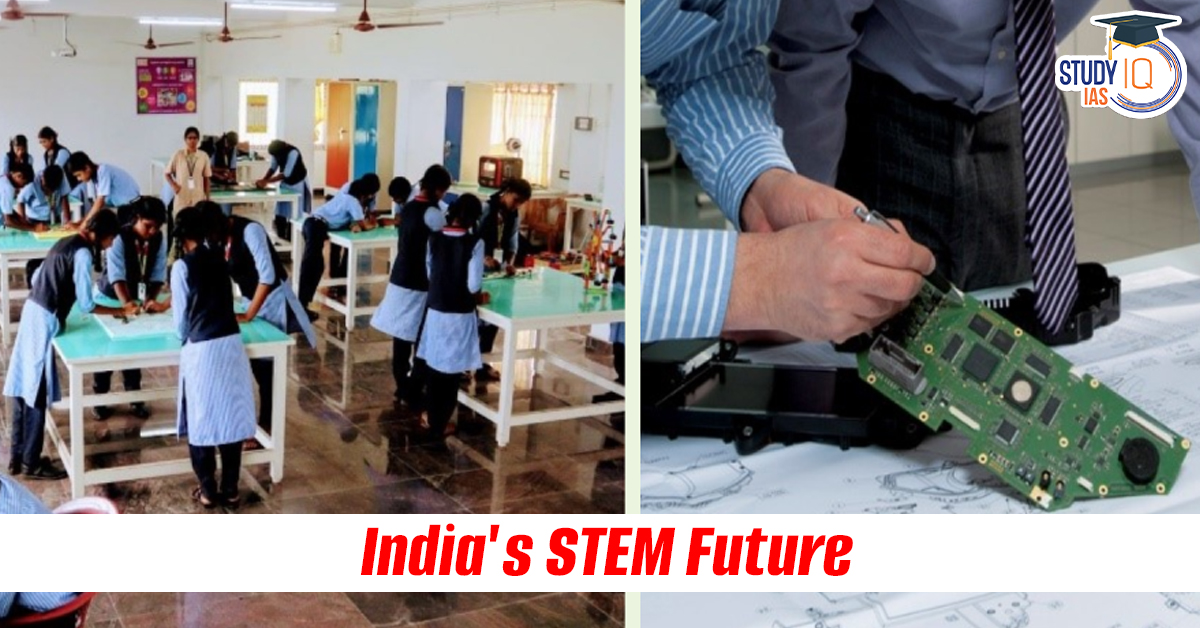
- Atal Tinkering Labs – 10,000+ school labs sparking curiosity in robotics, IoT and 3D printing.
The Persistent Roadblocks
- Abysmal R&D Investment India’s GERD is still ~0.67% of GDP (2024-25) vs China 2.55%, South Korea 4.9%, Israel 5.4%.
- Private Sector Apathy Only 34% of R&D comes from industry (down from 40%), compared to >70% in the US, Japan and South Korea.
- Bureaucratic Strangulation Fellowship delays of 6–10 months, archaic procurement rules, and zero financial autonomy for university vice-chancellors continue to demotivate young researchers.
- Brain Drain at Record Levels 23,000 Indian PhDs live in the US alone (2024). In AI/ML, >92% of IIT/IISc graduates move abroad within three years.
- Infrastructure Deficit Over 90% of state universities have outdated labs and no access to high-end journals or latest equipment.
The 2025 PhD Topic Controversy – Solved, but Not Really?
After huge backlash, the UGC withdrew its plan to restrict all PhD topics to 18 “national priorities”. The final rule (Oct 2025) applies only to government fellowships (PMRF, CSIR/UGC-JRF). Private or institution-funded PhDs remain free. Yet, many fear indirect pressure will still pushes pure science departments toward applied topics.
The Only Way Forward: A 7-Point Action Plan
To convert quantity into quality, India needs bold, time-bound reforms:
- Raise R&D spending to at least 2% of GDP by 2030 (1% public + 1% private).
- Mandate 25–30% of CSR funds for university research or offer 200% tax deduction on R&D.
- Create a “Single Window + Fast-Track” system for grants, equipment import and visa for foreign faculty.
- Launch 10,000 high-paying postdoctoral positions (₹1.5–2 lakh/month) positions with clear faculty-track conversion.
- Give full financial and hiring autonomy to the top 50 universities/institutes (like IISc and older IITs already enjoy).
- Massively expand ANRF funding to state universities and colleges, ending the IIT-IISc monopoly.
- Build 20 new green-field “Science Cities” with integrated housing, international schools and zero red-tape zones.
Conclusion: From Diploma Factory to Innovation Powerhouse
India has the largest and youngest STEM talent pool on the planet. What it lacks is not brains, but budgets, bureaucracy-free environments and bold political will.
If India can triple its R&D investment and halve its red tape in the next five years, the same 30 lakh graduates who today power global tech giants from California can tomorrow build Indian tech giants from Bengaluru, Hyderabad and Pune.
The window is still open — but it is closing fast. The choices made in the 2025–2030 period will decide whether India becomes a rule-maker or remains a rule-taker in the 21st-century technology race.
India’s STEM future is not doomed. It is waiting to be funded, freed and fired up.
 Sahitya Akademi Award 2025 Winners List:...
 Viksit Bharat Shiksha Adhishthan Bill 20...
 Cyclone Maila Intensifies Over Solomon S...













 WhatsApp





