
Table of Contents
Context
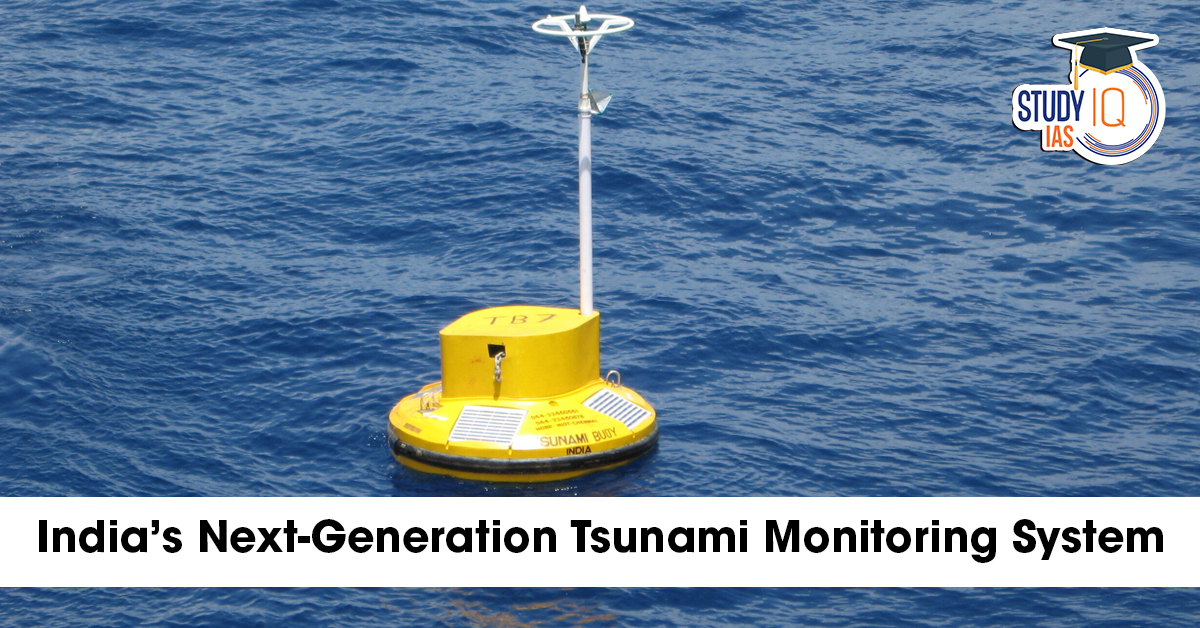
The Indian National Centre for Ocean Information and Services (INCOIS) is establishing a ₹300-crore Regional Service Centre (RSC) at Vijaynagar on Swaraj Dweep (Havelock Island) in the Andaman and Nicobar Islands.
About Regional Service Centre (RSC) at Vijaynagar
- Nodal Agency: Indian National Centre for Ocean Information and Services (INCOIS), which operates the Indian Tsunami Early Warning Centre (ITEWC).
- Key Features:
- The system expands detection to include non-seismic tsunamis caused by submarine landslides, mudslides, and volcanic activity.
- A 270-km sub-sea cable will be installed directly along tectonic subduction zones to ensure high-speed, real-time data transmission.
- The system will monitor underwater acoustic signals, which can travel faster than seismic waves, significantly reducing alert lead times.
- Significance
- Establishing the Regional Service Centre in Swaraj Dweep provides a critical “first-response” buffer for the Andaman and Nicobar Islands.
- The RSC will provide tsunami warning services to neighboring Indian Ocean Rim countries, specifically Sri Lanka.
|
Details |
| ● Indian Tsunami Early Warning Centre (ITEWC): Established in 2007 (post-2004 Tsunami), it is recognized by UNESCO-IOC as a Tsunami Service Provider (TSP) for the Indian Ocean region.
● Tsunami Ready Program: A community-based initiative by UNESCO-IOC. In 2020, Odisha’s Venkatraipur and Noliasahi became the first villages in the Indian Ocean region to be certified “Tsunami Ready.” |
 Tropical Cyclone Narelle Red Sky Western...
 Wildlife Crime Control Bureau (WCCB): Ro...
 Hope Island in News: Significance, Locat...













 WhatsApp





