
Table of Contents
Context
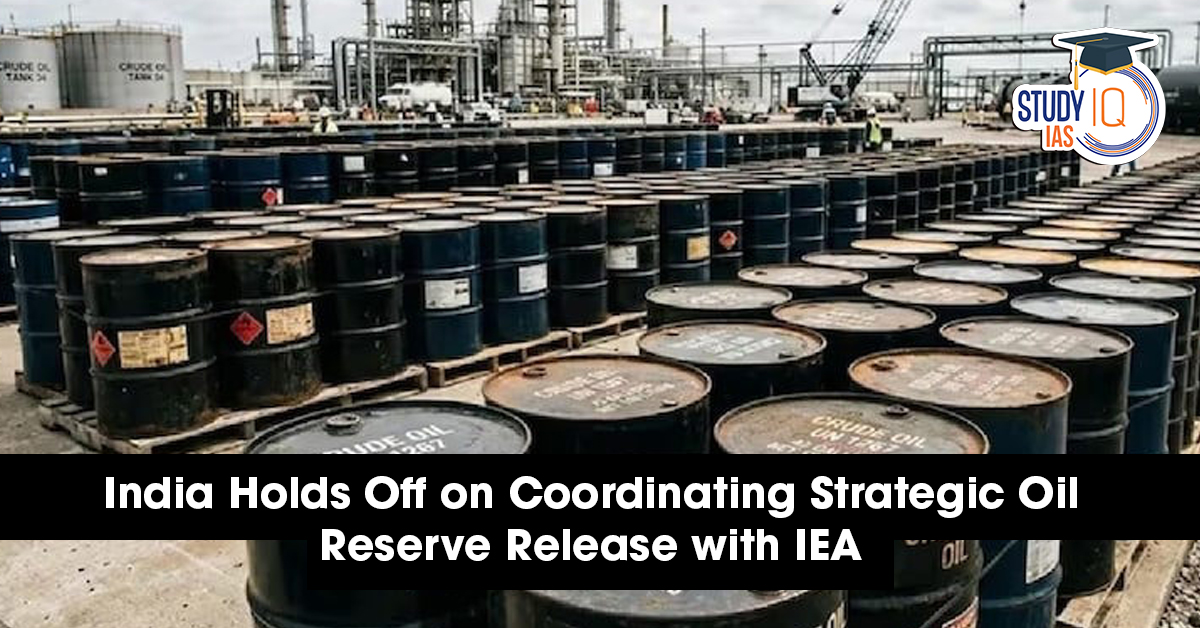
In response to the current oil crisis several major economies have been discussing the possibility of releasing crude oil from their emergency reserves through the International Energy Agency (IEA) to stabilise markets. However, India has decided not to participate in any coordinated release of strategic oil reserves at present.
|
About Strategic Petroleum Reserves |
| Strategic petroleum reserves are government-controlled oil stockpiles maintained to protect countries from supply disruptions caused by wars, natural disasters, or geopolitical crises.
● These reserves are typically released during: ○ Severe supply shortages ○ Sudden price spikes ○ Major geopolitical crises affecting oil flows ● IEA member countries coordinate releases to stabilise global markets during emergencies. India’s Strategic Oil Reserve System ● India maintains its emergency crude reserves through Indian Strategic Petroleum Reserves Limited, a government-owned company under the Ministry of Petroleum and Natural Gas. ● Current Storage Capacity: India’s Phase-1 SPR facilities include underground caverns at: ○ Visakhapatnam ○ Mangalore ○ Padur ● Together they hold about 5.33 million metric tonnes (around 37 million barrels) of crude oil, enough to meet roughly 9–10 days of national consumption. ● When combined with commercial inventories held by refiners, India has around 87 days of total crude storage, close to the 90-day requirement followed by IEA members. |
Why the IEA Is Considering Reserve Releases
- Global oil markets have been under pressure due to disruptions linked to the West Asia conflict and fears of supply shocks.
- Several G7 countries have been discussing a coordinated release of emergency oil stocks to prevent a spike in energy prices and inflation.
- IEA members collectively hold more than 2 billion barrels of emergency reserves, which can be deployed during crises.
- Such coordinated releases have happened several times in the past—for example during the 2011 Libya crisis and the 2022 Ukraine war.
Why India Has Declined to Join the Release
- Adequate Domestic Fuel Availability: Government officials say India currently has sufficient commercial and strategic oil stocks, reducing the need to release reserves immediately.
- Strategic Reserves Are Meant for Supply Emergencies: India views SPR primarily as a buffer against physical supply disruption, not as a tool to influence global oil prices.
- Limited Reserve Capacity Compared with Major Economies: India’s strategic reserves are relatively small compared with those of countries like the United States or China, making cautious use necessary.
- Maintaining Strategic Autonomy: India prefers to retain policy flexibility rather than committing to coordinated global stock releases.
|
Read More Notes |
|
| Environment Notes | Art and Culture Notes |
| Science and Tech | History Notes |
| Geography Notes | Indian Polity Notes |
| General Knowledge | International Relation |
|
Explore StudyIQ Courses |
|
 Algorithmic Sovereignty Should Be Indiaâ...
 $100 Oil: Why Supply Security Matters Mo...
 Bridging the Digital Divide: Meaning, Ch...











 WhatsApp





