
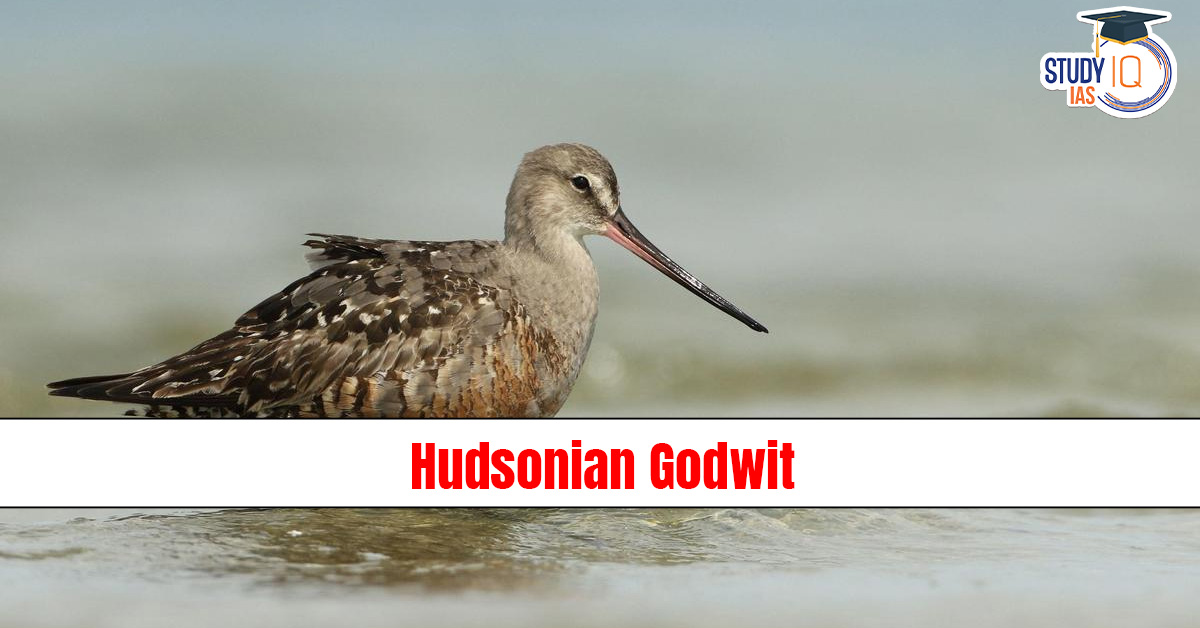
Context: The 15th Conference of the Parties (COP-15) to the Convention on the Conservation of Migratory Species of Wild Animals (CMS) opened in Pantanal, Brazil, with a high-priority focus on the near-extinction of the Hudsonian Godwit.
About Hudsonian Godwit
- Hudsonian Godwit is a large shorebird in the sandpiper family, Scolopacidae.
- Breeding Grounds: They nest in three remote sub-Arctic pockets: Western Alaska, the Mackenzie Delta (NWT), and the Hudson Bay Lowlands (Ontario/Manitoba).
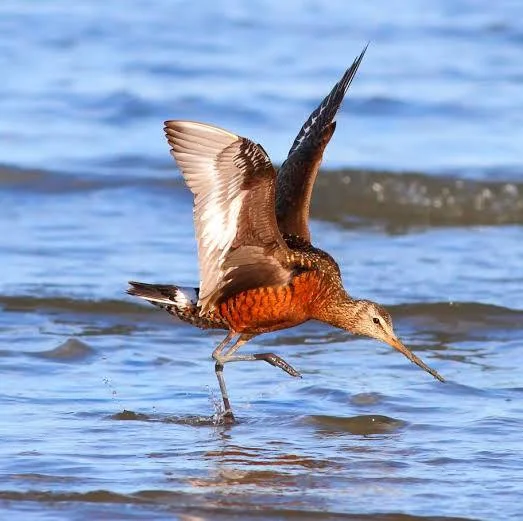
- Wintering Grounds: They spend the southern summer in Patagonia and Tierra del Fuego (Chile and Argentina).
- In a single stretch, a Hudsonian godwit can fly up to 11,000 km without eating, drinking, or sleeping.
- Before long-distance migration, the birds undergo physiological changes, shrinking their digestive organs to save weight and nearly doubling their body mass with fat stores.
- Their migration is a study in Aerodynamics and Metabolic efficiency, utilising high-altitude winds (Jet Streams) to cross the ocean.
- Indicator Species: Its decline reflects the degradation of three distinct ecosystems: Arctic tundra, mid-continental wetlands, and coastal mudflats.
- IUCN Red List: Vulnerable
Major Threats
- Arctic Phenological Mismatch: Due to climate change, spring is arriving earlier. Chicks are now hatching after the peak of the insect “bloom”, they need to survive, leading to high starvation rates.
- Stopover Habitat Loss: The wetlands in the U.S. Great Plains—crucial “gas stations” for their journey—are being drained for agriculture.
- Aquaculture in the South: In Chile, the expansion of salmon and oyster farming has disturbed the intertidal mudflats where the birds feed during the southern winter.
| Convention on the Conservation of Migratory Species of Wild Animals (CMS) |
|

 Desalination Plants in Gulf Countries
 India Lockdown 2026: Is Another Lockdown...
 UPSC Sociology Optional Syllabus 2026: C...













 WhatsApp





