
Table of Contents
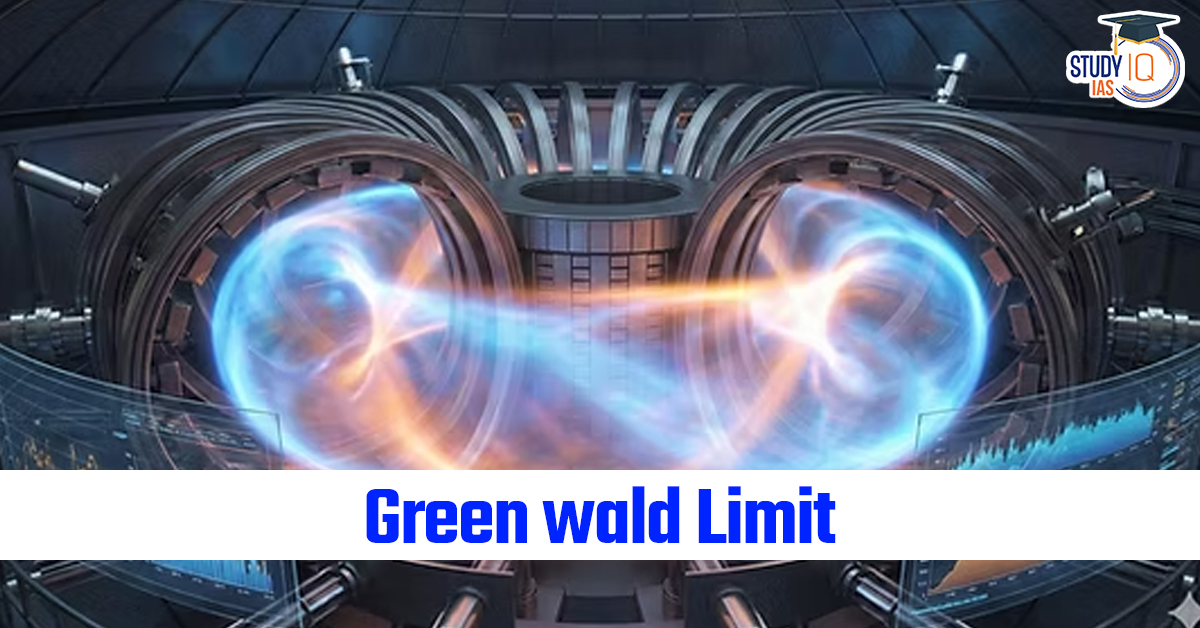
China’s Experimental Advanced Superconducting Tokamak (EAST), popularly known as the “artificial sun,” has recently crossed a historic milestone by operating beyond the Greenwald plasma density limit. This achievement marks a significant step forward in nuclear fusion research and strengthens the possibility of making fusion a practical, clean, and sustainable energy source for the future.
What is the Greenwald Limit?
The Greenwald limit is a rule-of-thumb that defines the maximum stable plasma density that can be maintained inside a tokamak fusion reactor. It was proposed in the 1980s by physicist Martin Greenwald.
In simple terms:
-
It sets an upper ceiling on how dense plasma can be.
-
If plasma density exceeds this limit, the plasma becomes unstable.
-
Instability can cause sudden disruptions and shutdown of the reactor.
For decades, the Greenwald limit acted as a major design constraint for fusion reactors, because achieving higher plasma density is crucial for increasing fusion reaction rates and improving energy output.
Why Plasma Density is Crucial for Fusion
Fusion reactions depend on three main parameters:
-
High temperature
-
Sufficient confinement time
-
High plasma density
This is captured by the Lawson Criterion.
Higher plasma density means:
-
More fuel particles in the reactor
-
More frequent collisions between ions
-
Greater probability of fusion reactions
-
Higher energy generation
Thus, overcoming limits on plasma density is vital for achieving net energy gain from fusion.
EAST Tokamak Breaks the Greenwald Barrier
China’s EAST reactor has demonstrated stable plasma operation beyond the traditional Greenwald limit. This is a landmark achievement because it proves that:
-
The Greenwald limit is not a fundamental physical barrier.
-
It is instead an engineering constraint that can be managed with advanced plasma control techniques.
-
Future fusion reactors can safely operate at higher densities.
This breakthrough opens new pathways for more compact, efficient, and powerful fusion reactor designs.
Significance of Exceeding the Greenwald Limit
1. Higher Fusion Efficiency
Denser plasma allows more fusion reactions per unit volume, increasing energy output.
2. Better Chances of Net Energy Gain
Operating beyond this limit brings reactors closer to producing more energy than they consume.
3. Flexible Reactor Design
Designers can choose higher density instead of only relying on extremely high temperatures or massive reactor sizes.
4. Faster Progress Toward Commercial Fusion
It shortens the technological gap between experimental fusion and commercial power plants.
What is EAST (Experimental Advanced Superconducting Tokamak)?
EAST is China’s flagship fusion research facility designed to simulate the conditions required for sustained nuclear fusion.
Key features:
-
Uses superconducting magnets for strong and stable plasma confinement
-
Can sustain plasma at temperatures exceeding 100 million°C
-
Enables long-duration plasma experiments
-
Acts as a testing platform for next-generation fusion reactors
EAST plays a crucial role in informing international fusion projects such as ITER (International Thermonuclear Experimental Reactor).
Nuclear Fusion: The Energy of the Future
Nuclear fusion is the process in which two light atomic nuclei, usually isotopes of hydrogen, combine to form a heavier nucleus, releasing enormous energy.
Fusion vs Fission:
| Fusion | Fission |
|---|---|
| Combines atoms | Splits atoms |
| Clean energy | Produces radioactive waste |
| No runaway accidents | Risk of meltdown |
| Abundant fuel | Limited fuel |
Why Fusion is Called the Cleanest Energy
Fusion offers unmatched advantages:
-
Uses abundant fuel (hydrogen from water and lithium)
-
Zero greenhouse gas emissions
-
Minimal long-lived radioactive waste
-
No risk of nuclear meltdown
-
Reaction stops automatically if conditions fail
These features make fusion the most promising long-term solution to the global energy crisis and climate change.
Global Impact of EAST’s Achievement
China’s success in exceeding the Greenwald limit strengthens:
-
Global confidence in tokamak-based fusion designs
-
Feasibility of compact and efficient reactors
-
Progress of international collaboration in fusion research
It positions EAST as one of the world’s most advanced experimental fusion facilities.
Conclusion
Breaking the Greenwald limit is not just a technical achievement—it is a paradigm shift in fusion research. It proves that plasma density can be pushed beyond long-held boundaries through better engineering and control systems. With EAST leading the way, nuclear fusion is no longer a distant dream but a scientifically achievable reality.
Fusion truly stands as the “energy of the future”—clean, safe, and virtually limitless.
 Navigating Uncharted Waters: What Next f...
 Astronaut Reentry Explained: How Spacecr...
 Missile Interceptors Explained: Role in ...











 WhatsApp





