
Table of Contents
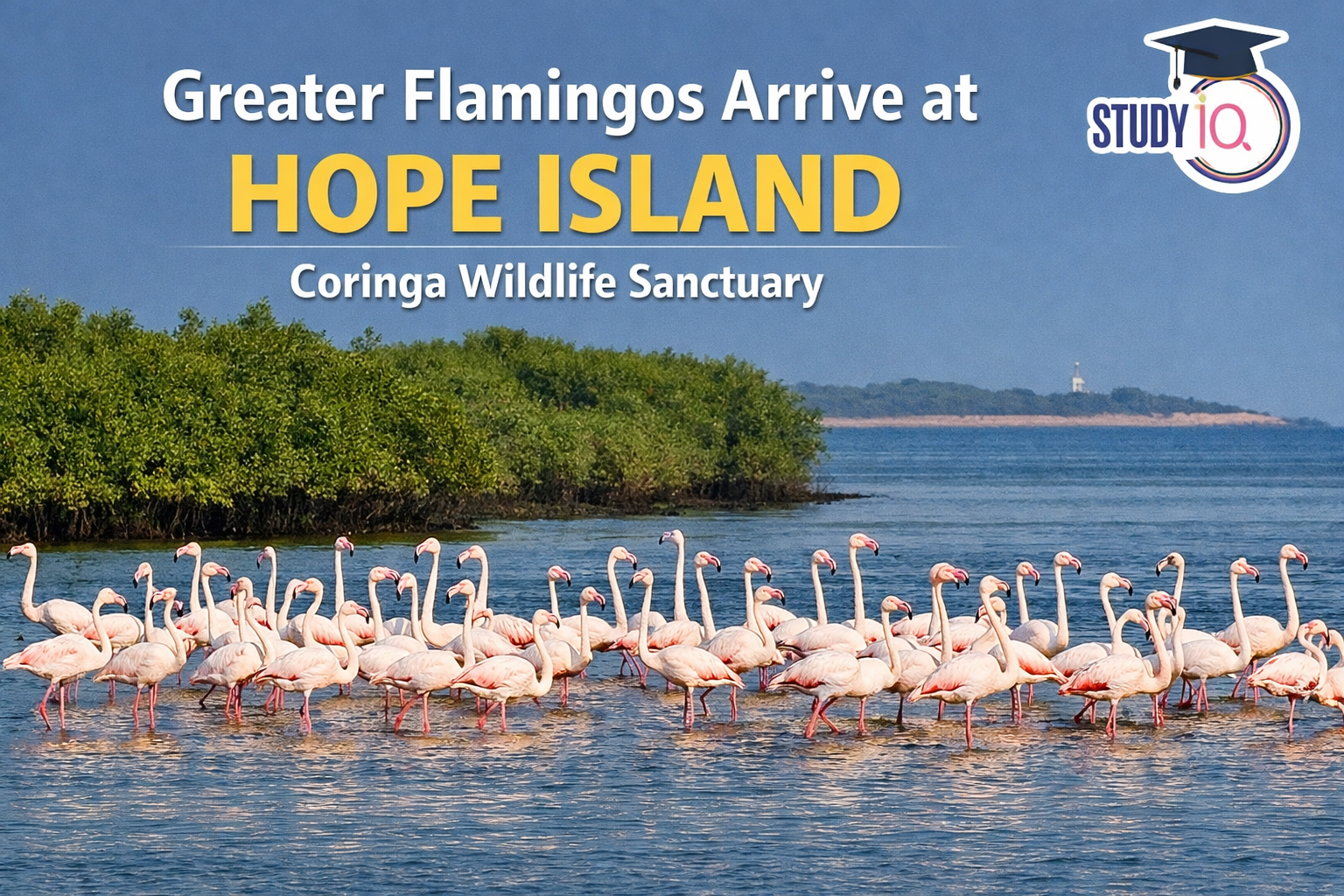
The recent arrival of nearly 70 Greater Flamingos at Hope Island in the Coringa Wildlife Sanctuary, located in Kakinada Bay, Andhra Pradesh, has drawn the attention of bird lovers, environmentalists, and conservationists. This rare and beautiful sighting highlights the ecological richness of the region and underlines the importance of conserving India’s coastal wetlands and mangrove ecosystems.
The presence of Greater Flamingos, known to be sensitive to environmental changes, is often considered an indicator of a healthy and balanced wetland ecosystem. Their visit to Hope Island reflects the improving habitat quality and food availability in the Coringa Wildlife Sanctuary.
About Coringa Wildlife Sanctuary
Coringa Wildlife Sanctuary is one of the most significant mangrove ecosystems in India. It is located near Kakinada city in Andhra Pradesh and forms an integral part of the Godavari River estuary.
Key Features of Coringa Wildlife Sanctuary
-
Location: Near Kakinada, Andhra Pradesh
-
Geographical Setting: Godavari delta and estuarine ecosystem
-
Rivers: Coringa and Gaderu
-
Hope Island:
-
A 16-km-long young sand-spit island
-
Located in the Bay of Bengal
-
Acts as a natural barrier protecting the coast from cyclones and sea erosion
-
Flora
Coringa hosts the third-largest stretch of mangrove forests in India, making it ecologically invaluable.
-
Around 24 species of mangrove trees
-
Dense mangrove vegetation
-
Also includes dry deciduous tropical forests
-
Mangroves help in:
-
Coastal protection
-
Carbon sequestration
-
Breeding grounds for marine life
-
Fauna
The sanctuary is a paradise for bird watchers and wildlife researchers.
-
Over 120 species of birds
-
Notable species:
-
White-backed vulture
-
Long-billed vulture
-
Painted storks
-
Egrets, herons, and kingfishers
-
-
Rich diversity of:
-
Reptiles
-
Fish
-
Crustaceans
-
Small mammals
-
Hope Island: A Unique Coastal Landform
Hope Island is a young and dynamic sand-spit island stretching about 16 km along the Kakinada coast.
Its importance lies in:
-
Acting as a buffer against storms and cyclones
-
Protecting the mangrove forests of Coringa
-
Providing feeding and resting grounds for migratory birds
-
Supporting marine biodiversity
The arrival of Greater Flamingos at Hope Island strengthens its reputation as a vital ecological zone on India’s east coast.
Greater Flamingo: An Overview
The Greater Flamingo (Phoenicopterus roseus) is the largest and most widespread species of flamingo in the world. Its striking pink plumage and graceful movements make it one of the most admired water birds.
Distribution
Greater Flamingos are found across:
-
Africa
-
Southern Europe
-
South and West Asia
In India, they are commonly seen in:
-
Gujarat coast
-
Rann of Kutch
-
Pulicat Lake
-
Chilika Lake
-
Gulf of Mannar region
Their sighting at Hope Island adds Andhra Pradesh to the list of important flamingo habitats in India.
Habitat Preference of Greater Flamingos
Greater Flamingos prefer:
-
Shallow saline and brackish water bodies
-
Lagoons
-
Estuaries
-
Salt pans
-
Coastal wetlands
These habitats provide:
-
Abundant algae
-
Plankton
-
Small crustaceans
which form the core of their diet.
Why Are Flamingos Pink?
The iconic pink colour of Greater Flamingos comes from carotenoid pigments found in their food:
-
Algae
-
Plankton
-
Small crustaceans
As they consume these organisms, pigments accumulate in their feathers, giving them their distinctive pink to reddish hue.
Behaviour and Social Life
-
Highly social birds, living in large colonies
-
Known for synchronized movements and group feeding
-
Form monogamous pairs
-
Nest in large breeding colonies
-
Strong parental care
Their social structure helps in:
-
Protection from predators
-
Efficient foraging
-
Successful breeding
Conservation Status
-
IUCN Red List: Least Concern
Although their global population is stable, local threats remain significant.
Threats to Flamingos and Coastal Wetlands
Despite being listed as Least Concern, Greater Flamingos face several regional threats:
-
Destruction of wetlands
-
Coastal development projects
-
Pollution and plastic waste
-
Disturbance from tourism
-
Climate change and sea-level rise
-
Reduction in food availability due to water contamination
Protecting habitats like Coringa Wildlife Sanctuary is essential for their long-term survival.
Ecological Importance of Flamingos
Greater Flamingos play a key role in wetland ecosystems:
-
Help in nutrient cycling
-
Maintain balance in aquatic food chains
-
Act as bio-indicators of ecosystem health
-
Support eco-tourism and conservation awareness
Their presence reflects the quality of water and food availability in a region.
Significance of Their Arrival at Hope Island
The arrival of nearly 70 Greater Flamingos at Hope Island is significant because:
-
It indicates a healthy coastal ecosystem
-
Shows improvement in wetland conservation
-
Enhances Coringa’s importance as a bird habitat
-
Strengthens Andhra Pradesh’s position on India’s migratory bird map
-
Promotes eco-tourism and biodiversity awareness
For students preparing for UPSC, State PSCs, and environmental studies, this event is highly relevant under:
-
Biodiversity conservation
-
Wetland ecosystems
-
Mangrove forests
-
Migratory birds in India
Conclusion
The sighting of Greater Flamingos at Hope Island in Coringa Wildlife Sanctuary is a powerful reminder of the importance of preserving India’s fragile coastal ecosystems. Coringa’s mangroves, estuaries, and sand-spit islands together create an ideal habitat for migratory birds and marine biodiversity. Protecting such regions is not just about saving wildlife; it is about ensuring ecological balance, disaster resilience, and sustainable development.
 Supreme Court Upholds the Right to Die w...
 GDP Growth vs Employment Reality: Unders...
 Bill to Codify IPS Deputation in CAPFs: ...











 WhatsApp





