
Table of Contents
Scientists from the Stevens Institute of Technology, in collaboration with Yale University, have announced plans to build the world’s first experiment explicitly designed to detect an individual graviton. If successful, this would mark one of the greatest breakthroughs in the history of physics, as it would confirm that gravity, like other fundamental forces, has a quantum nature.
What is a Graviton?
In modern physics, all fundamental forces are believed to be mediated by particles:
| Force | Mediating Particle |
|---|---|
| Electromagnetism | Photon |
| Strong Nuclear Force | Gluon |
| Weak Nuclear Force | W and Z Bosons |
| Gravity (Hypothetical) | Graviton |
A graviton is a hypothetical, massless, electrically neutral particle that carries the gravitational force in quantum theories of gravity.
While General Relativity explains gravity as the curvature of spacetime caused by mass and energy, Quantum Mechanics describes forces through particle exchange. The graviton is the missing link that would make gravity compatible with quantum theory.
Gravitational Waves vs Gravitons
It is important to distinguish between gravitational waves and gravitons:
-
Gravitational Waves
-
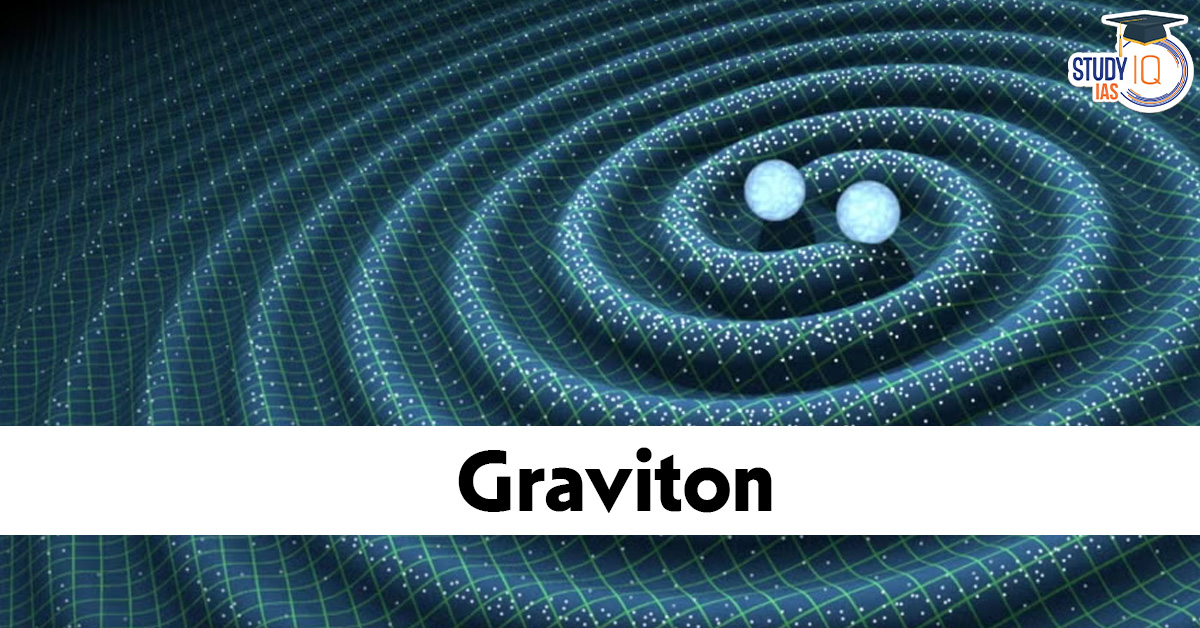
Large-scale ripples in spacetime
-
Predicted by Einstein in 1916
-
Detected directly by LIGO in 2015
-
Produced by massive cosmic events like black hole mergers
-
-
Gravitons
-
Hypothetical quantum particles
-
Represent the smallest unit of gravitational interaction
-
Analogous to photons being the quantum of light
-
Gravitational waves are classical phenomena, while gravitons belong to the quantum domain.
Why is Detecting the Graviton Important?
1. Proof that Gravity is a Quantum Force
Detecting a graviton would confirm that gravity behaves like other forces at the quantum level.
2. Bridge Between Two Pillars of Physics
It would help unify:
-
General Relativity (macroscopic universe)
-
Quantum Mechanics (microscopic universe)
This is a major step toward a “Theory of Everything.”
3. New Physics Beyond the Standard Model
Gravity is not yet incorporated into the Standard Model of particle physics. The graviton could extend or reshape it.
4. Deeper Understanding of the Universe
It could transform our understanding of:
-
Black holes
-
Early universe
-
Spacetime structure
-
Dark energy and quantum gravity
The New Experiment: A Historic Attempt
The proposed experiment by scientists from Stevens Institute of Technology and Yale University is the first designed explicitly to detect a single graviton.
Earlier research largely considered graviton detection practically impossible, but this experiment aims to challenge that assumption using innovative quantum measurement techniques and ultra-sensitive detectors.
This initiative represents a shift from “gravitons are impossible to detect” to “gravitons might be experimentally testable.”
Why is Detecting a Graviton So Difficult?
1. Gravity is Extremely Weak
Gravity is about:
-
10³⁶ times weaker than electromagnetism
A magnet can lift iron against Earth’s gravity, showing how weak gravitational interactions are at small scales.
2. Gravitons Hardly Interact with Matter
Gravitons would pass through ordinary material almost without interaction, similar to neutrinos but even more elusive.
3. Black Hole Paradox of Detection
Earlier theoretical work suggested:
Any detector massive enough to trap a graviton would collapse into a black hole.
This made detection seem fundamentally impossible.
4. Extremely Low Energy
The energy of gravitons associated with detectable gravitational waves is:
-
Far below background noise levels
-
Many orders of magnitude smaller than what current instruments can detect
Scientific Significance in Simple Words
| Aspect | Impact |
|---|---|
| Physics | Quantum nature of gravity confirmed |
| Cosmology | New understanding of early universe |
| Technology | Development of ultra-sensitive detectors |
| Theory | Progress toward unified physics |
Conclusion
The graviton represents the final missing piece in our understanding of fundamental forces. Detecting it would revolutionize physics by proving that gravity is a quantum force, bridging the gap between Einstein’s relativity and quantum mechanics.
The new experiment proposed by Stevens Institute of Technology and Yale University is a bold attempt to turn a long-standing theoretical idea into observable reality. If successful, it would not just be a scientific milestone—it would redefine our understanding of the universe itself.
Sharing is caring!
 Shia Politics in India: History, Influen...
 Future of Chipmaking: Trends, Technologi...
 Nucleic Acid Testing (NAT): Meaning, Wor...











 WhatsApp





