
Table of Contents
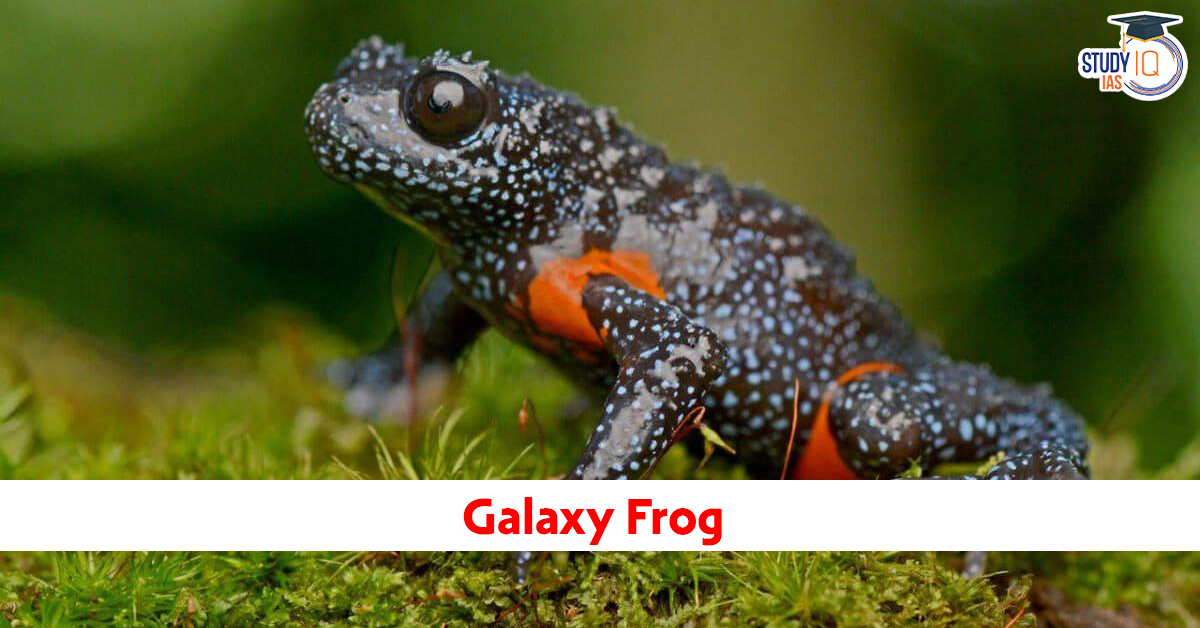
The Galaxy Frog is one of the rarest and most dazzling amphibians in the world, known for its star-like blue speckles on a glossy black body. Endemic to India’s Western Ghats, this tiny frog has recently come under global attention due to alarming reports of population loss linked to unethical photo tourism. From an environment, biodiversity, and UPSC Prelims perspective, the Galaxy Frog is a highly important species.
Galaxy Frog Latest News (2026)
According to a recent scientific study, seven Galaxy Frogs have vanished and are presumed dead after repeated disturbances caused by wildlife photographers. The study highlighted that handling frogs, overturning logs, and prolonged exposure to high-intensity camera flashes disrupted their feeding, breeding, and microhabitat conditions, ultimately leading to their disappearance.
About Galaxy Frog
-
Common Name: Galaxy Frog
-
Scientific Name: Melanobatrachus indicus
-
Family: Microhylidae
-
Sub-family: Melanobatrachinae
The species was first described in 1878. Despite being known for over a century, very little scientific data exists due to its cryptic behaviour and extremely limited distribution.
The Galaxy Frog has been declared the flagship species of Mathikettan Shola National Park.
Appearance and Size
-
Size: 2 cm to 3.5 cm
-
Skin: Shiny black and warty
-
Markings: Bluish-white speckles resembling stars, sometimes with orange streaks
Its unique coloration gives the frog a cosmic or galaxy-like appearance, making it a highly sought-after subject for wildlife photography.
Habitat of Galaxy Frog
Galaxy Frogs are microhabitat specialists and depend on very specific ecological conditions.
-
Lives under rotten logs, stones, and leaf litter
-
Found on the moist forest floor
-
Prefers elevations above 900 metres
-
Requires cool temperatures and high humidity
Even minor disturbances in these conditions can make the habitat unsuitable for survival.
Distribution
-
Endemic to India
-
Restricted to the wet evergreen forests of the southern Western Ghats
-
Found only in parts of Kerala and Tamil Nadu
Due to this extremely narrow distribution, the species is highly vulnerable to extinction.
Characteristics of Galaxy Frog
-
No vocal sac – cannot be detected by croaking
-
Bright spots are believed to help in visual communication
-
Nocturnal in nature
-
Absorbs oxygen and water through its skin
-
Secretes mucus to keep skin moist for respiration
-
Extremely sensitive to light, temperature, and humidity
Because it breathes through its skin, any drying caused by heat, handling, or flash photography can be fatal.
Threats to Galaxy Frog
The Galaxy Frog faces multiple natural and human-induced threats:
-
Deforestation and land-use change for agriculture
-
Firewood collection in forest areas
-
Landslides in the Western Ghats
-
Photo tourism
-
Handling frogs with bare hands
-
Displacing logs and microhabitats
-
Prolonged exposure to camera flashes
-
Risk of pathogen transfer from humans
-
Unregulated wildlife photography has emerged as a new and serious conservation threat.
Conservation Status
-
IUCN Red List: Vulnerable (by International Union for Conservation of Nature)
The species’ limited range and sensitivity to environmental changes make it highly prone to extinction.
Conclusion
The Galaxy Frog is not just a biological wonder but also a warning sign. Its decline shows how even well-intentioned human activities like photography can push rare species toward extinction. Protecting such amphibians requires strict regulation, ethical wildlife practices, and public awareness. Sometimes, conservation simply means leaving nature untouched.
 Species in News for UPSC Prelims 2026: C...
 Central India’s Jumbo Crisis: Human-El...
 UN Road Safety Project: Objectives, Impl...











 WhatsApp





