
Table of Contents
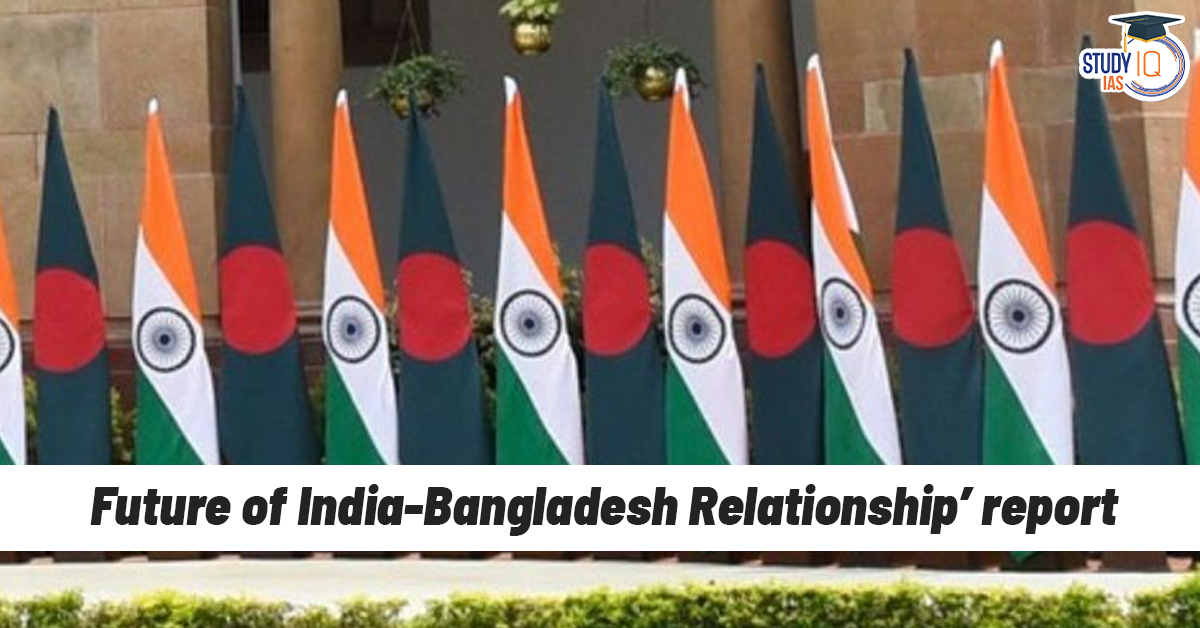
India–Bangladesh relations are at a critical juncture. A recent report by the Parliamentary Standing Committee on External Affairs has described developments in Bangladesh as India’s “greatest strategic challenge since the Liberation War of 1971.” Unlike the existential crisis of 1971, today’s challenge is subtle yet profound—marked by political transition, generational change, and shifting geopolitical alignments.
This article analyses the future of India–Bangladesh relations, emerging challenges, strategic concerns for India, and possible pathways for recalibration.
Background: India–Bangladesh Relations Since 1971
Since Bangladesh’s independence, India has been a key partner in:
-
Political support and diplomacy
-
Trade and connectivity
-
Security cooperation
-
Water-sharing agreements
-
Cultural and people-to-people ties
Under Sheikh Hasina’s Awami League government, bilateral ties reached an unprecedented level of cooperation. However, recent political upheavals have disrupted this equilibrium.
Changing Political Landscape in Bangladesh
Collapse of Awami League Dominance
-
The fall of the Sheikh Hasina government in August 2025 marked a major political shift.
-
The Awami League has since been banned from political activity.
-
Upcoming February 2026 elections may be held without the participation of the party, raising concerns about inclusiveness and democratic legitimacy.
Rise of New Political Forces
-
Emergence of the National Citizen Party, formed by student activists.
-
Return of Jamaat-e-Islami after restoration of its electoral registration.
-
Surge of youth-led nationalism with reduced emotional connection to India’s role in 1971.
This generational and ideological shift poses long-term implications for India’s influence in Dhaka.
External Influence: China and Pakistan Factor
China’s Expanding Footprint
-
Increased infrastructure investments and strategic engagement.
-
Use of economic diplomacy to deepen influence.
-
Alignment with Bangladesh’s emerging political class.
Pakistan’s Renewed Engagement
-
Re-entry through religious and ideological networks.
-
Improved diplomatic and intelligence outreach.
Strategic Risk for India:
India risks losing its traditional strategic space in Bangladesh not through confrontation, but through gradual marginalisation.
Sheikh Hasina’s Exile and Diplomatic Sensitivities
India’s decision to provide refuge to Sheikh Hasina was guided by humanitarian considerations. However:
-
Bangladesh’s interim government has accused her of influencing domestic politics from Indian soil.
-
India has clarified that no political platform has been provided and that any statements are made through personal communication devices.
This issue continues to strain bilateral trust and requires careful diplomatic handling.
Key Bilateral Issues Affecting Future Relations
1. Ganga Water Treaty (Expires 2026)
-
No formal bilateral negotiations have commenced.
-
Delay could create uncertainty and diplomatic friction.
-
Parliamentary committee has urged early dialogue to avoid a post-2026 vacuum.
2. Border Security and Radicalisation
-
Political instability increases risks of extremism.
-
Border management and intelligence cooperation remain crucial.
3. Declining People-to-People Trust
-
Anti-India protests and nationalist narratives.
-
Perception of India as overly aligned with a single political party.
Parliamentary Committee’s Warning
The Standing Committee cautioned that:
“India risks losing strategic space in Dhaka not to war, but to irrelevance.”
This underscores the urgency for strategic recalibration rather than reactive diplomacy.
Way Forward: Recalibrating India’s Bangladesh Policy
1. Engage Beyond Political Elites
-
Build ties with new political actors, youth groups, civil society, and media.
-
Avoid over-identification with any single political party.
2. Strengthen Soft Power Diplomacy
-
Educational scholarships, cultural exchanges, and skill partnerships.
-
Focus on youth-to-youth engagement.
3. Counter China Through Development, Not Rhetoric
-
Offer transparent, sustainable development cooperation.
-
Emphasise regional connectivity and shared prosperity.
4. Institutionalise Dialogue
-
Early negotiations on water-sharing and trade.
-
Regular strategic consultations irrespective of political changes.
5. Maintain Strategic Neutrality
-
Respect Bangladesh’s sovereignty.
-
Support democratic processes without overt interference.
Conclusion
The future of India–Bangladesh relations will be shaped less by history and more by adaptability. The post-1971 emotional bond is no longer sufficient to anchor strategic cooperation. India must transition from legacy-based diplomacy to forward-looking engagement, rooted in inclusivity, economic partnership, and generational connect.
A failure to recalibrate may not result in immediate conflict—but it could permanently diminish India’s influence in one of its most critical neighbourhood partners.
 World Meteorological Day 2026: Theme, Hi...
 Water Governance in India, Current Crisi...
 World Bear Day 2026: Date, Theme, Histor...








 WhatsApp





