
Table of Contents
Context
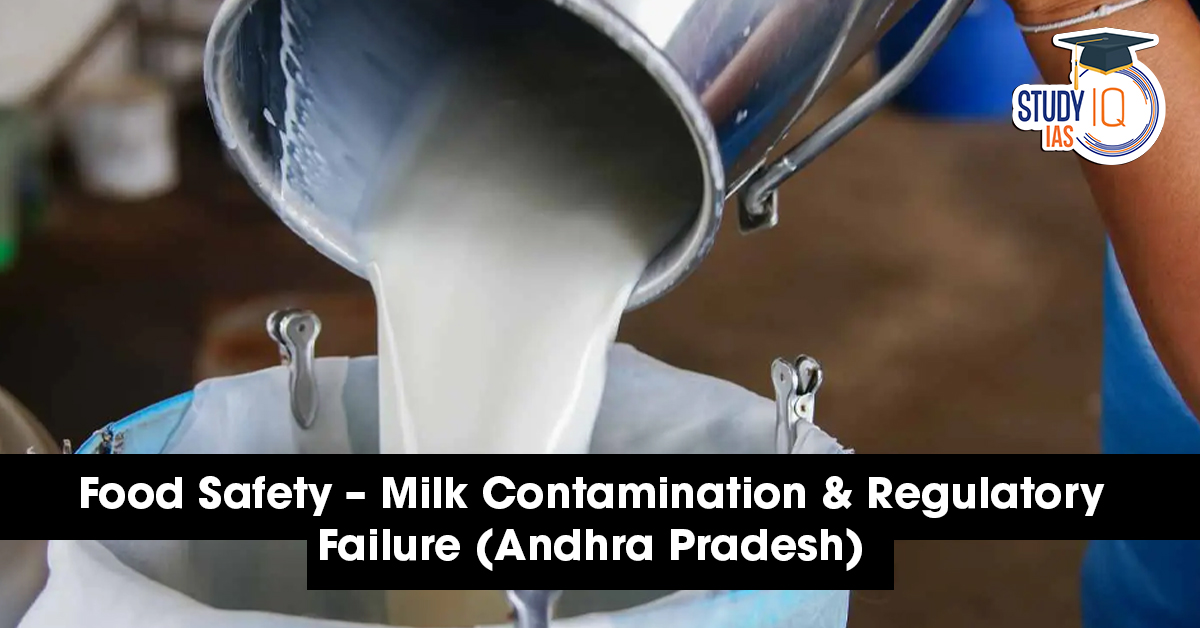
- In Rajamahendravaram, Andhra Pradesh, 11 people died and ~20 were hospitalized after consuming milk contaminated with ethylene glycol (industrial coolant).
- The dairy had been operating without a safety licence for 11 years — exposing systematic failure of FSSAI and local government oversight.
- The state invoked Sections 103 and 105 of Bharatiya Nyaya Sanhita (BNS) — treating gross food safety negligence as murder/culpable homicide.
|
Some Basics |
| ● FSSAI (Food Safety and Standards Authority of India): Established under FSS Act, 2006; under MoHFW; responsible for food safety standards, licensing, and enforcement.
● Food Safety and Standards Act, 2006: Consolidated 9 earlier food laws; provides for licensing, standards-setting, and penalties. ● Ethylene Glycol: Toxic industrial compound used in coolants; causes acute kidney failure; lethal if consumed. ● BNS Section 103: Punishment for murder (replaces IPC Section 302). ● BNS Section 105: Culpable homicide not amounting to murder (replaces IPC Section 304). ● Cold Chain Infrastructure: India lacks adequate cold chain for milk — especially for small, informal vendors — driving adulteration risk. ● Amul, Vijaya Cooperatives: Pasteurized, regulated brands — safer but not universally accessible. |
Analysis of the issue
- Paradox of Criminalization: Invoking “murder” charges is politically strong but may drive small dairy operators underground, paradoxically undermining oversight.
- Safe Harbour Provisions: Operators who voluntarily report contamination should receive reduced penalties — incentivizing transparency over concealment.
- FSSAI’s Structural Weakness: FSSAI is overstretched — it licenses all food businesses but has limited field inspection capacity; relies heavily on state food safety departments which are equally under-resourced.
- 11-Year Unlicensed Operation: Indicts both FSSAI (national standards body) and municipal/panchayat authorities (local licensing) — a classic inter-governmental coordination failure.
Way Forward
- Subsidized testing kits and cooperative chilling facilities for small dairies — reduce the cost of compliance.
- Safe harbour provisions — reduced penalties for operators who self-report contamination early.
- Mandatory GPS-linked milk van tracking and temperature-logging for all commercial milk supply chains.
- Strengthen FSSAI district-level enforcement — increase field inspectors; use AI-based audit targeting.
- Consumer awareness: Promote FSSAI’s “Eat Right India” campaign; encourage purchase from licensed cooperatives.
- Global Best Practice: EU’s HACCP (Hazard Analysis and Critical Control Points) framework — proactive safety management rather than reactive penalization.
- Constitutional Value: Article 21 (Right to Life includes right to safe food); Article 47 (DPSP — State duty to raise nutritional standards).
|
Read More Notes |
|
| Environment Notes | Art and Culture Notes |
| Science and Tech | History Notes |
| Geography Notes | Indian Polity Notes |
| General Knowledge | International Relation |
|
Explore StudyIQ Courses |
|
 Algorithmic Sovereignty Should Be Indiaâ...
 $100 Oil: Why Supply Security Matters Mo...
 Bridging the Digital Divide: Meaning, Ch...










 WhatsApp





