
Table of Contents
Context
Hate groups and terrorist organisations are increasingly exploiting online gaming platforms such as Minecraft and Roblox to radicalise and recruit children, according to counter-terrorism researchers.
Scale of the Threat
Research cited by the International Centre for Counter-Terrorism (ICCT), The Hague indicates that around 30% of counter-terrorism workloads now involve minors, some as young as 12. In North America, children account for 42% of terrorism-related investigations, reflecting a sharp rise since 2021.
Methods of Radicalisation
Extremist groups use:
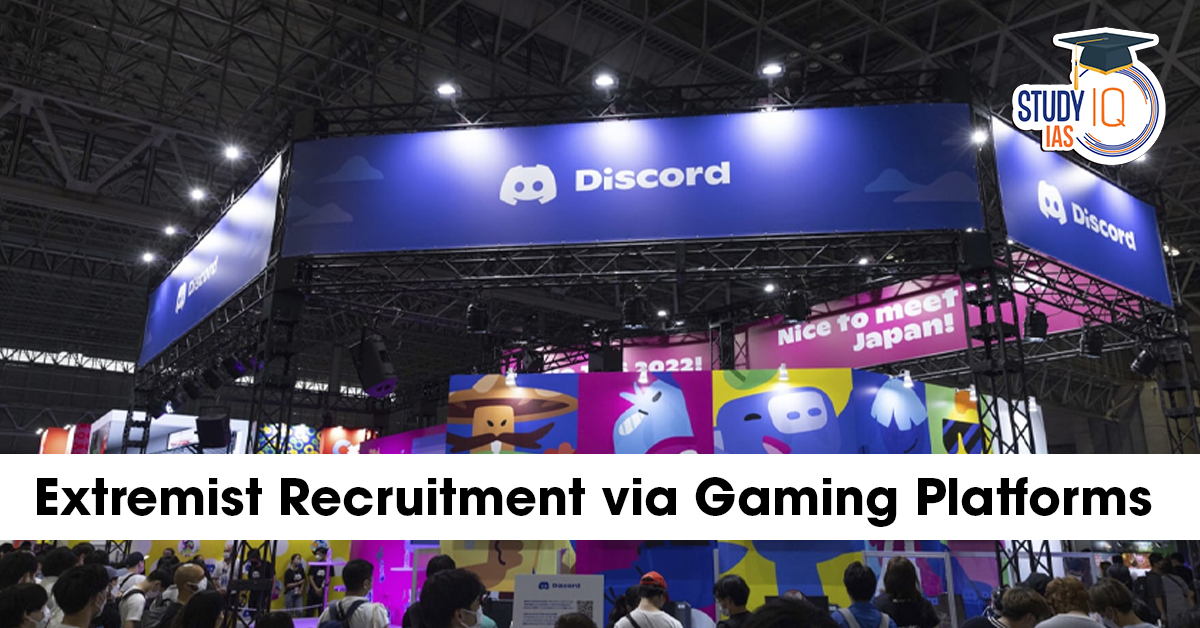
- In-game chat, private servers, and social platforms like Discord
- Custom game worlds and role-play scenarios that simulate violence, attacks, or extremist narratives
- Gradual grooming tactics, mirroring methods used in other forms of online child exploitation
Global Evidence
Security agencies in the United States, Australia, and Europe have documented cases where gaming ecosystems were used to recruit and train extremists. Investigations highlight Roblox as a particular focus due to its young user base and user-generated content.
Platform Responses
Gaming companies have introduced:
- AI-based content moderation
- In-game reporting and parental controls
- Filtering and enforcement mechanisms on official servers
Security and Policy Implications
- Radicalisation often stems from social isolation rather than ideology
- The transition from online extremism to real-world violence is unpredictable but accelerating
- Existing regulatory frameworks are not designed for interactive gaming environments
Conclusion
The use of gaming platforms for extremist recruitment represents a new frontier in digital radicalisation, demanding coordinated responses from governments, technology companies, educators, and parents to safeguard children in online spaces.
 West Bengal Elections 2026: Full Schedul...
 ISRO Launches Mission MITRA in Ladakh: A...
 Disaster Management in India, Classifica...













 WhatsApp





