
Table of Contents
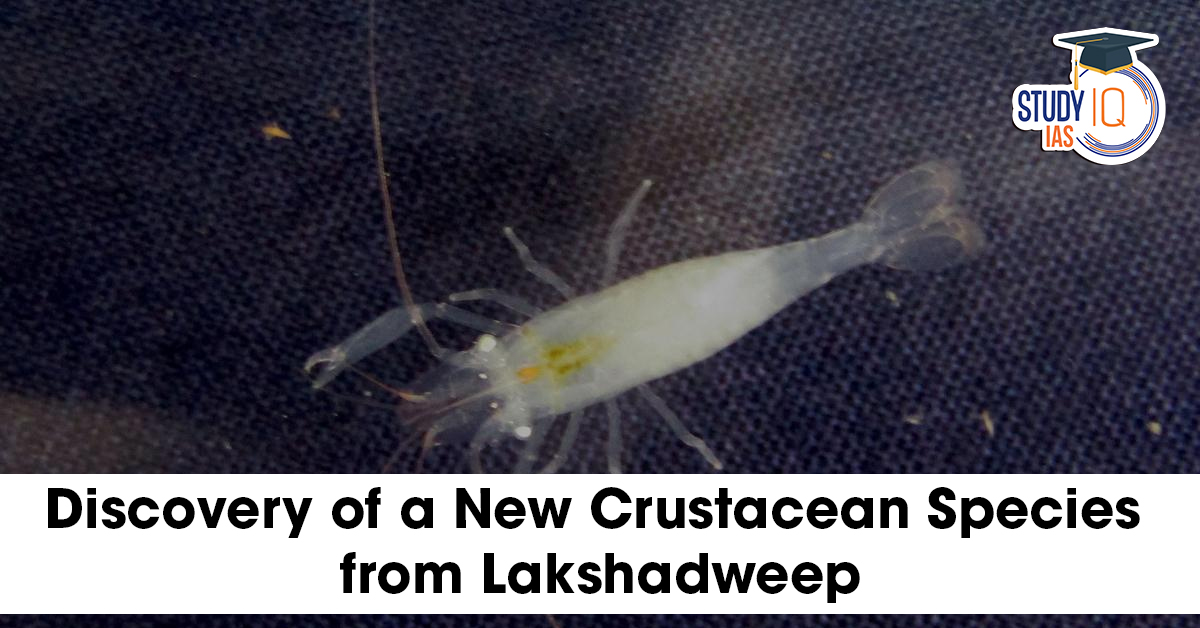
The discovery of a new microscopic crustacean species from the Kavaratti lagoon in Lakshadweep has added a significant chapter to India’s marine biodiversity. Scientists have identified a new genus and species named Indiaphonte bijoyi, highlighting the immense but largely unexplored biodiversity of India’s coral reef and lagoon ecosystems. This finding is not only important from a taxonomic point of view but also from ecological and conservation perspectives, especially for UPSC and other competitive exam aspirants.
What Has Been Discovered?
A new genus and species of microscopic crustacean has been discovered from the lagoon sediments of Kavaratti Island in Lakshadweep.
-
Scientific name: Indiaphonte bijoyi
-
Family: Laophontidae
-
Class: Copepoda
-
Order: Harpacticoida
This species is extremely small and can only be studied using a microscope. It belongs to a group of organisms known as meiofauna, which are tiny invertebrates less than 1 mm in size and live in the sediments of marine and freshwater ecosystems.
Taxonomic Classification of Indiaphonte bijoyi
| Rank | Classification |
|---|---|
| Kingdom | Animalia |
| Phylum | Arthropoda |
| Subphylum | Crustacea |
| Class | Copepoda |
| Order | Harpacticoida |
| Family | Laophontidae |
| Genus | Indiaphonte |
| Species | bijoyi |
This discovery is remarkable because it introduces a new genus, not just a new species, indicating a completely unique evolutionary lineage.
What is Meiofauna?
Meiofauna refers to microscopic organisms that:
-
Are smaller than 1 mm
-
Live in sediments of marine and freshwater ecosystems
-
Include nematodes, copepods, and small crustaceans
-
Form an essential part of the benthic ecosystem
Despite their tiny size, meiofauna are crucial for maintaining the health and stability of aquatic ecosystems.
Ecological Importance of Indiaphonte bijoyi
Even though Indiaphonte bijoyi is microscopic, it plays several vital roles:
-
Nutrient Cycling
-
Helps decompose organic matter
-
Facilitates recycling of nutrients in marine sediments
-
-
Sediment Health
-
Improves sediment structure and oxygenation
-
Enhances microbial activity
-
-
Marine Food Webs
-
Acts as food for small fishes, larvae, and other invertebrates
-
Forms the base of the marine trophic pyramid
-
-
Indicator of Ecosystem Health
-
Sensitive to pollution and environmental changes
-
Used as a bioindicator for assessing lagoon and coral reef health
-
Thus, meiofauna like Indiaphonte bijoyi are excellent tools for monitoring marine ecosystem stability.
Why is This Discovery Important?
The discovery has multiple dimensions of significance:
-
Scientific Value:
-
Enriches global biodiversity records
-
Enhances understanding of crustacean evolution
-
-
Ecological Value:
-
Shows the hidden biodiversity of Indian lagoons
-
Highlights the importance of sediment ecosystems
-
-
Conservation Value:
-
Strengthens the case for protecting fragile island ecosystems
-
Supports sustainable coastal and marine management
-
-
UPSC Relevance:
-
Topics: Biodiversity, Environment, Marine ecosystems, Conservation
-
Static + Current Affairs integration
-
About Kavaratti (Karavatti) Island
Kavaratti is an atoll in the Indian Union Territory of Lakshadweep and holds immense strategic, ecological, and administrative importance.
-
Capital of Lakshadweep
-
Located about 360 km west of the Malabar Coast in mainland India
-
Known for:
-
Coral reefs
-
Lagoons
-
Rich marine biodiversity
-
Lakshadweep consists of:
-
12 atolls
-
5 submerged banks
-
3 coral reefs
These features make it one of the most sensitive and ecologically rich marine regions of India.
Kavaratti and the Smart Cities Mission
Kavaratti has been selected as one of the 100 cities under India’s flagship Smart Cities Mission.
This shows a balanced development approach that integrates:
-
Sustainable urban planning
-
Marine ecosystem conservation
-
Eco-friendly tourism
-
Modern infrastructure with environmental safeguards
Link Between Biodiversity and Sustainable Development
The discovery of Indiaphonte bijoyi reinforces the idea that:
“Development and conservation must go hand in hand.”
Lakshadweep’s fragile ecosystems require:
-
Scientific monitoring
-
Strict environmental regulations
-
Responsible tourism
-
Protection of lagoon and coral reef habitats
Microscopic species often go unnoticed, yet their extinction could destabilize entire marine food chains.
UPSC Prelims & Mains Pointers
Prelims Facts:
-
Indiaphonte bijoyi → New genus & species
-
Family → Laophontidae
-
Class → Copepoda
-
Order → Harpacticoida
-
Discovered from → Kavaratti lagoon sediments
-
Type → Meiofauna (<1 mm)
Mains Linkages:
-
Role of meiofauna in marine ecosystems
-
Importance of biodiversity documentation
-
Conservation of island ecosystems
-
Smart Cities Mission and sustainable coastal development
Conclusion
The discovery of Indiaphonte bijoyi from Lakshadweep is a reminder that some of the most important components of biodiversity are invisible to the naked eye. This microscopic crustacean plays a massive role in sustaining marine ecosystem health, nutrient cycling, and sediment stability.
At a time when marine ecosystems are under threat from climate change, pollution, and unregulated tourism, such discoveries emphasize the urgent need to protect India’s coastal and island biodiversity. Lakshadweep, with Kavaratti at its heart, stands as a living laboratory of marine life and a symbol of sustainable coexistence between nature and development.
 Shia Politics in India: History, Influen...
 Future of Chipmaking: Trends, Technologi...
 Nucleic Acid Testing (NAT): Meaning, Wor...











 WhatsApp





