
Table of Contents
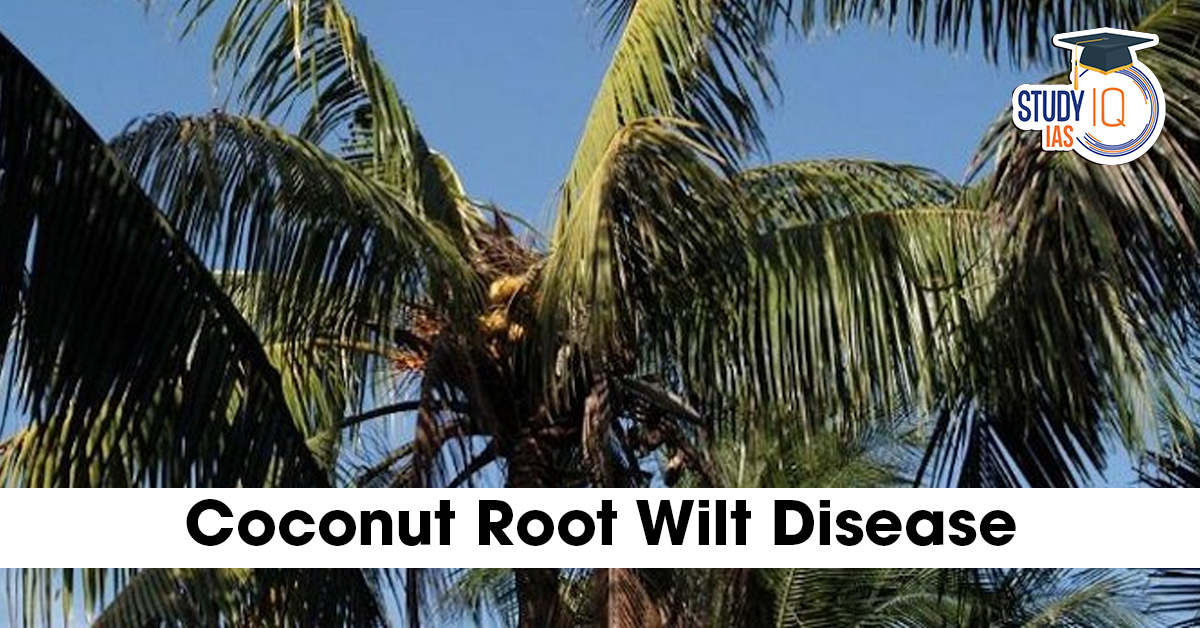
Coconut Root Wilt Disease (RWD) is a serious and chronic disease affecting coconut palms in India, especially in the southern states. It is caused by phytoplasma, a type of bacteria-like organism that lives in plant tissues and is transmitted by sap-sucking insects. The disease has destroyed large coconut-growing areas in Kerala, Karnataka, and Tamil Nadu, affecting more than 30 lakh coconut palms. It has emerged as a major challenge to India’s coconut economy and rural livelihoods.
Nature of the Disease
Coconut Root Wilt Disease is:
-
Chronic and progressive, meaning once infected, the palm cannot be fully cured.
-
Spread mainly through insect vectors and aggravated by climatic stress, monoculture plantations, and continuous coconut belts.
-
A major constraint to sustainable coconut production in India.
Causes of Coconut Root Wilt Disease
-
Phytoplasma Infection
-
The primary cause is phytoplasma that blocks nutrient transport in the plant.
-
It weakens the palm gradually and leads to long-term decline.
-
-
Insect Vectors
-
Spread by sap-sucking insects that carry phytoplasma from infected to healthy palms.
-
-
Climatic Stress
-
Rising temperatures, drought conditions, and irregular rainfall weaken coconut palms, making them more vulnerable.
-
-
Continuous Coconut Belts
-
Large uninterrupted coconut plantations help faster disease transmission.
-
-
Wind Movement
-
Helps spread insect vectors over wider areas.
-
Symptoms of Root Wilt Disease
The disease affects all parts of the coconut palm and shows clear visible signs:
-
Leaf Symptoms
-
Flaccidity (drooping of leaves)
-
Yellowing and ribbing of leaflets
-
Reduced photosynthesis
-
-
Root Symptoms
-
Root decay
-
Reduced water and nutrient absorption
-
-
Reproductive Symptoms
-
Reduced flowering
-
Poor nut setting
-
Decreased coconut yield
-
-
Overall Plant Health
-
Chronic weakening of palms
-
Gradual decline in productivity
-
Increased susceptibility to pests and drought
-
Affected States in India
Coconut Root Wilt Disease mainly affects:
-
Kerala – Most severely impacted
-
Karnataka
-
Tamil Nadu
These states together account for a major share of India’s coconut production, making the disease a national agricultural concern.
Economic Impact
-
Decline in Coconut Production
-
Reduced nut yield leads to heavy losses for farmers.
-
-
Loss of Farmer Income
-
Coconut is a major cash crop in southern India.
-
Yield loss causes economic distress, especially for small and marginal farmers.
-
-
Impact on Allied Industries
-
Coconut-based industries such as oil extraction, coir, and handicrafts suffer.
-
-
Disruption of Intercropping Systems
-
Coconut plantations support shade-loving crops like pepper, cocoa, and banana.
-
When coconut palms weaken or die, intercropping systems collapse.
-
-
Increased Rural Vulnerability
-
Loss of livelihood
-
Migration
-
Reduced economic stability in rural areas
-
Impact on Agricultural Sustainability
Root Wilt Disease weakens the resilience of coconut-based farming systems by:
-
Reducing biodiversity
-
Increasing dependency on chemical inputs
-
Making plantations more vulnerable to climate change
This threatens long-term agricultural sustainability in coastal and tropical regions.
Coconut Cultivation in India (Quick Facts)
| Factor | Requirement |
|---|---|
| Climate | Warm and humid |
| Temperature | 20°C–25°C |
| Rainfall | Above 150 cm annually |
| Soil | Deep, well-drained, sandy or lateritic |
| Major Producing States | Kerala, Tamil Nadu, Karnataka, Andhra Pradesh |
Management and Control Measures
-
Integrated Pest Management (IPM)
-
Control insect vectors using eco-friendly methods.
-
-
Removal of Severely Affected Palms
-
Prevents spread of disease.
-
-
Use of Resistant Varieties
-
Development and promotion of tolerant coconut varieties.
-
-
Nutrient Management
-
Balanced fertilization improves plant immunity.
-
-
Climate-Resilient Practices
-
Irrigation support during droughts
-
Mulching and organic farming practices
-
Way Forward
-
Strengthening early detection systems
-
Promoting scientific plantation management
-
Investing in phytoplasma research
-
Supporting farmers through subsidies and crop insurance
-
Encouraging diversification to reduce dependence on coconut alone
Conclusion
Coconut Root Wilt Disease is not just a plant disease but a socio-economic and environmental challenge. It threatens India’s coconut economy, farmer livelihoods, and rural stability. Addressing it requires an integrated approach combining scientific research, sustainable agriculture, climate adaptation, and policy support.
 Shia Politics in India: History, Influen...
 Future of Chipmaking: Trends, Technologi...
 Nucleic Acid Testing (NAT): Meaning, Wor...











 WhatsApp





