
Table of Contents
India stands as one of the world’s largest producers of coconuts, a crop deeply woven into the cultural fabric, agricultural economy, and culinary traditions of the country. From the sun-drenched coastlines of Kerala to the fertile plains of Tamil Nadu and Karnataka, coconut palms — often called the “Kalpavriksha” or Tree of Life — blanket millions of hectares across the nation.
Whether you’re an aspiring farmer, an agribusiness professional, or a student of agricultural sciences, understanding the full landscape of coconut cultivation in India is essential. This comprehensive guide covers everything: climate needs, soil preferences, major producing states, cultivation practices, and the enormous economic importance of this iconic palm crop.
What Is Coconut Cultivation?
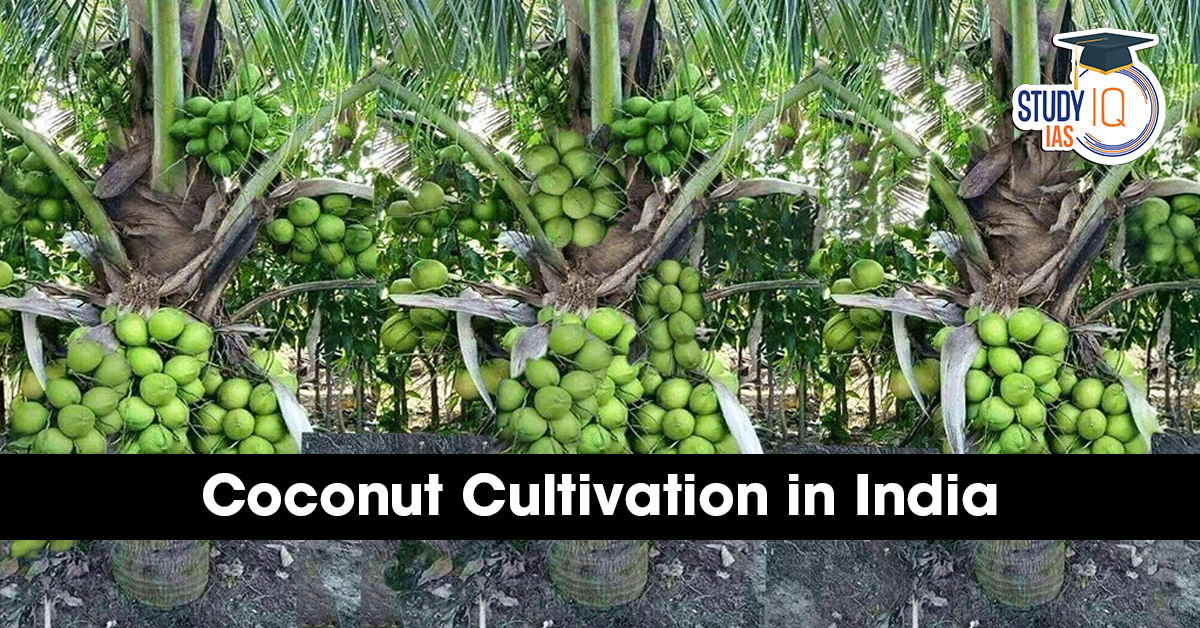
Coconut cultivation refers to the systematic farming of Cocos nucifera, a tall perennial palm that thrives in tropical coastal environments. The coconut palm is one of the most versatile crops in the world — virtually every part of the tree, from its fruit to its trunk, leaves, and roots, is commercially useful.
In India, coconut farming is both a subsistence activity for smallholder farmers and a large-scale commercial enterprise supplying global markets with copra, coconut oil, coir, coconut water, and more.
Climate Requirements for Coconut Cultivation in India
Coconut palms are quintessential tropical plants with very specific climate needs. Meeting these requirements is crucial for high yields and long-term productivity.
1. Temperature
- Optimal Range: 27°C (80°F), with a variation between 20°C and 34°C
- Coconut palms do not tolerate frost or temperatures below 15°C
- Prolonged cold spells can stunt growth, reduce flowering, and damage fruit set
2. Rainfall
- Annual Rainfall Requirement: 1,500 mm to 2,500 mm, distributed evenly throughout the year
- Coconut palms are sensitive to prolonged dry spells; at least 50 rain days per year are ideal
- In areas with low rainfall, supplementary drip irrigation is widely practiced
3. Humidity
- Relative Humidity: 80–90% is ideal
- High atmospheric moisture promotes healthy vegetative growth and fruit development
- Coastal regions naturally provide this humidity, making them prime coconut-growing belts
4. Sunlight
- Coconut palms are highly photophilous (light-loving)
- A minimum of 2,000 hours of sunshine per year is required for optimal yield
- Shading from tall trees or structures significantly reduces productivity
5. Wind
- Moderate winds are beneficial for pollination
- However, strong cyclonic winds can damage or uproot palms, particularly a concern in coastal Odisha and Andhra Pradesh
6. Altitude
- Coconut cultivation is best suited to elevations below 600 metres above sea level
- Farming at higher altitudes reduces growth rate, yield, and oil content in copra
Soil Requirements for Coconut Cultivation
The right soil is as important as the right climate. Coconut palms are relatively adaptable but perform best under specific conditions.
| Soil Parameter | Ideal Condition |
|---|---|
| Soil Type | Sandy loam, laterite, alluvial, or red sandy loam |
| pH Range | 5.5 to 8.0 (slightly acidic to mildly alkaline) |
| Drainage | Well-drained; waterlogging is harmful |
| Depth | Deep soils (at least 1.2 metres) preferred |
| Salinity | Tolerates mild salinity; grows well in coastal soils |
Coconut palms can also thrive in reclaimed marshy lands and deltaic soils, which is why they are abundantly found in river delta regions of South India.
Major Coconut-Producing States in India
India’s coconut belt is concentrated in the southern and coastal regions of the country. Together, the top four states account for over 90% of the nation’s total coconut production.
1. Kerala — The Coconut State
Kerala is synonymous with the coconut palm. The very name “Kerala” is believed to be derived from the Malayalam word “Kera” (coconut tree) and “alam” (land) — literally, “Land of Coconuts”.
- Area under cultivation: Approximately 8–9 lakh hectares
- Contribution: Nearly 35–40% of India’s total coconut production
- Coconut oil from Kerala is a staple cooking medium and a key export commodity
- The state is a major producer of coir (coconut fibre) and coir-based products
- Kerala’s Thiruvananthapuram, Kollam, Kozhikode, and Thrissur districts are top producers
2. Tamil Nadu — The Leading Producer
Tamil Nadu has, in recent years, surpassed Kerala in terms of total coconut production volume, thanks to high-yielding hybrid varieties and intensive farming practices.
- Key Districts: Coimbatore, Tirupur, Erode, Thanjavur, and Pollachi
- Tamil Nadu leads in the production of coconut-based industrial products, including desiccated coconut, coconut milk, and coconut cream
- The state has invested heavily in drip irrigation for coconut cultivation in water-scarce regions
- Pollachi is often called the “Coconut City of India,” serving as a major trading hub
3. Karnataka — The Rising Contributor
Karnataka has emerged as a significant coconut producer, particularly in its coastal and transitional districts.
- Key Districts: Tumkur, Hassan, Chitradurga, Mandya, and Coastal Dakshina Kannada
- Tumkur is the largest non-coastal coconut-producing district in Asia
- Karnataka is known for both tender coconut (for drinking) and mature coconut (for oil extraction)
- The state government actively promotes coconut cultivation through subsidies and farm support schemes
4. Andhra Pradesh and Telangana
These states contribute significantly to India’s overall output, particularly from their Krishna-Godavari delta regions.
- Key Districts (AP): Krishna, Guntur, East Godavari, West Godavari, and Nellore
- Andhra Pradesh is a prominent producer of tender coconuts and copra
- The coastal belt benefits from fertile alluvial soils and adequate monsoon rainfall
5. Other Contributing States
- Odisha – Coastal Puri and Ganjam districts
- Goa – Small-scale but high-quality coastal production
- Maharashtra – Konkan belt (Ratnagiri, Sindhudurg)
- Assam & West Bengal – Limited but growing cultivation in humid sub-tropical zones
- Lakshadweep & Andaman Islands – High-density coconut farming in island ecosystems
Coconut Varieties Cultivated in India
India grows a diverse range of coconut varieties, broadly classified as Tall, Dwarf, and Hybrid types.
Tall Varieties
- West Coast Tall (WCT) – Most widely cultivated; hardy and long-lived
- East Coast Tall (ECT) – Popular in Tamil Nadu and Andhra Pradesh
- Laccadive Ordinary – Grown in island territories
Dwarf Varieties
- Chowghat Orange Dwarf (COD) – Used for tender coconut production
- Malayan Yellow Dwarf – Early bearing and high yielding
Hybrid Varieties
- Kera Sagara (WCT × COD) – High copra content
- Chandrasankara – Disease-resistant with high yield
- Kerasree – Popular in Kerala for tender coconut markets
- D×T Hybrids – Widely promoted by the Coconut Development Board
Cultivation Practices and Agronomic Management
Land Preparation
- Deep ploughing and levelling of the field
- Pits of 1m × 1m × 1m are dug and filled with a mixture of topsoil, compost, and sand
- Planting distance: 7.5m × 7.5m (square system) or 9m × 9m for tall varieties
Planting Season
- June to December (post-monsoon onset) is the ideal planting window
- Pre-monsoon planting is also done in irrigated conditions
Irrigation
- Young palms require regular watering for the first 3–4 years
- Mature palms need watering every 7–10 days in summer
- Drip irrigation reduces water use by up to 40% while boosting yields
Manuring and Fertilization
- Coconut responds well to organic manures: Farm Yard Manure (FYM), green manures, and vermicompost
- NPK application at recommended rates by the Coconut Development Board
- Green manuring with Mucuna and Tephrosia helps build soil organic matter
Intercropping
Intercropping is widely practised in coconut gardens to maximize land use efficiency. Common intercrops include:
- Banana, pineapple, pepper (short-term intercrops)
- Cocoa, cloves, nutmeg (long-term intercrops)
- Fodder crops and vegetables (seasonal intercrops)
- Intercropping can boost a farmer’s income by 30–50%
Pest and Disease Management
Major Pests:
- Rhinoceros Beetle (Oryctes rhinoceros) – Most destructive; damages spear leaves
- Red Palm Weevil (Rhynchophorus ferrugineus) – Causes severe internal damage
Major Diseases:
- Root Wilt Disease – Unique to Kerala; causes significant economic loss
- Bud Rot (caused by Phytophthora palmivora) – Common in waterlogged regions
- Lethal Yellowing – Spread by insect vectors
Management Strategies:
- Integrated Pest Management (IPM) using pheromone traps, biocontrol agents, and chemical treatments
- Use of disease-resistant hybrid varieties
- Regular monitoring and early detection
Economic Importance of Coconut Cultivation in India
The coconut palm is aptly called the Tree of Life because of its extraordinary economic contributions at multiple levels — from the smallholder farm to the national export market.
1. Income Source for Millions of Farmers
- Coconut is cultivated across approximately 2.2 million hectares in India
- Over 10 million farm families depend on coconut for their primary or supplementary income
- Small and marginal farmers in Kerala, Tamil Nadu, and Karnataka are heavily reliant on coconut revenue
2. Contribution to Agricultural GDP
- India’s coconut sector contributes significantly to the agricultural economy
- The total value of coconut and coconut products in India exceeds ₹25,000 crore annually
- India is one of the world’s top three coconut-producing countries alongside the Philippines and Indonesia
3. Major Products and Their Economic Value
| Product | Use | Economic Significance |
|---|---|---|
| Coconut Oil | Cooking, cosmetics, pharmaceuticals | Dominant edible oil in South India |
| Copra | Oil extraction, animal feed | Major export commodity |
| Coir Fibre | Ropes, mats, geotextiles | Large cottage industry employer |
| Coconut Water | Health beverage | Rapidly growing export market |
| Desiccated Coconut | Food ingredient, bakery | High-value processed export |
| Shell Charcoal | Activated carbon, fuel | Industrial and export demand |
| Toddy (Neera) | Fermented beverage, jaggery | Socioeconomic significance in Kerala |
| Coconut Husk | Coir products, fuel | Zero-waste utilisation |
4. Coir Industry — A Unique Employment Generator
- India produces over 80% of the world’s coir fibre
- The coir industry employs approximately 7 lakh workers, predominantly women in Kerala
- Coir products — mats, mattresses, ropes, and geotextiles — are exported to over 80 countries
- India’s coir exports exceed ₹3,000 crore annually
5. Export Potential and Foreign Exchange
- India exports coconut and coconut products to the USA, European Union, Middle East, and Southeast Asian nations
- Key exports include virgin coconut oil (VCO), desiccated coconut, coir products, and coconut shell charcoal
- VCO has seen a dramatic rise in global demand due to its health and wellness properties
- The global coconut products market is projected to grow to USD 31 billion by 2030, and India is well-positioned to capture a larger share
6. Nutritional and Health Economy
- Coconut water is a natural electrolyte-rich beverage gaining massive traction in the health food industry
- Virgin coconut oil is prized in the nutraceutical and cosmetic sectors globally
- The rise of plant-based diets and natural ingredient trends is boosting coconut product demand worldwide
7. Role in Rural Employment and Livelihoods
- Coconut cultivation creates direct and indirect employment in farming, processing, transport, and trade
- The coconut value chain — from farm to consumer — engages a wide spectrum of rural and semi-urban labour
- Cottage industries based on coconut shell, leaves, and husk products provide year-round supplementary income
Government Support and Key Institutions
The Government of India recognizes the strategic importance of coconut cultivation and actively supports the sector through:
Coconut Development Board (CDB)
- Established under the Coconut Development Board Act, 1979
- Headquarters in Kochi, Kerala
- Functions: Research, development, promotion, and regulation of the coconut sector
- Key schemes: Distribution of quality planting material, area expansion, rejuvenation of old palms, and technology dissemination
National Coconut Development Programme (NCDP)
- Focuses on improving productivity through better varieties, better practices, and farmer training
Central Plantation Crops Research Institute (CPCRI)
- Located in Kasaragod, Kerala
- Leads scientific research in coconut breeding, pest management, and post-harvest technologies
PM-KISAN and Other Subsidy Schemes
- Farmers engaged in coconut cultivation are eligible for direct income support and input subsidies under various central and state government programmes
Challenges Facing Coconut Cultivation in India
Despite its strengths, the Indian coconut sector faces several pressing challenges:
- Aging Palm Population – A large proportion of coconut palms in Kerala and Tamil Nadu are over 60 years old, with declining yields
- Labour Scarcity – Climbing coconut palms for harvesting is physically demanding; labour shortages are increasing
- Price Volatility – Coconut and copra prices fluctuate significantly, affecting farmer income security
- Climate Change – Irregular rainfall, droughts, and cyclones increasingly threaten coastal coconut farms
- Pest and Disease Pressure – Rhinoceros beetle and Root Wilt Disease remain persistent threats in Kerala
- Limited Processing Infrastructure – Value addition at the farm level remains insufficient in many regions
Emerging Solutions
- Mechanical Climbers & Drones for harvest assistance
- Microdrip Irrigation to combat water stress
- Farmer Producer Organizations (FPOs) for collective bargaining
- Agri-tech startups offering precision farming tools for coconut gardens
Future Outlook for Coconut Cultivation in India
The future of Indian coconut farming is bright, driven by rising global demand for natural, health-conscious products. Key growth areas include:
- Virgin Coconut Oil (VCO) production and export
- Coconut water as a premium health beverage
- Organic coconut farming catering to premium international markets
- Coir geotextiles for environmental and civil engineering applications
- Coconut-based biofuels and activated carbon for industrial use
With the right policy support, technological upgradation, and market access, India can significantly enhance its position as a global leader in coconut products.
|
Read More Notes |
|
| Environment Notes | Art and Culture Notes |
| Science and Tech | History Notes |
| Geography Notes | Indian Polity Notes |
| General Knowledge | International Relation |
|
Explore StudyIQ Courses |
|
 Tiniest QR Code: Scientists Develop Ultr...
 Rupture Across the Durand Line: Rising T...
 Why Berbera Port Matters: Israel’s Rec...











 WhatsApp





