
Table of Contents
The Chandela Dynasty was a prominent medieval ruling dynasty that flourished in central India between the 9th and 13th centuries. Centred in the region of Bundelkhand (present-day Madhya Pradesh and Uttar Pradesh), the Chandelas rose to power after the decline of the Gurjara-Pratiharas and established a strong and culturally rich kingdom.
They are best known for their remarkable contributions to art and architecture, especially the iconic Khajuraho Group of Monuments, which are celebrated for their intricate carvings and architectural excellence. The dynasty played a significant role in shaping regional politics, culture, and temple architecture in medieval India.
Origin and Foundation of the Chandela Dynasty
- Founder: Nannuka (831–845 CE).
- Clan: High-ranking Rajputs; claimed descent from the Moon (Chandravanshi).
- Early Status: Feudatories (Mandalikas) of the Gurjara-Pratiharas.
- Region: Jejakabhukti (Named after Jayashakti/Jaejak, grandson of Nannuka).
- Genealogy Source: The Khajuraho Inscription of 954 CE provides the most complete lineage.
- Mythological Origin: Claimed birth from the union of Hemavati (daughter of a royal priest) and the Moon God.
- Predecessor of Nannuka: Some sources mention Chandravarman as the legendary founder, but Nannuka is the historically verified founder.
Political Chronology & Great Rulers of Chandela Dynasty
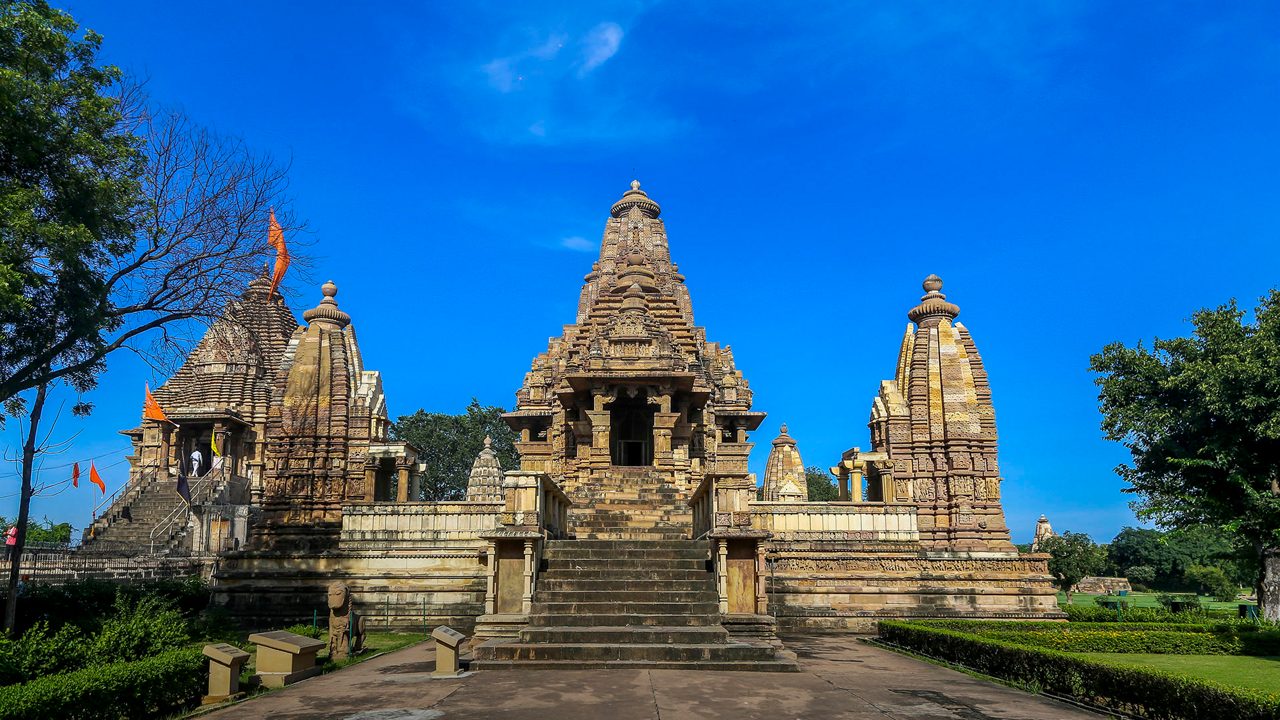
- Yashovarman (Lakshavarman): The first virtually independent ruler. He captured the Kalinjar Fort and built the Lakshmana Temple to house the Vaikuntha idol.
- Dhangadeva (Dhanga): The most powerful early king. He achieved total sovereignty.
- Built the Vishvanatha and Parshvanatha temples.
- Extended the empire to Gwalior and Varanasi.
- Died via Jala-Samadhi at the Sangam (Prayag).
- Vidyadhara: The zenith of Chandela power.
- The Shield of India: Successfully resisted Mahmud Ghaznavi (1019 & 1022 CE).
- Punished/Killed the Pratihara king Rajyapala for fleeing from the invaders.
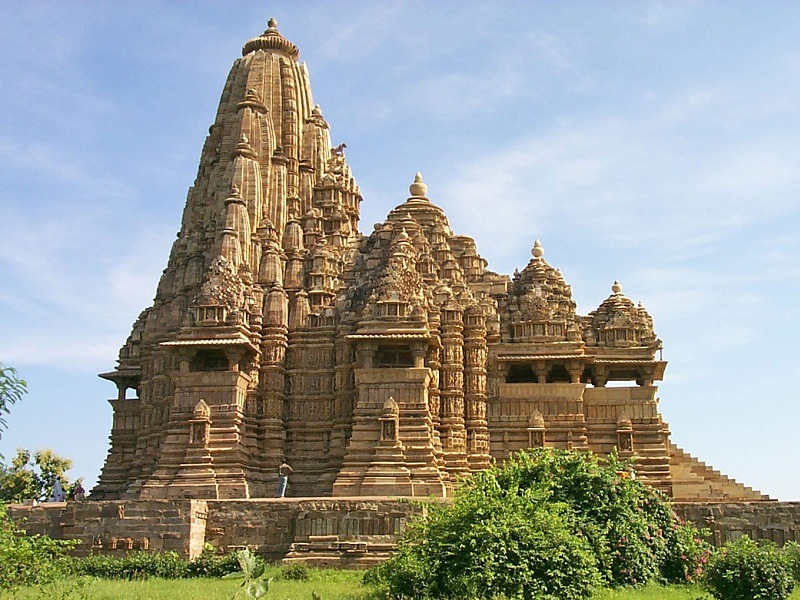
- Commissioned the Kandariya Mahadeva Temple.
- Kirtivarman: The “Restorer.” Defeated the Kalachuri king Lakshmi-Karna.
- Issued Gold Coins (Seated Lakshmi style).
- Built Kirat Sagar (Mahoba).
- Paramardi Deva (Parmal): The last great imperial ruler.
- Defeated by Prithviraj Chauhan (Battle of Mahoba, 1182 CE).
- Famous for the sacrifice of generals Alha and Udal.
- Lost Kalinjar to Qutb-ud-din Aibak in 1202 CE.
- Harsha (905–925 CE): The “Kingmaker.” He helped the Pratihara King Mahipala I regain the throne of Kannauj against the Rashtrakutas, significantly elevating the Chandela status.
- Vakpati: Mentioned in inscriptions as a great warrior who made the Vindhya Mountains his pleasure garden (Vindhya-krida-parvata).
- Ganda Deva: Often skipped, but he was the ruler between Dhanga and Vidyadhara; he continued the construction of the Khajuraho complex.
- Madanavarman: Built the Madan Sagar lake and the Vishnu temple at Ajaigarh. He is credited with defeating the Gurjara king Siddharaja Jayasimha.
- Hammiravarman: The last known king of the imperial line (early 14th century).
- Alha-Udal’s Clan: They belonged to the Banaphar clan. The battle they died in (1182 CE) is specifically called the Battle of Mahoba or the Battle of Sirswagarh.
- Importance of Kalinjar Fort: Even when the Chandelas lost territorial control of the plains, they continued to use the title Kalanjaradhipati (Lord of Kalinjar). This was not just a title, but their “Imperial Identity.” In the medieval period, holding Kalinjar was synonymous with being the legitimate protector of Aryavarta.
- Importance of Ajaigarh (Jaya-pura-durga): This was the “Reserve Capital.” Whenever Kalinjar was under heavy siege (by Mahmud Ghaznavi or later the Delhi Sultanate), the royal family and the treasury were moved to Ajaigarh.
Administration & Economy of Chandela Dynasty
- Capitals: Shifted from Khajuraho (Religious/Cultural) to Mahoba (Political) to Kalinjar (Military).
- Administrative Units: Divided into Bhuktis (provinces), Vishayas (districts), and Gramas (villages).
- Family Deity: Maniya Devi (Shrine at Mariyado & Kalinjar).
- Water Management: Known for massive stone-embanked lakes (e.g., Rahilya Sagar, Kirat Sagar, Madan Sagar).
- “Barhot” Equivalent: Chandelas used the “Chaurasi“ (group of 84 villages) system for revenue, similar to the Gonds, based on 12 villages (Barhot) later on.
- Title of the King: High-ranking kings used the title Paramabhattaraka-Maharajadhiraja-Paramesvara.
- Key Officials:
- Mantri/Wazir: Prime Minister (often hereditary).
- Sandhivigrahika: Minister of War and Peace.
- Akshapatalika: Keeper of Records.
- Kottapala: Fort Commander (crucial for Kalinjar).
- Taxation: Known as Bhaga (land tax) and Hiranya (tax paid in cash/gold).
- Trade: Mentions of the Sresthis (Guild Presidents) who funded temple maintenance.
- Hereditary nature of ministers: Mau Inscription refers to the hereditary succession of the Prabhasha Family. This family served as Chief Ministers (Mantrimukhya) from the reign of Dhanga to Kirtivarman. This 150-year ministerial continuity is why the Chandelas managed to build the world’s most complex temples while fighting constant wars.
- Panchakula system in village administration: While hereditary elites ruled the centre, the villages were governed by a committee called the Panchakula (an ancestor of the modern Panchayat). This dual-layered administration (Centralised Ministers + Decentralised Village Councils)
Art & Architecture of Chandelas (Khajuraho)
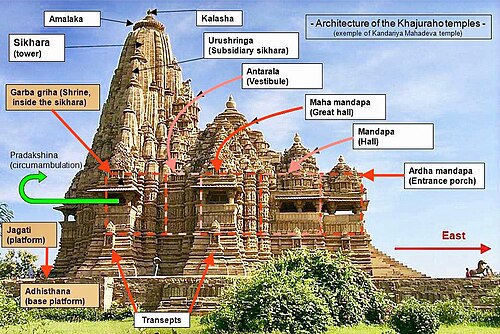
- Style: Nagara Style (characterised by high shikharas and panchayatana layout).
- Material: Built mostly using buff-colored sandstone (except Chausath Yogini, which is granite).
- The Khajuraho temples are unique because they lack an enclosure wall, sitting directly on a high platform (Adhisthana).
- Phases:
- Early: Lakshmana Temple (Yashovarman).
- Peak: Vishvanatha & Kandariya Mahadeva (Dhanga & Vidyadhara).
- Jain Influence: Parshvanatha & Adinatha temples.
- Key Feature: The “Adhisthana” (high platform) and intricate carvings depicting religious, social, and erotic themes.
- Sandhara: Temples with an internal circumambulation path (Pradakshina Patha) inside the sanctum. Examples: Lakshmana, Vishvanatha, Kandariya Mahadeva.
- Nirandhara: Temples without this internal path. Examples: Adinatha, Chaturbhuja.
Critical Literary Sources about Chandelas
- Prabodha-Chandrodaya (Krishna Misra): Dramatises Kirtivarman’s victory.
- Prithviraj Raso (Chand Bardai): Details the fall of Mahoba. The lore of Alha and Udal is preserved in the “Mahoba Khand” section of the Prithviraj Raso. These warriors were Banaphar Rajputs, and their sacrifice is still celebrated in the folk songs of Bundelkhand (Alha Gayan).
- Akbarnama/Ain-i-Akbari: Records the wealth and elephants of the region.
- Mahoba Copper Plate: Essential for understanding land grants and village administration.
- Sarvadeshvrittant Sangrah (Mahesh Thakur): Though it later references the region’s historical legacy.
- Kavyamimansa (Rajasekhara): Mentions the political geography of Central India during the Chandelas’ rise.
Inscriptions about Chandelas
- Inscriptions: Khajuraho Inscription (954 CE) and Ajaygarh Rock Inscription.
- Kalinjar Rock Inscription: Provides details on the military fortifications.
- Dudhai Stone Inscription: Mentions Devalabdhi (son of Kirtivarman).
- Mau Inscription: Details the administrative brilliance of the Chandela ministers.

 Comprehensive List of Ancient and Mediev...
 Civil Disobedience Movement (CDM): Cause...
 Mahad Satyagraha 1927, History and Signi...









 WhatsApp





