
Table of Contents
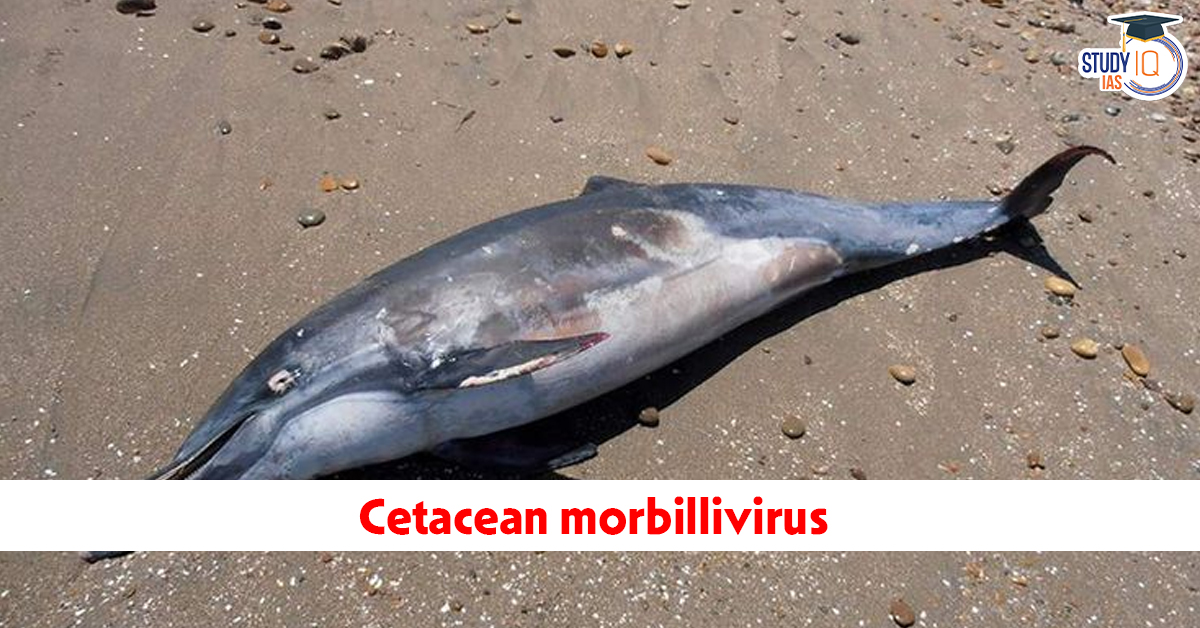
Cetacean morbillivirus (CeMV) is a highly infectious viral disease affecting marine mammals, increasingly recognised as a serious threat to ocean biodiversity. Recent scientific detection of this virus in Arctic waters for the first time, using drone-based whale breath sampling, has brought global attention to emerging disease risks linked to climate change, shifting migration routes, and ecosystem stress.
This SEO-focused article explains what cetacean morbillivirus is, where it is found, how it spreads, its ecological impact, and why it matters for conservation and competitive exams.
What is Cetacean Morbillivirus?
Cetacean morbillivirus is a contagious viral disease that affects:
-
Whales
-
Dolphins
-
Porpoises
-
Pilot whales
It belongs to the morbillivirus family, the same group of viruses that includes measles in humans and canine distemper in dogs. The virus primarily attacks the respiratory, immune, and nervous systems, often leading to severe illness or death.
Origin and Evolution
-
First identified in 1987
-
Believed to have evolved from terrestrial morbilliviruses
-
Later adapted to marine mammals
-
Spread is facilitated by social behaviour and close contact among cetaceans
Where is Cetacean Morbillivirus Found?
Earlier Distribution
-
North Atlantic Ocean
-
Mediterranean Sea
-
Pacific Ocean
New Scientific Finding
-
Recently detected in Arctic waters
-
Identified among:
-
Humpback whales
-
Sperm whales
-
This marks a significant northward expansion of the virus’s known range.
How Does Cetacean Morbillivirus Spread?
-
Direct contact between infected animals
-
Aerosolised respiratory droplets, released through whale blow
-
Close grouping and migratory overlap increase transmission risk
-
Can cross species barriers among different cetacean species
Key Features of Cetacean Morbillivirus
-
Highly infectious and fast-spreading
-
Causes immunosuppression, making animals vulnerable to secondary infections
-
Often detected post-mortem, complicating early surveillance
-
Capable of triggering large-scale outbreaks
Health and Ecological Impact
On Marine Mammals
-
Severe pneumonia and respiratory failure
-
Neurological disorders
-
Mass strandings
-
High mortality events
On Marine Ecosystems
-
Decline in whale and dolphin populations
-
Disruption of marine food chains
-
Loss of keystone species that regulate ocean health
Detection Using Drone-Based Technology
Scientists recently used drones to collect whale breath (blow) samples, a non-invasive technique that:
-
Avoids physical handling of animals
-
Reduces stress and behavioural disturbance
-
Enables early detection of pathogens
-
Is especially useful in remote regions like the Arctic
This represents a major advancement in marine disease surveillance.
Link with Climate Change
The detection of cetacean morbillivirus in the Arctic highlights:
-
Warming oceans and melting sea ice
-
Changing migration routes of whales
-
Increased contact between previously isolated populations
Climate change may thus act as a multiplier of disease risk in marine ecosystems.
Why Cetacean Morbillivirus Matters for Conservation
-
Indicates emerging biosecurity threats in oceans
-
Helps authorities plan stress-reduction measures for infected populations
-
Supports long-term marine conservation strategies
-
Reinforces the need for global cooperation in monitoring marine diseases
Relevance for Competitive Exams (UPSC & State PCS)
Cetacean morbillivirus is important under:
-
Environment & Ecology
-
Species in News
-
Climate change and biodiversity
-
Application of technology in conservation
Conclusion
Cetacean morbillivirus is a serious and emerging threat to marine mammals, with recent detection in Arctic waters signalling new ecological challenges. The use of drone-based, non-invasive monitoring offers hope for early detection and better conservation outcomes. As climate change reshapes ocean ecosystems, understanding and monitoring diseases like CeMV will be critical to protecting global marine biodiversity.
 What is El Niño Labelling and Why It Ma...
 CAFE 3 Norms and India’s Climate Targe...











 WhatsApp





