
Table of Contents
Context
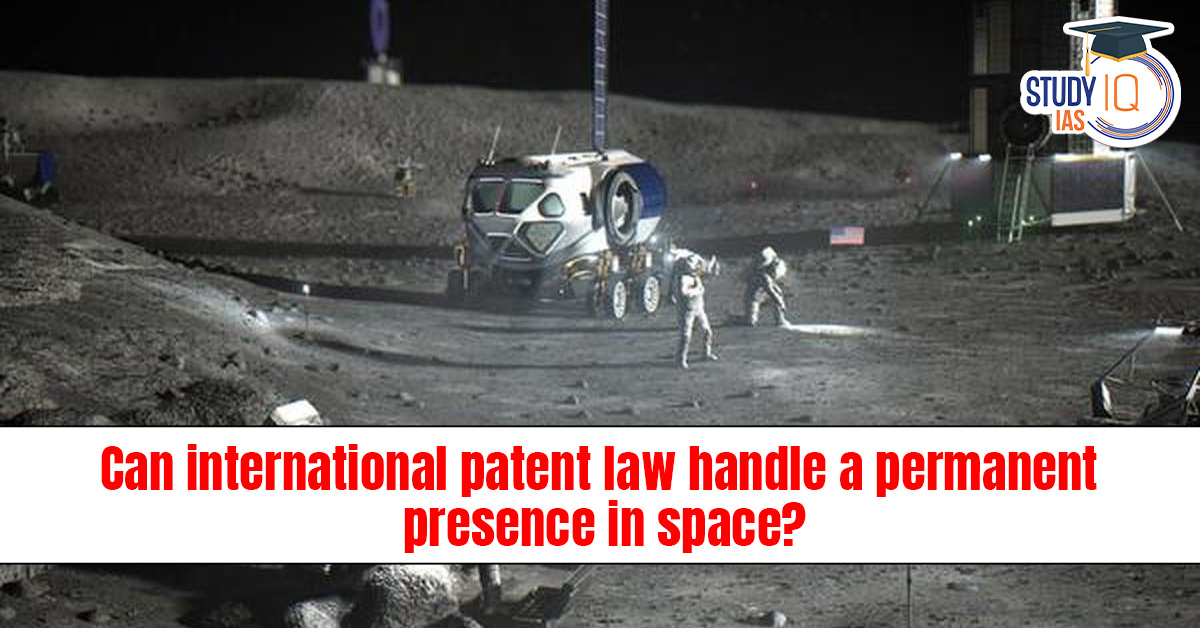
Permanent human presence in space is becoming a reality, driven by survival-critical technological innovation. This raises a key legal question about how ownership of inventions created beyond Earth’s territorial boundaries should be governed.
Why the Present Patent System Does Not Work in Outer Space
- Territorial Foundation of Patent Law
- Patent law is based on territorial jurisdiction, granting exclusive rights within defined national boundaries.
- Infringement is determined by locating where an invention is made, used or sold.
- Absence of Sovereign Boundaries in Space: Outer space has no national territory or sovereign control under international space law. This removes the geographical anchor on which patent enforcement depends.
- Jurisdiction by Registration is Inadequate:
- Under international space law, states retain jurisdiction over space objects registered under their authority, not over physical locations.
- Article VIII of the Outer Space Treaty links legal control to the state of registry.
- As a result, inventions aboard registered space objects are treated as occurring within the registering state’s legal territory.
|
The International Space Station (ISS) Model |
Limits of the ISS Model for Lunar and Planetary Bases
|
- Non-Appropriation Principle in Space Law
- National appropriation is prohibited under Article II of the Outer Space Treaty, meaning no state can own the Moon, Mars or any part of outer space.
- Patents create a legal tension because, while they do not claim territory, they grant exclusive control over technologies that may be essential for survival in space.
- Patents as De Facto Exclusion
- In permanent settlements, patented technologies may control access to water, energy or life-support systems.
- Exclusive patent rights could effectively restrict survival-critical activities, contradicting the principle of open access. This creates tension between private innovation incentives and collective human interest.
- Flags of Convenience in Space
- Registration-based jurisdiction enables regulatory arbitrage, similar to maritime flags of convenience.
|
What Does “Flags of Convenience” Mean? |
Problem of Regulatory Arbitrage
Why This Is a Concern
|
- Unequal Rule-Making Power
- While over 110 states are party to the Outer Space Treaty, only a few shape space-related IP practices.
- Most countries act as rule-takers, not rule-makers, in evolving space governance.
- This deepens inequalities in access, innovation benefits and legal influence.
- Limits of Cooperative Frameworks
- Frameworks like the Artemis Accords promote coordination and interoperability.
- However, coordination does not resolve ownership, enforcement or dispute settlement in IP law.
- Operational agreements cannot substitute for binding legal jurisdiction.
- Temporary Presence Doctrine
- Article 5 of the Paris Convention limits patent enforcement for patented articles in transit on Earth.
- It protects freedom of movement across borders for ships, aircraft and vehicles.
- Its applicability to space objects, docking stations or orbital platforms remains legally unresolved.
Implications for India
- India’s growing role in space exploration places it in a strong position to shape equitable space governance norms.
- A clear national space law and proactive engagement in global IP discussions are essential.
- India can bridge innovation incentives with inclusive, humanity-centric legal frameworks.
Way Forward: Reforming Patent Law for Outer Space
- Dedicated Space IP Framework: Create a separate international legal regime for space-based inventions, moving beyond Earth-centric territorial patent principles.
- Contribution-Based Ownership: Grant patent rights based on actual technological contribution and innovation, rather than mere registration of space objects.
- Shared-Use Exceptions: Limit patent exclusivity for technologies essential to life support, safety and survival in permanent space habitats.
- Temporary Presence Clarity: Clearly extend the temporary presence doctrine to space activities such as docking, transit and multinational operations.
- Prevent Flags of Convenience: Establish minimum global patent standards to stop misuse of weak registration regimes in space operations.
- Inclusive Rule-Making: Ensure wider participation of developing countries in shaping global space intellectual property governance frameworks.
- Licensing and Patent Pools: Encourage shared licensing mechanisms to balance innovation incentives with collaboration and affordability in space missions.
- Alignment with Space Law: Harmonise patent rules with non-appropriation and common-benefit principles of international space law.
- India’s Leadership Role: India should adopt a national space law and lead efforts toward equitable and cooperative space IP governance.
 Bharat Audyogik Vikas Yojana (BHAVYA Sch...
 NavIC Satellite Clock Failures: Causes, ...
 Rare Earth Elements (REE) Sites in India...










 WhatsApp





