
Table of Contents
Context
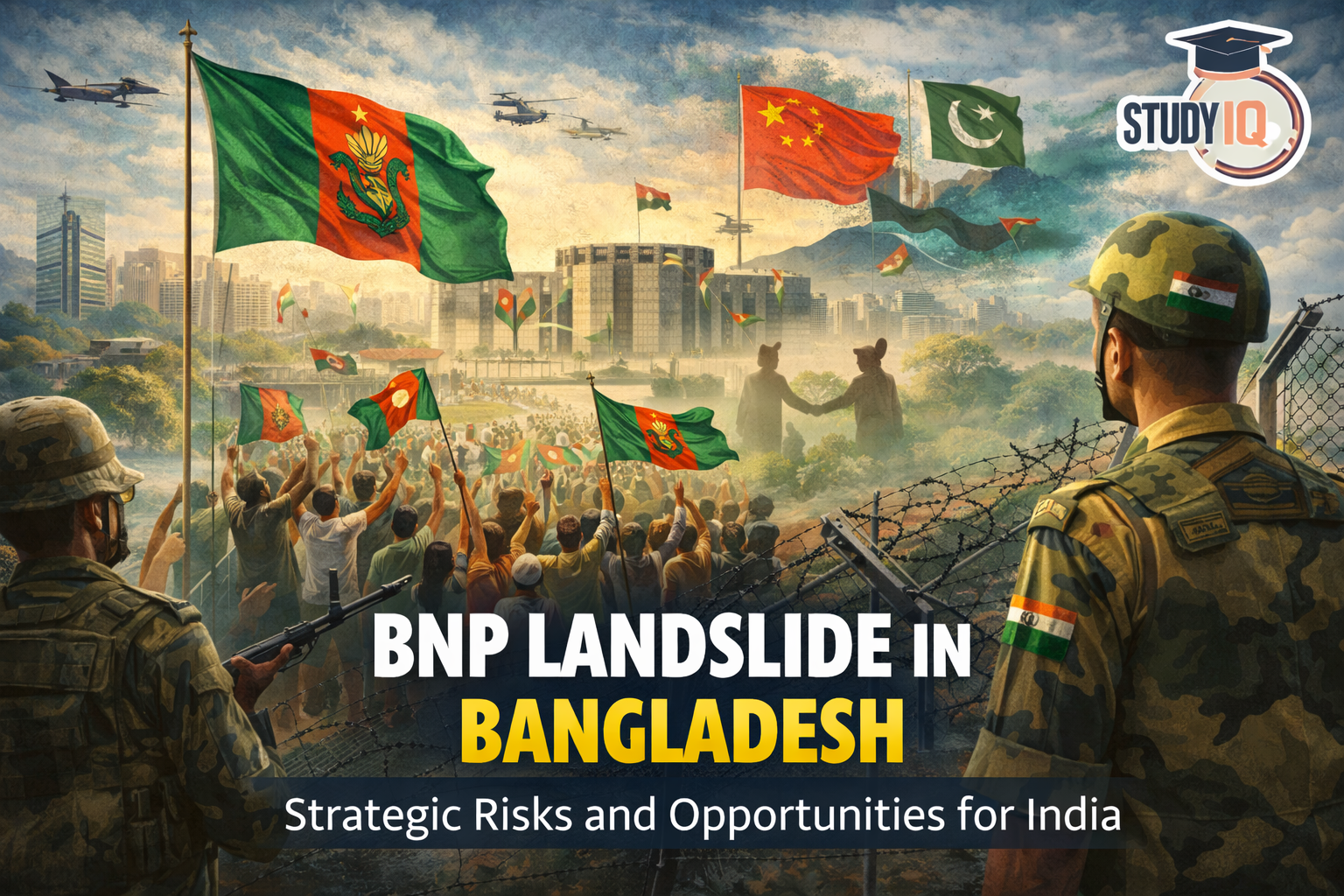
- The decisive victory of the Bangladesh Nationalist Party (BNP) under Tarique Rahman in the 2026 parliamentary elections marks a major political shift in Dhaka. With the Awami League absent from the contest, India now faces a complex mix of historical baggage, strategic caution, and new opportunities.
| India’s History with the BNP |
| ● Origins of Engagement (Ziaur Rahman Era): India’s engagement with the BNP dates back to its founder, General Ziaur Rahman, who established the party in 1978. Unlike the Awami League’s pro-India orientation, the BNP cultivated a nationalist identity that emphasized sovereignty and strategic autonomy vis-à-vis India.
● Khaleda Zia Period (2001–2006): During the BNP-Jamaat coalition government (2001–2006), bilateral ties deteriorated sharply. ○ E.g. India accused Dhaka of allowing Northeastern insurgent groups and terror outfits to operate from Bangladeshi soil, creating serious security concerns. ● Contrast with Sheikh Hasina’s Tenure (2009–2024): Under Sheikh Hasina, Bangladesh cracked down on anti-India insurgent networks, deepened counter-terrorism cooperation, and strengthened connectivity and economic ties. This period was described by PM Narendra Modi as a “Shonali adhyay” (golden chapter). ● BNP’s Ideological Positioning: The BNP traditionally framed India through a sovereignty lens, promoting the idea of “Bangladesh First”. It has often sought to balance India with outreach to China, Pakistan, and the broader Muslim world. ● Recent BNP Manifesto (2026 Elections): The 2026 BNP manifesto avoided direct reference to India but emphasized: ○ “Friend Yes, Master No” — signaling equality-based relations. ○ Non-interference in internal affairs — a veiled message about sovereignty concerns. ○ Strategic partnership with the “Muslim world”, without highlighting Pakistan explicitly. The tone during the campaign remained conciliatory, and Tarique Rahman avoided overtly anti-India rhetoric. |
Key Challenges for India
- Sheikh Hasina’s Presence in India: Hasina’s continued stay in India may create diplomatic friction if Dhaka presses for extradition. The issue could become a political flashpoint within Bangladesh.
- Security Concerns and Extremism: India remains wary of any revival of insurgent safe havens or extremist networks. Past experiences during BNP-Jamaat coalitions make this a priority concern.
- Minority Protection: Reports of attacks on Hindus and other minorities in Bangladesh generate domestic political pressure in India. Stability and inclusivity in Bangladesh are vital for bilateral trust.
- Connectivity and Infrastructure Projects: India has invested heavily in connectivity projects linking the Northeast to Bangladesh. Anti-India sentiment in Bangladesh may complicate these initiatives.
- Migration and Border Management: Illegal migration remains a politically sensitive issue in Indian states such as Assam and West Bengal. Managing migration without straining bilateral ties is critical.
- China and Pakistan Factor: India would be concerned if Bangladesh deepens strategic engagement with China or rekindles close ties with Pakistan, especially in defence and infrastructure sectors.
Silver Lining: Strategic Relief in BNP’s Clear Majority
Insights from former Foreign Secretary Kanwal Sibal highlight why the BNP’s majority may offer India relative stability.
- Reduced Jamaat Influence: Unlike 2001–2006, the BNP now governs without needing Jamaat-e-Islami as a coalition partner. Jamaat’s reduced leverage lowers the risk of hardline, anti-India policymaking.
- More Predictable Governance Structure: A single-party majority reduces internal ideological bargaining. India may find a clearer and more coherent decision-making structure in Dhaka.
- Business-Oriented Leadership: BNP leadership is viewed as pragmatic and economically focused. Stability in trade and investment relations is likely to remain a priority.
- Potential Reversal of Interim Pro-Pakistan Signals: Analysts suggest the BNP may moderate the interim government’s visible warmth towards Pakistan to maintain regional balance and economic stability.
- Opportunity for Diplomatic Reset: PM Modi’s swift congratulatory message indicates India’s willingness to engage constructively. Early outreach could prevent misunderstandings.
- Structural Stability over Ideological Alignment: For India, the key takeaway is not ideological closeness but reduced unpredictability. A strong BNP government may be easier to manage than a fragile coalition dependent on Islamist factions.
Areas of Continued Engagement
- Economic Interdependence: Bangladesh is India’s largest trade partner in South Asia. Cooperation in textiles, energy, pharmaceuticals, and infrastructure benefits both sides.
- Counter-Terrorism Cooperation: Institutional mechanisms established during the Hasina era can continue if both sides prioritise security coordination.
- Connectivity and Northeast Integration: Transport corridors linking India’s Northeast to Bangladesh enhance economic prospects for both countries.
- People-to-People Ties: Medical tourism, education, and long-term visa regimes can generate goodwill.
- Regional Stability in the Bay of Bengal: Collaboration within BIMSTEC and Indo-Pacific frameworks remains strategically significant.
Strategic Implications for India
- From Golden Chapter to Managed Pragmatism: The era of deep political alignment under Hasina may not return immediately, but pragmatic cooperation remains possible.
- Balancing Sovereignty Sensitivities: India will need to avoid perceptions of dominance while safeguarding its core security interests.
- Preventing Strategic Drift Toward China: Sustained economic and developmental engagement can reduce incentives for Dhaka to tilt excessively toward Beijing.
- Regional Geopolitical Stability: A stable India-Bangladesh relationship is crucial for managing Bay of Bengal security, maritime trade routes, and Northeast insurgency dynamics.
The BNP’s landslide victory presents India with a nuanced scenario. While historical mistrust and security concerns persist, the structural stability of a single-party majority reduces immediate strategic risks. The future of India-Bangladesh ties will depend less on ideological affinity and more on pragmatic engagement, economic interdependence, and mutual respect for sovereignty.
|
Read More Notes |
|
| Environment Notes | Art and Culture Notes |
| Science and Tech | History Notes |
| Geography Notes | Indian Polity Notes |
| General Knowledge | International Relation |
|
Explore StudyIQ Courses |
|
 Disaster Management in India, Classifica...
 Good Friday 2026: Date, History, Meaning...
 Removal of the Chief Election Commission...












 WhatsApp





