
Table of Contents
Context
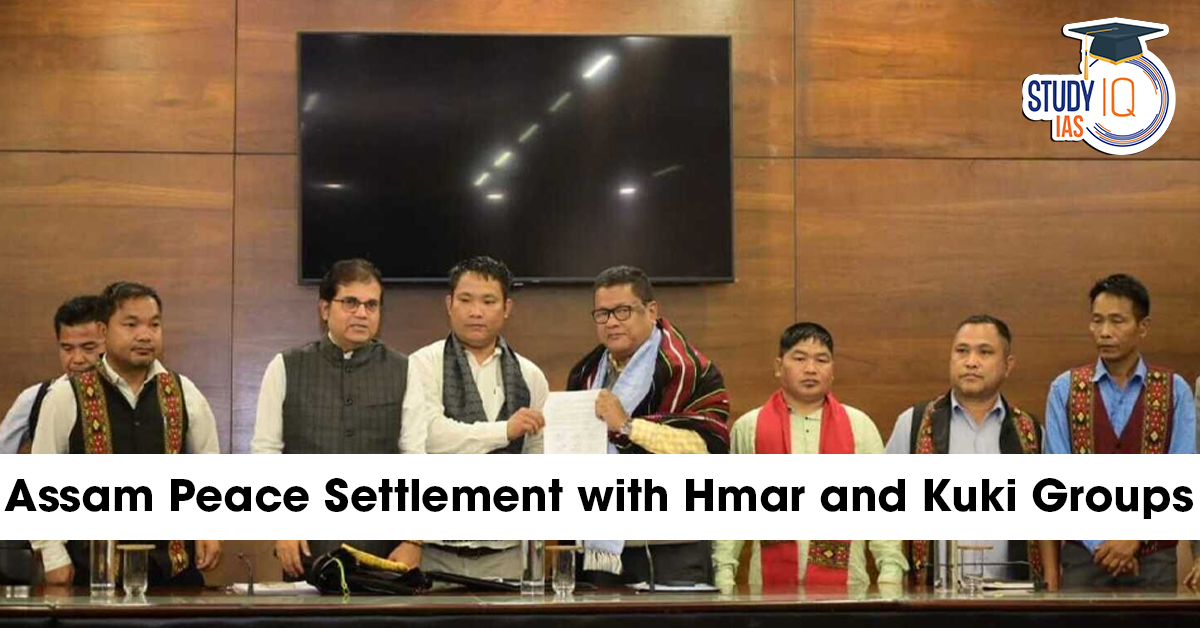
- The Government of Assam signed a Memorandum of Settlement (MoS) in March 2026 with several armed groups representing the Hmar and Kuki communities, marking an important step toward ending ethnic militancy in the state.
Key Features of the 2026 Settlement
- Formation of Welfare Development Councils: The agreement provides for the creation of Hmar Welfare Development Council and Kuki Welfare Development Council to address developmental and administrative needs of these communities.
- Institutional Structure of the Councils: Each council will have a Chairman, Deputy Chairman, Chief Executive Member, and nominated members, ensuring community participation in governance and development planning.
- Budgetary Support and Administrative Framework: The councils will function under the Assam government’s Transformation and Development Department, which will allocate funds based on development proposals submitted by the councils.
- Tripartite Negotiation Process: The settlement emerged from tripartite talks involving the Assam government, the Central government, and the insurgent groups, highlighting a collaborative peace-building approach.
- Rehabilitation of Former Cadres: The government will implement rehabilitation schemes for former militants.
- Disarmament and Surrender of Weapons: As part of earlier peace initiatives, the groups collectively surrendered over 1,000 firearms, thousands of rounds of ammunition, and grenades
|
Background of Hmar and Kuki Militancy in Assam |
| ● Ethnic Identity and Regional Aspirations: The Hmar and Kuki communities, primarily residing in Barak Valley and hill areas of Northeast India, have historically demanded greater political representation, autonomy, and development.
● Rise of Ethnic Insurgent Groups: Several armed organisations such as HPC-D, KRA, UKDA, and KLO emerged between 1992 and 2010, seeking to protect ethnic interests and address perceived political and economic marginalisation. ● Cross-Border Ethnic Networks: The Hmar and Kuki communities share ethnic ties with populations in Manipur, Mizoram, and Myanmar, which sometimes complicated security and insurgency dynamics in the Northeast. ● Suspension of Operations Agreement (2012): In 2012, these groups signed a Suspension of Operations (SoO) pact with the government and agreed to cease armed activities and stay in designated camps, initiating a gradual peace process. |
|
Read More Notes |
|
| Environment Notes | Art and Culture Notes |
| Science and Tech | History Notes |
| Geography Notes | Indian Polity Notes |
| General Knowledge | International Relation |
|
Explore StudyIQ Courses |
|
 The Transgender Persons (Protection of R...
 WASH (Water, Sanitation, and Hygiene) Se...
 Vairamuthu Wins Jnanpith Award 2026: Tam...







 WhatsApp





