
Table of Contents
Context
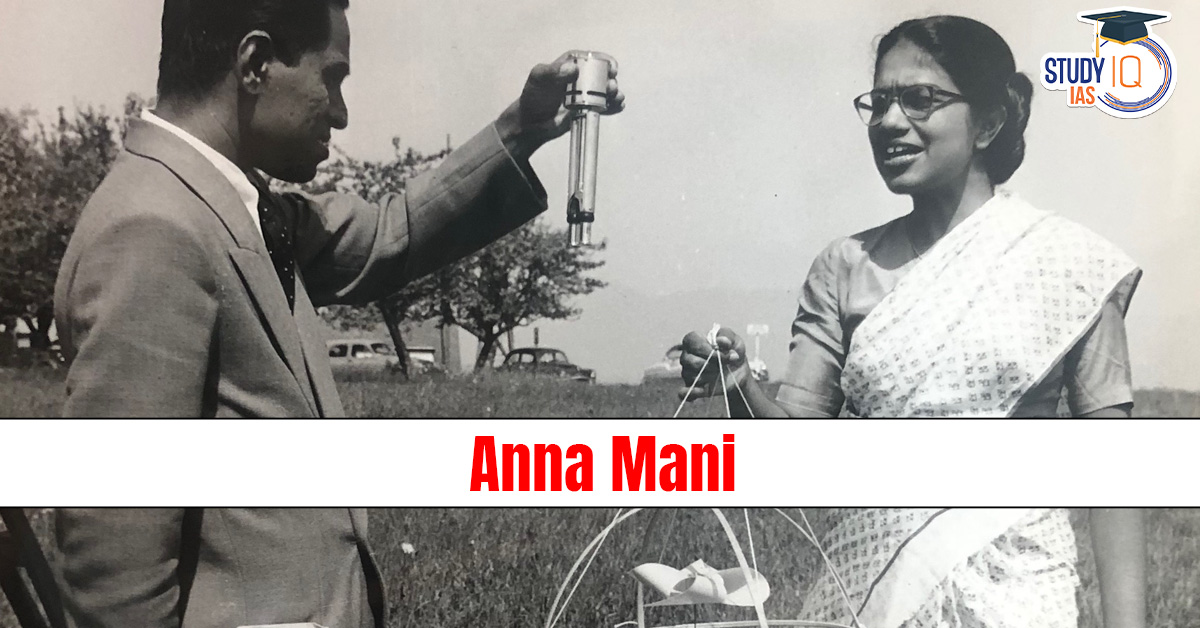
A new biographical work highlights the legacy of Anna Mani
About Anna Mani
- She was a physicist who worked under Sir C.V. Raman at the Indian Institute of Science (IISc), Bangalore, where she conducted research on the optical properties of diamonds and rubies.
- In 1948, she joined the India Meteorological Department (IMD) in Pune. This was a critical period as India was striving for scientific independence post-1947.
- Known as the “Weather Woman of India,” she rose to become the Deputy Director General of the IMD.
- Key Contributions
- Instrument Standardisation: Before Mani, India relied heavily on imported weather instruments. She established a workshop in Pune that designed, manufactured, and standardized over 100 types of meteorological instruments (including rain gauges, thermometers, and anemometers).
- Ozone Research: She was a pioneer in atmospheric ozone research. She designed the Ozonesonde, an instrument used to measure the vertical distribution of ozone in the atmosphere, crucial for understanding the ozone layer.
- Solar Radiation: She set up a network of stations across India to measure solar radiation, which provided the foundational data for India’s modern Solar Energy sector.
- Wind Energy: She conducted extensive wind speed surveys, laying the groundwork for the development of Wind Energy in India decades before it became a mainstream focus.
|
Read More Notes |
|
| Environment Notes | Art and Culture Notes |
| Science and Tech | History Notes |
| Geography Notes | Indian Polity Notes |
| General Knowledge | International Relation |
|
Explore StudyIQ Courses |
|
 IEA Agrees to Release 400 Million Barrel...
 Black Rain Crisis in Iran: Causes, Envir...
 Lakkundi Treasure: Rare Gold Coins Disco...










 WhatsApp





