
Table of Contents
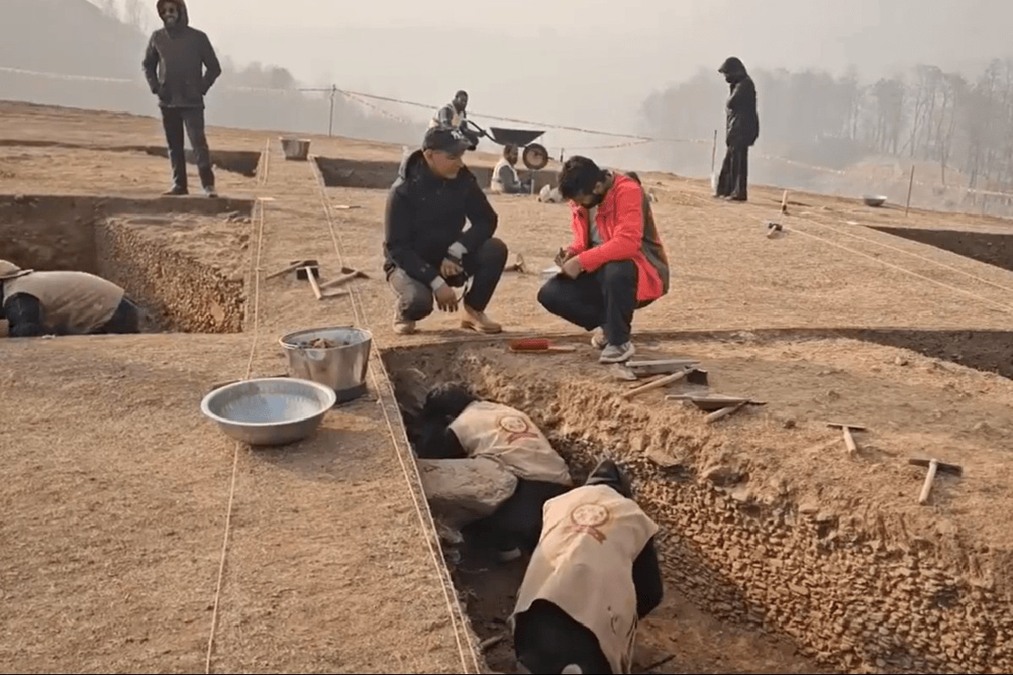
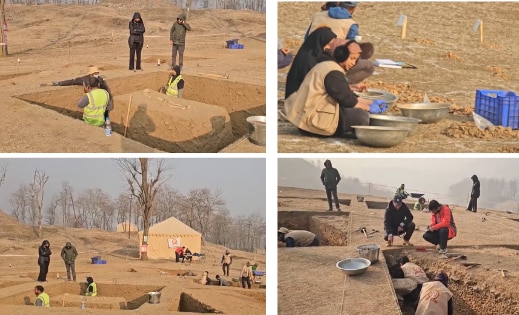
A major archaeological discovery at Zehanpora village in Baramulla district, Jammu and Kashmir, has brought Kashmir’s long-neglected Buddhist heritage back into national and academic focus. The excavation of a 2,000-year-old Buddhist site, dating to the Kushan period, provides strong material evidence of organised Buddhist activity in the Kashmir Valley during the early centuries of the Common Era. The discovery has been described by the Prime Minister as a reflection of Kashmir’s deep civilisational roots, reinforcing its historical role as a cultural and religious crossroads.
About the Zehanpora Excavation
Archaeological excavations at Zehanpora have revealed:
-
Buddhist stupas
-
Monastic structures (viharas)
-
Architectural remains associated with organised religious activity
Based on structural typology and stratigraphic evidence, the remains are dated to around 1st–3rd century CE, corresponding to the Kushan period. This places the site among the earliest known Buddhist establishments in Kashmir.
The discovery is significant because physical evidence of early Buddhism in Kashmir is relatively limited compared to Gandhara or the Gangetic plains. Zehanpora thus fills a crucial gap in the archaeological map of north-western Buddhism.
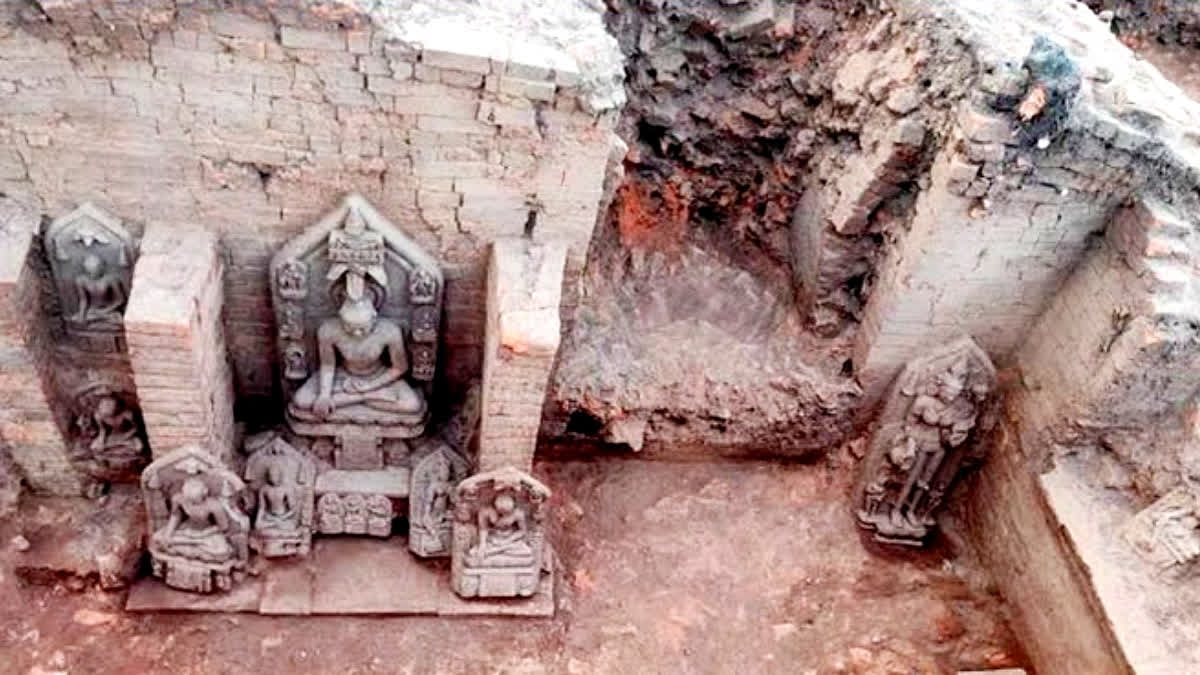
A view of Zehanpora Buddhist Site in Baramulla, Jammu Kashmir
Zehanpora and Kushan-Era Kashmir
A Buddhist Centre under Kushan Rule
Archaeologists believe Zehanpora functioned as an important Buddhist centre during Kushan rule, when rulers like Kanishka and Huvishka patronised Buddhism across north India, Central Asia and the north-west.
-
The site is believed to have links with Huvishkapura, an important but still archaeologically elusive Kushan capital.
-
Architectural features of the stupas and monastic cells resemble Gandharan Buddhist layouts, suggesting strong cultural and artistic exchanges.
Gandharan Influence
Key Gandharan features observed include:
-
Stupa design with structured drum and harmika
-
Monastic cell layouts similar to sites in present-day Pakistan and Afghanistan
-
Evidence of trans-regional religious networks
This confirms Kashmir’s integration into the north-western Buddhist world, rather than isolation from it.
Strategic Location and Trade-Pilgrimage Networks
Zehanpora lies along an ancient trade and pilgrimage corridor connecting Gandhara with the Kashmir Valley. This strategic location would have facilitated:
-
Movement of Buddhist monks
-
Flow of traders and pilgrims
-
Transmission of religious ideas, art styles and texts
Such corridors were crucial for the spread of Buddhism beyond the Gangetic plains and explain Kashmir’s emergence as a major Buddhist centre despite its mountainous terrain.
Kashmir as a Major Buddhist Centre
Kushan Patronage
During the Kushan period (1st–3rd century CE), Kashmir emerged as a significant Buddhist hub:
-
Rulers like Kanishka actively patronised Buddhist institutions.
-
Monasteries flourished alongside urban centres.
-
Kashmir became a centre for Buddhist scholastic traditions, especially Sarvastivada Buddhism.
Fourth Buddhist Council
-
The Fourth Buddhist Council, associated with the Sarvastivada tradition, is believed to have been held in Kashmir during Kanishka’s reign.
-
This council played a key role in systematising Buddhist doctrine and commentaries.
Accounts of Chinese Pilgrims
Chinese pilgrims provide valuable historical corroboration:
-
Xuanzang (Hsüan-Tsang) described Kashmir as a flourishing Buddhist region with numerous monasteries.
-
Faxian also mentioned the presence of active Buddhist communities.
The Zehanpora discovery lends archaeological credibility to these textual accounts.
Important Buddhist Sites in Kashmir: Prelims-Friendly Table
| Buddhist Site | Location | Key Prelims Facts |
|---|---|---|
| Harwan Monastery | Near Srinagar (Zabarwan Range, Dal Lake) | Kushan period site; famous for terracotta tiles with floral and human motifs; reflects Gandharan influence; among the earliest monastic sites in Kashmir. |
| Parihaspora | Baramulla district | Founded by Lalitaditya Muktapida (8th century CE); housed Buddhist stupas and monasteries alongside Hindu temples; symbol of religious coexistence. |
| Ushkur / Hushkapura | Near Baramulla | Identified with Huvishkapura, founded by Kushan king Huvishka; mentioned by Xuanzang as a flourishing Buddhist centre; served religious and administrative roles. |
| Kanispora | Baramulla district | Associated with Kanishka; evidence of stupas and viharas; highlights strong Kushan–Buddhist connection. |
| Narastan | Pulwama district | Site of an ancient Buddhist stupa; indicates spread of Buddhism into South Kashmir. |
| Vijeshwara / Bijbehara | Anantnag district | Shows Buddhist occupation layers; later evolved into a Hindu centre, reflecting religious transition and continuity. |
Significance of the Discovery
For Archaeology and History
-
Provides material evidence of early Buddhist institutions in Kashmir.
-
Strengthens links between Kashmir, Gandhara and Central Asia.
-
Helps locate and contextualise elusive Kushan centres like Huvishkapura.
For UPSC and Competitive Exams
-
High relevance for Art & Culture, Ancient History, and Buddhism.
-
Useful for Prelims factual questions and Mains GS-I answers on cultural exchanges and religious history.
For Cultural Reassessment
-
Challenges the perception of Kashmir’s history as exclusively medieval or early modern.
-
Reasserts Kashmir’s role as a civilisational bridge between India and Central Asia.
Conclusion
The discovery of the ancient Buddhist site at Zehanpora is a landmark moment in understanding Kashmir’s historical and religious landscape. Dating back nearly 2,000 years, the site confirms that Kashmir was not a peripheral region but an integral part of the Kushan-era Buddhist world, deeply connected to Gandhara through trade, pilgrimage and intellectual exchange. As further excavations continue, Zehanpora may emerge as a key reference point in reconstructing the Buddhist past of the Kashmir Valley and India’s broader civilisational history.
 FATF Report on India’s Action on Virtu...
 India Pharma Expo 2026: Key Highlights, ...
 India–Arab League Relations: Cooperati...













 WhatsApp





