
Table of Contents
The tragic plane crash involving Maharashtra Deputy Chief Minister Ajit Pawar has once again placed Air Safety Mechanism in India under intense scrutiny. According to multiple reports, the aircraft carrying Ajit Pawar reportedly crashed while attempting to land at Baramati Airport on January 28, 2026. The Directorate General of Civil Aviation (DGCA) has confirmed that the chartered plane went off the runway, resulting in a major aviation accident, and this has triggered nationwide discussion on flight safety regulations, airport infrastructure, and disaster preparedness.
Air Safety Mechanism in India: What Happened in the Baramati Plane Crash?
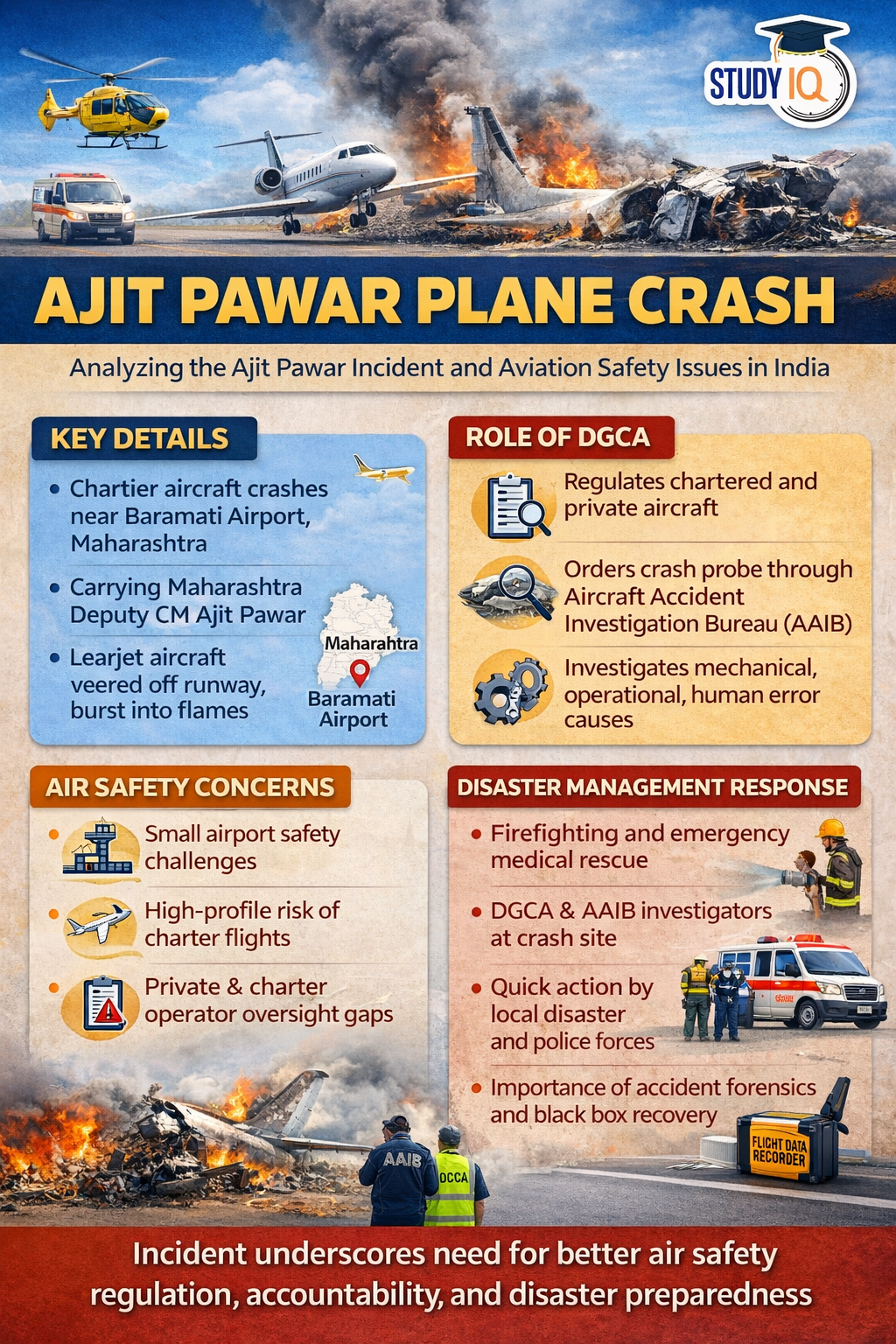
Early live updates from the crash site indicate that a Learjet 45 charter aircraft (VT-SSK) carrying Deputy CM Ajit Pawar veered off the runway during landing at Baramati Airport in Pune district, Maharashtra. According to reports, all passengers on board, including Ajit Pawar, have been confirmed dead by DGCA sources.
Eyewitnesses described the aircraft approaching the runway before suddenly losing control, triggering emergency response teams to reach the scene. Visuals from the site show debris and a large emergency operation underway, while the DGCA has launched a formal probe into the technical and operational causes behind the crash.
Air Safety Mechanism in India: Baramati Airport and Its Safety Challenges
Located about 12 km from Baramati city, Baramati Airport is a small public aviation facility primarily used for general aviation and pilot training. The airport’s runway is approximately 1,770 metres long, catering to light aircraft operations rather than heavy commercial flights.
Smaller airports often face infrastructure limitations, including shorter runways, less advanced navigational aids, and limited on-site emergency facilities — factors that can influence landing safety during adverse conditions or high traffic moments.
Role of DGCA in Aviation Safety Regulation
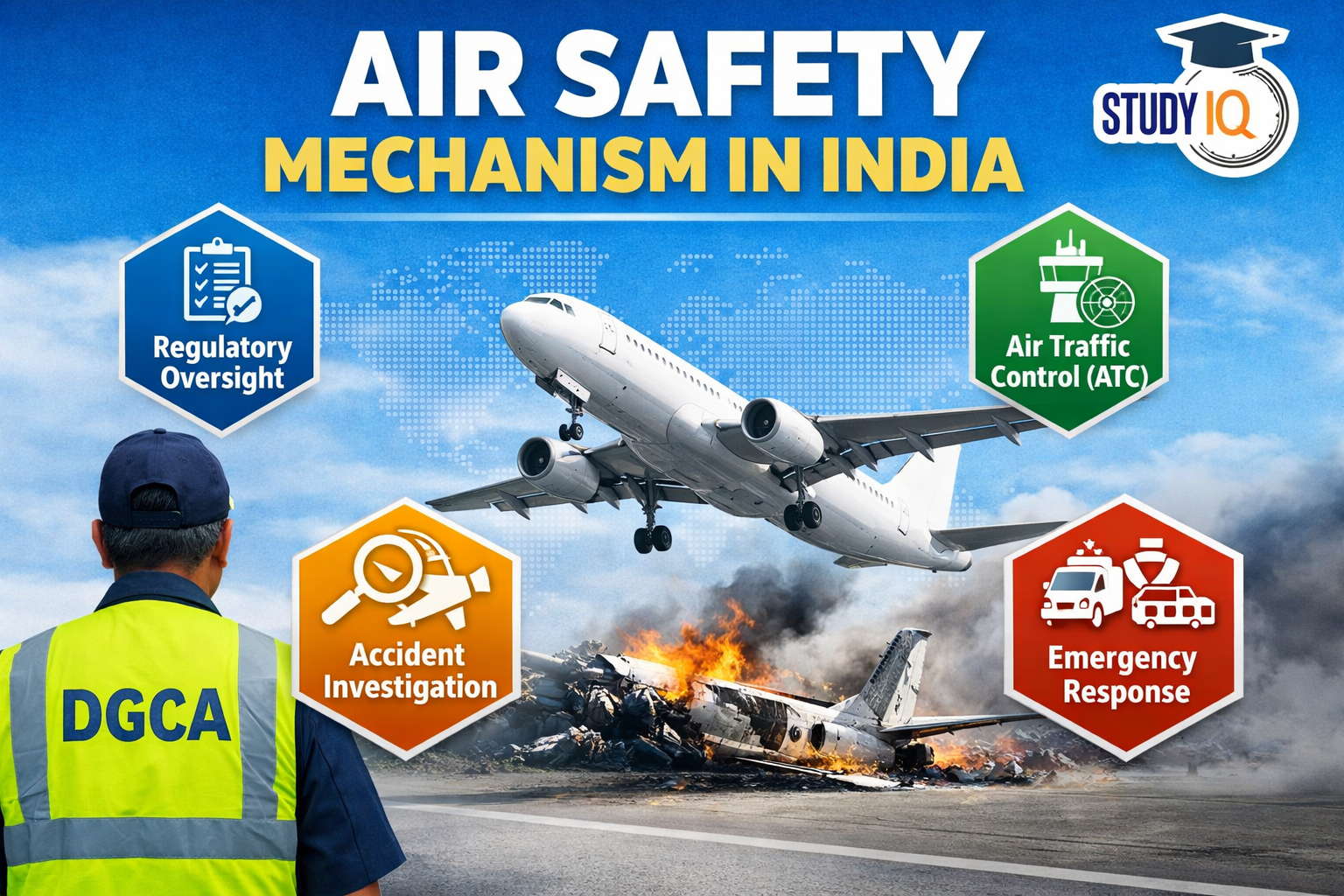
The Directorate General of Civil Aviation (DGCA) is India’s apex aviation regulatory body under the Ministry of Civil Aviation. Its core responsibilities include:
- Licensing of pilots and air crew
- Certification of aircraft and operators
- Safety audits of airports
- Regulation of chartered and private aircraft
- Enforcement of ICAO (International Civil Aviation Organization) standards
Whenever an aviation accident occurs, DGCA’s role becomes threefold:
-
Immediate coordination
-
Securing the crash site
-
Preventing evidence tampering
-
Ensuring emergency response
-
-
Technical investigation
-
In collaboration with AAIB
-
Black box recovery and analysis
-
Pilot communication analysis
-
-
Policy recommendations
-
Safety advisories
-
Regulatory amendments
-
Infrastructure improvement proposals
-
Thus, any plane crash becomes a test of regulatory robustness.
Role of the Aircraft Accident Investigation Bureau (AAIB)
The AAIB is the independent agency responsible for crash investigations in India. It functions separately from DGCA to ensure objectivity.
Its work includes:
-
Forensic analysis of wreckage
-
Flight data recorder examination
-
Cockpit voice recorder decoding
-
Human factors evaluation
-
Publishing of preliminary and final reports
This independence is crucial because:
-
It prevents conflict of interest
-
Builds public trust
-
Aligns India with ICAO Annex 13 standards
Aviation Safety Mechanisms: Key Components
| Component | Responsible Authority | Key Functions | Importance in Aviation Safety |
|---|---|---|---|
| Regulatory Oversight | DGCA (Directorate General of Civil Aviation) | Formulating aviation rules, issuing licenses, conducting safety audits, ensuring ICAO compliance | Ensures airlines, pilots, airports and operators follow standardized safety norms |
| Accident Investigation | AAIB (Aircraft Accident Investigation Bureau) | Technical investigation of crashes, black box analysis, publishing reports | Identifies root causes and prevents future accidents |
| Aircraft Certification | DGCA | Airworthiness certification, maintenance approval | Confirms aircraft are fit to fly |
| Pilot Licensing & Training | DGCA | Issuing licenses, simulator checks, medical fitness | Ensures skilled and medically fit flight crew |
| Airport Safety Management | Airport Operators & DGCA | Runway maintenance, navigation aids, emergency preparedness | Prevents runway mishaps and landing accidents |
| Emergency Response System | NDMA, State Disaster Forces, Local Authorities | Fire control, rescue operations, medical evacuation | Minimizes loss of life after crashes |
| Air Traffic Control (ATC) | Airports Authority of India (AAI) | Managing aircraft movement, providing navigation guidance | Prevents mid-air and runway collisions |
| Weather Monitoring | IMD & ATC | Real-time weather updates and warnings | Helps pilots avoid hazardous conditions |
| Charter Aircraft Regulation | DGCA | Operator certification, maintenance audits, safety checks | Ensures private jets and charter planes meet safety standards |
| Safety Audits & Surveillance | DGCA | Scheduled and surprise inspections | Detects lapses before accidents occur |
| Crisis Communication | Government & Aviation Authorities | Official updates, public information, misinformation control | Maintains transparency and public trust |
| International Compliance | ICAO | Global aviation safety standards and protocols | Aligns India with international best practices |
| Infrastructure Upgradation | Ministry of Civil Aviation, State Governments | Modernizing runways, ILS, fire services, radar systems | Reduces accident risk at airports |
| Insurance & Liability Framework | IRDAI, Aviation Operators | Compensation, risk coverage, victim support | Ensures justice and financial relief after accidents |
Why this Incident Matters for Aviation Policy
The Ajit Pawar plane crash highlights several ongoing concerns:
-
Safety at non-major airports — Smaller facilities may lack advanced landing aids and robust emergency apparatus.
-
Regulatory gaps — High-profile accidents often expose the need for stronger enforcement of aviation regulations.
-
Public confidence — Crashes involving political leaders amplify public scrutiny of aviation governance and disaster preparedness.
Small Airports and Safety Challenges: The Baramati Context
Baramati airport represents a broader issue in Indian aviation:
Tier-2 and Tier-3 airports often lack advanced safety infrastructure.
Common challenges include:
-
Shorter runways
-
Limited Instrument Landing Systems (ILS)
-
Minimal emergency fire units
-
Fewer trained aviation medical responders
-
Dependence on district administration for rescue
With India expanding regional connectivity under UDAN, aviation safety at smaller airports is becoming more important than ever.
The Ajit Pawar plane crash, therefore, becomes a case study for:
“Infrastructure preparedness versus aviation expansion.”
Charter Aircraft Safety: A Grey Zone in Regulation?
Chartered aircraft operations form a fast-growing segment:
-
Used by politicians
-
Corporate executives
-
Emergency medical services
However, concerns include:
-
Irregular safety audits
-
Pressure on pilots due to VVIP schedules
-
Less public scrutiny compared to commercial airlines
Trending Google searches:
-
Ajit Pawar charter plane
-
Private jet crash India
-
Learjet safety India
-
DGCA charter aircraft rules
This incident highlights the need to:
-
Tighten charter operator regulation
-
Standardize maintenance protocols
-
Strengthen oversight of VIP aviation movements
Disaster Management: Air Crash as a Man-Made Disaster
Under India’s disaster management framework:
-
Air crashes are classified as man-made disasters
-
Governed by:
-
NDMA Guidelines
-
State Disaster Response Mechanism
-
Local emergency services
-
Ideal response includes:
-
Fire suppression
-
Victim evacuation
-
Forensic recovery
-
Family assistance
-
Crisis communication
Every air crash becomes a stress test for:
India’s emergency preparedness architecture
Crisis Governance and Constitutional Protocols
When an accident involves a constitutional authority like a Deputy Chief Minister:
-
State machinery activates high-level protocols
-
Federal coordination becomes essential
-
Governance continuity mechanisms are triggered
This touches GS Paper 2 themes:
-
Federalism
-
Executive stability
-
Emergency decision-making
Aviation Safety in India: Growth vs Regulation
India is one of the fastest-growing aviation markets:
-
Increasing passenger load
-
Expanding charter operations
-
Rapid airport construction
But growth without safety oversight creates vulnerability:
-
Overworked regulators
-
Infrastructure gaps
-
Reactive reforms instead of preventive policies
Policy Reforms Needed
Based on repeated aviation incidents, India needs:
-
Stronger DGCA autonomy
-
More staff and technical capacity
-
Mandatory safety audits of charter operators
-
Upgrade of small airports
-
Faster AAIB reporting timelines
-
Integrated aviation disaster drills
Conclusion
The Baramati plane crash is a grim reminder that aviation safety is non-negotiable. As the DGCA continues its investigation, policymakers, aviation experts and disaster management authorities must work together to strengthen India’s aviation safety mechanisms.
For UPSC aspirants and civil affairs observers, this incident underscores the importance of understanding regulatory frameworks, institutional roles, safety protocols and crisis governance in India’s aviation sector.
|
Read More Notes |
|
| Environment Notes | Art and Culture Notes |
| Science and Tech | History Notes |
| Geography Notes | Indian Polity Notes |
| General Knowledge | International Relation |
|
Explore StudyIQ Courses |
|
 Supreme Court Upholds the Right to Die w...
 GDP Growth vs Employment Reality: Unders...
 Bill to Codify IPS Deputation in CAPFs: ...











 WhatsApp





