
Table of Contents
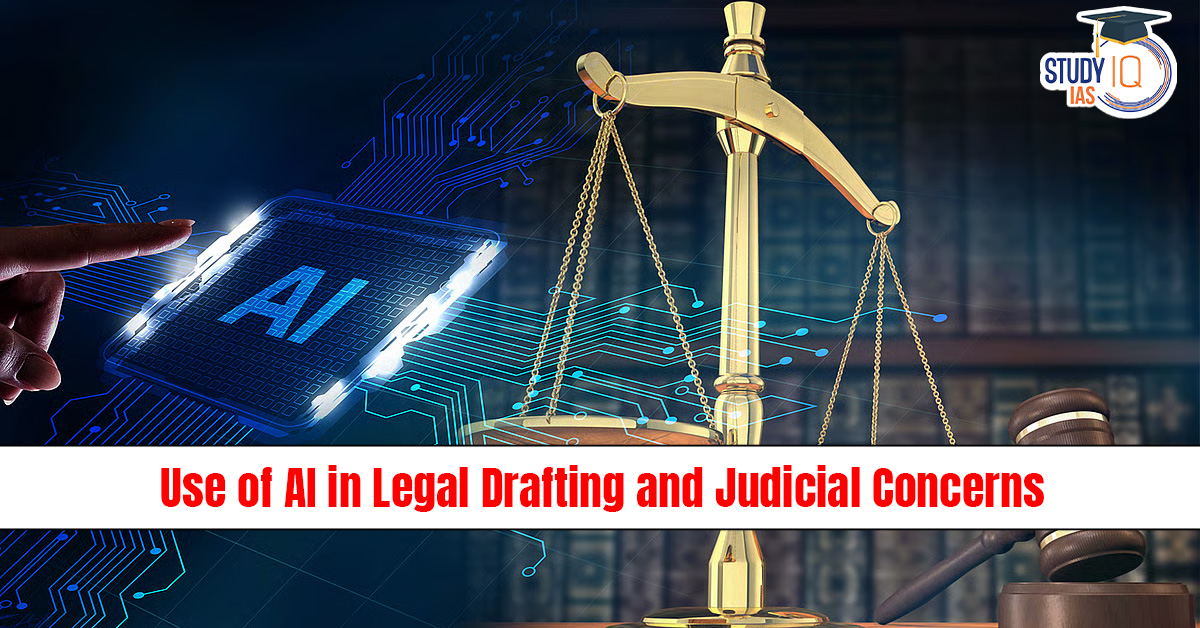
Artificial Intelligence is rapidly transforming the legal profession. From drafting contracts and petitions to summarising judgments and conducting legal research, AI tools are increasingly being used by lawyers and law firms. However, the growing use of AI in legal drafting has also raised serious judicial, ethical, and constitutional concerns in India.
This article explains the role of AI in legal drafting, concerns raised by courts, privacy implications, and the future regulatory roadmap in the Indian context.
Rise of AI in Legal Drafting
AI tools today can assist in drafting contracts, affidavits, written submissions, and compliance documents. They can analyse large volumes of case law within seconds and generate structured legal drafts. Legal professionals use AI to improve efficiency, reduce repetitive work, and save time in research.
In India, legal technology platforms and generative AI tools are increasingly being adopted by law firms and independent practitioners. However, AI generated drafts still require careful human supervision.
Judicial Concerns in India
The Supreme Court of India has expressed caution regarding the use of AI tools in legal processes.
Accuracy and reliability
AI systems sometimes generate incorrect citations or fabricate case references. In legal matters, even minor factual errors can have serious consequences.
Algorithmic bias
AI models are trained on historical data. If past judgments contain bias, AI outputs may reproduce similar patterns. This may affect fairness in legal drafting.
Accountability
If an AI generated document contains misleading information, determining responsibility becomes complex. The lawyer remains professionally accountable for submissions made before the court.
Impact on legal skills
Overdependence on AI may reduce independent thinking and analytical ability among young lawyers.
Data Privacy and Confidentiality Concerns
Legal drafting often involves sensitive personal and commercial data. Uploading confidential documents to AI platforms can create risks of data leakage or misuse.
The Digital Personal Data Protection Act provides a framework for protecting personal data in India. Lawyers must ensure compliance with data protection obligations and safeguard client confidentiality.
The right to privacy under Article 21 of the Constitution reinforces the need for secure data handling in digital legal practices.
Ethical and Professional Responsibilities
Legal professionals must verify all AI generated content before submission. AI should function as an assistive tool and not replace human judgment. Transparency in the use of AI tools is essential to maintain trust in the justice system.
Courts in various jurisdictions have penalised lawyers for submitting AI generated fake case citations. Such incidents highlight the importance of responsible use.
Potential Benefits of AI in Legal Drafting
Despite concerns, AI offers important advantages
Faster legal research
Reduction in drafting time
Standardised documentation
Improved access to justice
Support in managing judicial backlog
AI can assist in summarising large case records and preparing preliminary drafts, helping courts function more efficiently.
AI and Judicial Decision Making
Judicial decision making involves interpretation of law, constitutional values, and moral reasoning. These functions require human discretion and cannot be replaced by automated systems. AI may support administrative tasks, but final judicial authority must remain with judges.
Regulatory Roadmap in India
India is gradually developing its AI governance framework through policy discussions and digital regulation. A balanced approach is necessary to encourage innovation while protecting constitutional rights, judicial independence, and accountability.
Clear guidelines on AI usage in courts, data security standards, and ethical safeguards will be essential for the responsible integration of AI in the legal system.
Conclusion
The use of AI in legal drafting presents both opportunities and risks. While it can enhance efficiency and accessibility, concerns regarding accuracy, bias, privacy, and accountability cannot be ignored. The future of AI in the Indian legal system depends on careful regulation, professional responsibility, and a commitment to ensuring that technology strengthens rather than undermines justice.
|
Read More Notes |
|
| Environment Notes | Art and Culture Notes |
| Science and Tech | History Notes |
| Geography Notes | Indian Polity Notes |
| General Knowledge | International Relation |
|
Explore StudyIQ Courses |
|
 West Bengal Elections 2026: Full Schedul...
 ISRO Launches Mission MITRA in Ladakh: A...
 Disaster Management in India, Classifica...












 WhatsApp





