
Table of Contents
Context
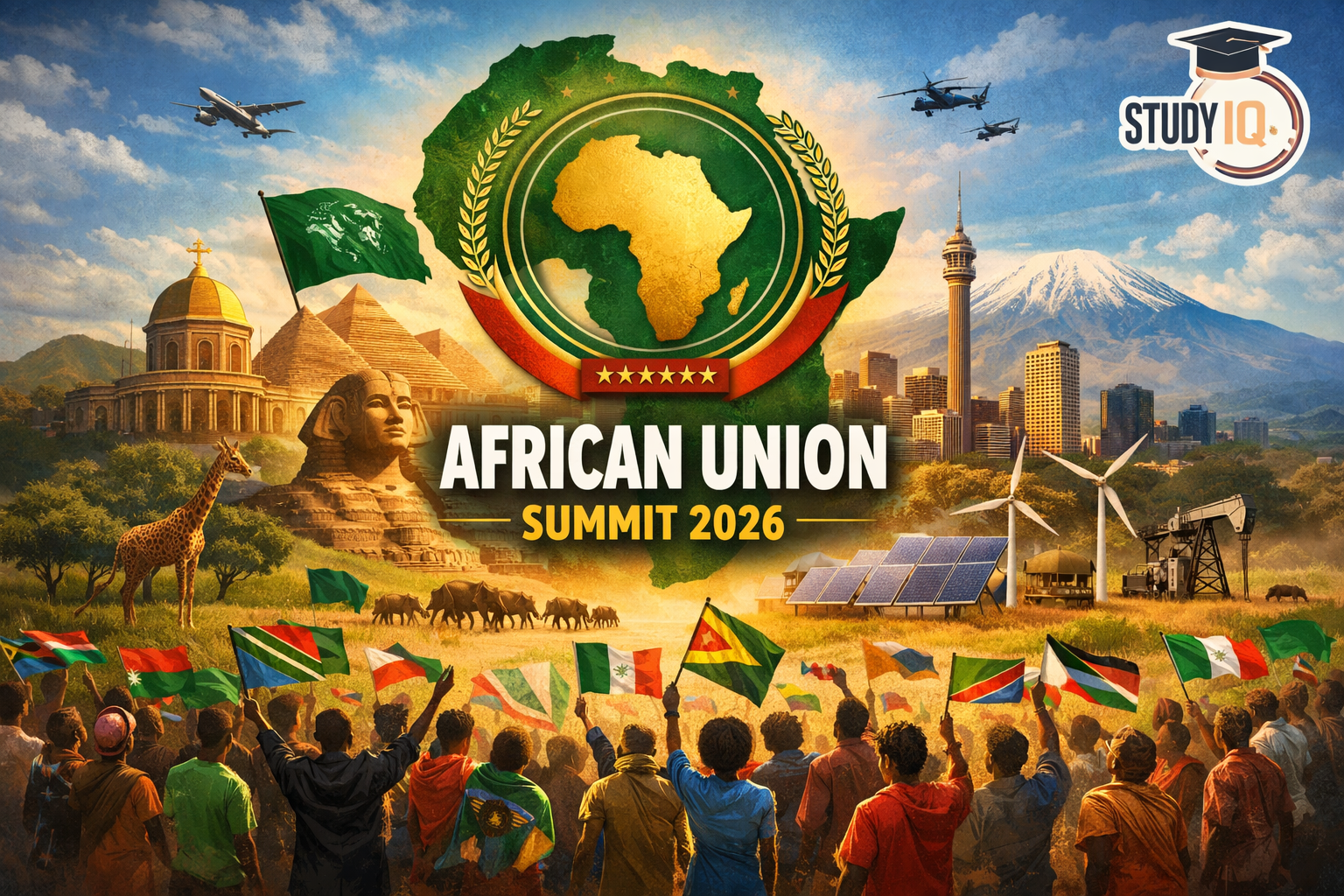
The 39th Summit of the African Union (AU) opened in Addis Ababa, bringing together leaders of 55 African countries.
|
About African Union |
| Establishment: Founded in 2002, replacing the Organization of African Unity (OAU).
● Headquarters: Addis Ababa, Ethiopia. Membership”: 55 member states (all African countries). Objectives ● Promote unity and solidarity among African states. ● Defend sovereignty, territorial integrity, and independence. ● Promote peace, security, and stability. ● Accelerate political and socio-economic integration. Key Initiatives ● Agenda 2063 – Long-term development blueprint. ● AfCFTA (African Continental Free Trade Area) – World’s largest free trade area by number of countries. India & AU ● AU became a permanent member of G20 in 2023 (under India’s presidency). ● India–Africa Forum Summit strengthens India–AU cooperation. |
Challenges Faced by the African Union
- Youth Disillusionment: Africa has the youngest population in the world, with over 400 million people aged 15–35. Yet many countries are led by long-serving political elites.
- Legitimacy Crisis: Young citizens often see the AU as a “bloc of old leaders” that prioritises governments over people. This generational disconnect has weakened public trust in the institution.
- Political Instability: In recent years, countries like Mali, Burkina Faso, Niger, and Gabon have witnessed coups. While the AU suspends coup-hit nations, its responses are often seen as reactive and limited..
- Democratic Backsliding: Several African elections have been marred by opposition repression, internet shutdowns, and contested results.
- g. Critics argue that AU election observer missions sometimes appear lenient toward incumbents. This perception damages its credibility as a guardian of democracy.
- Weak Enforcement Mechanisms: The AU passes resolutions, but implementation often falters. Member states do not always comply with decisions, and funding constraints weaken enforcement. Financial dependence on external donors also limits strategic autonomy.
- Economic Hardship and Poverty: Despite economic growth in some regions, Africa remains the only major region where extreme poverty numbers are rising. Youth unemployment, inflation, and debt burdens have worsened after global shocks such as the pandemic and aid cuts from major partners.
- Security Crises and Extremism: The Sahel region faces growing extremist violence. Civil conflicts in Sudan, Ethiopia, and parts of Central Africa continue to destabilise communities. Many citizens feel the AU has struggled to provide strong peacekeeping or conflict-resolution leadership.
- Humanitarian Pressures: Droughts, floods, and water scarcity are intensifying. Climate-related displacement is rising.
- Climate Change: Africa contributes minimally to global emissions yet suffers disproportionately from climate impacts, creating a justice dilemma that the AU must navigate.
The 2026 AU Summit: An Opportunity for Renewal
The 39th AU Summit, themed around water and sanitation, also includes discussions on climate resilience, humanitarian crises, and global geopolitical shifts.
- Advancing Economic Integration: Accelerating the African Continental Free Trade Area (AfCFTA) can boost intra-African trade and job creation. Regional economic cooperation is vital to tackle unemployment.
- Reclaiming People-Centred Governance: The summit offers a chance to reposition the AU as citizen-driven rather than leader-centric. Stronger engagement with civil society and youth forums can rebuild legitimacy.
- Strengthening Electoral Standards: Reforming election observation processes and issuing clearer, consistent assessments could restore trust. Transparent monitoring mechanisms would reduce accusations of bias.
- Enhancing Enforcement of Democratic Norms: The AU could develop stronger penalties for unconstitutional changes of government and clearer timelines for restoring civilian rule.
- Reducing Aid Dependency: With foreign aid cuts, the AU must encourage domestic resource mobilisation and regional financing mechanisms to enhance autonomy.
- Climate and Water Security Leadership: Given the summit’s focus on water, the AU can push for stronger climate adaptation funding and sustainable resource management.
- Responding to Global Power Shifts: In a changing global order marked by strategic competition among major powers, the AU can articulate a united African voice to secure fair trade, climate finance, and development partnerships.
Strategic Significance of the Moment
This summit is not just another annual gathering. It comes amid:
- Growing geopolitical competition in Africa.
- Youth-led democratic movements.
- Economic strain and humanitarian crises.
- Questions about institutional credibility.
The 2026 summit in Addis Ababa provides an opportunity to renew commitment to democracy, economic resilience, and youth inclusion. Whether the AU seizes this moment will determine if it remains a forum of leaders — or becomes a platform for Africa’s people.
 BNP Landslide in Bangladesh: Strategic R...
 Quad as a Very Important Platform: U.S. ...
 Bharat Bodhan AI Conclave 2026 – AI in...











 WhatsApp





