
Table of Contents
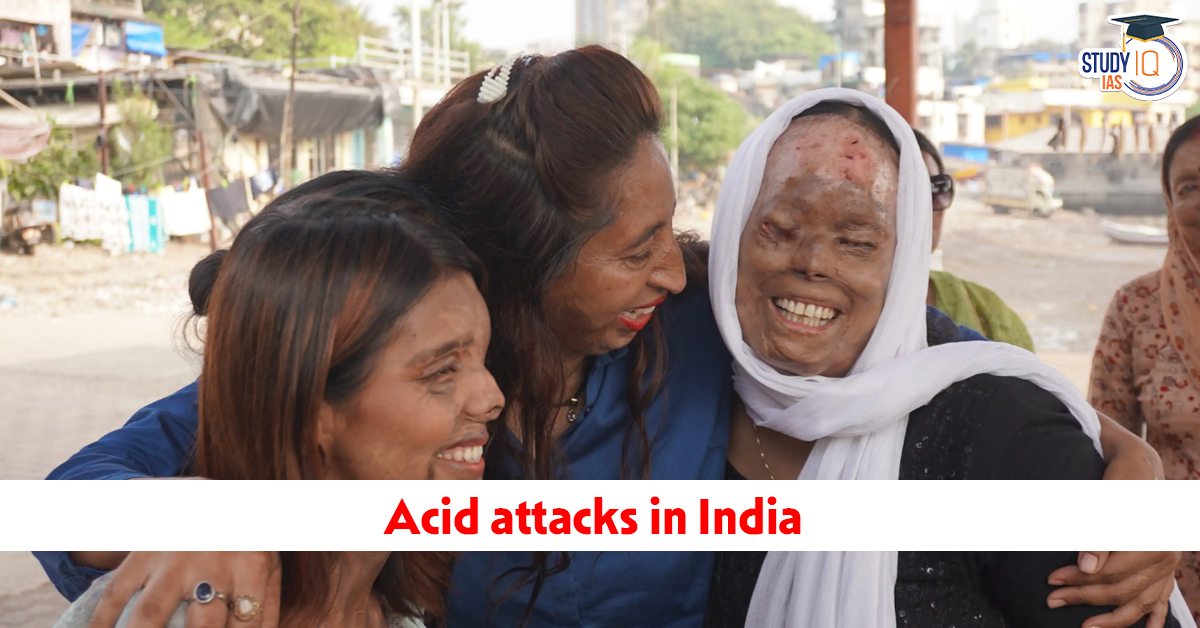
Acid attacks are among the most brutal forms of violence in India, leaving survivors with lifelong physical, psychological, and social scars. Despite strong laws and Supreme Court directions, conviction rates remain extremely low, and implementation gaps continue to deny justice to victims. This article provides a comprehensive, SEO-optimised analysis of acid attacks in India—covering causes, data, legal framework, challenges, and solutions—useful for UPSC, State PCS, law aspirants, and general readers.
What Is an Acid Attack?
An acid attack involves intentionally throwing corrosive substances such as sulphuric, hydrochloric, or nitric acid on a person to cause severe injury, disfigurement, or death.
Impact of Acid Attacks
-
Severe burns and destruction of skin and tissues
-
Blindness and permanent disability
-
Long-term psychological trauma (PTSD, depression)
-
Social stigma, loss of livelihood, and economic dependency
Acid attacks are not just crimes against individuals but assaults on human dignity and gender equality.
Who Are the Victims and Why Do Acid Attacks Occur?
Victim Profile
-
Predominantly women and young girls
-
Children may be injured incidentally
-
Perpetrators are overwhelmingly men
Key Motives
-
Rejection of romantic or sexual advances
-
Dowry disputes and domestic violence
-
Suspected infidelity
-
Property disputes and professional rivalry (more common in male victims)
Acid attacks are widely recognised as a form of gender-based violence rooted in patriarchy and entitlement.
Acid Attack Statistics in India
According to the National Crime Records Bureau (NCRB):
-
207 acid attacks reported in 2023
-
65 attempted acid attacks
-
649 cases pending trial
-
Only 16 convictions against 27 acquittals
Experts believe the real number is much higher due to underreporting, social pressure, and fear of retaliation.
Geographical Distribution
States reporting higher numbers include:
-
West Bengal
-
Uttar Pradesh
-
Gujarat
Why These Areas?
-
Easy availability of industrial acids
-
Weak regulation and enforcement
-
Deep-rooted patriarchal attitudes
Legal Framework Against Acid Attacks in India
Judicial Recognition
Following the landmark judgment of the Supreme Court of India in Laxmi vs Union of India, acid attacks were recognised as a distinct criminal offence.
Current Law: Bharatiya Nyaya Sanhita (BNS)
With the replacement of IPC by BNS:
Section 124 – Acid Attack
-
Minimum 10 years imprisonment, extendable to life imprisonment
-
Fine must be “just and reasonable” to cover medical expenses
Attempt to Acid Attack
-
5–7 years imprisonment
Victim Care Provisions
-
Mandatory free first aid and medical treatment in all public and private hospitals
-
Non-compliance punishable with imprisonment and/or fine
Regulation of Acid Sale
Supreme Court guidelines mandate:
-
Photo ID for acid buyers
-
Maintenance of seller registers
-
Restrictions on over-the-counter sales
Reality: These guidelines are poorly enforced in most states, allowing easy access to corrosive substances.
Challenges in Addressing Acid Attacks
1. Low Conviction Rates
-
Poor police investigation
-
Weak forensic evidence
-
Hostile witnesses
-
Long trial delays
2. Judicial Delays
-
Cases drag on for 10–15 years
-
Survivors face emotional and financial exhaustion
3. Inadequate Compensation
-
Compensation often delayed by several years
-
Amount insufficient for lifelong treatment
4. Social Stigma
-
Victim-blaming and isolation
-
Pressure to settle cases out of court
Rehabilitation of Acid Attack Survivors
Survivors require lifelong support, including:
-
Multiple reconstructive surgeries
-
Psychological counselling
-
Education and skill development
-
Employment and social reintegration
The Justice J.S. Verma Committee recommended a dedicated national fund for comprehensive rehabilitation, which remains inadequately implemented.
Learning from Bangladesh
Bangladesh offers a global best practice:
Bangladesh Acid Control Laws (2002)
-
Strict licensing of acid production and sale
-
Severe punishment for offenders
-
Nationwide awareness campaigns
Result:
Acid attacks dropped from nearly 500 cases in 2002 to double digits by 2024, proving that strict enforcement works.
Way Forward: Ending Acid Attacks in India
1. Strict Control or Ban on Acid Sale
-
Digital tracking of industrial acids
-
Criminal liability for illegal sellers
2. Fast-Track Courts
-
Time-bound investigation and trial
-
Special public prosecutors
3. Survivor-Centric Justice
-
Immediate compensation within 3–6 months
-
Legal aid and counselling support
4. Sensitisation and Awareness
-
Training police, prosecutors, and judges
-
Public campaigns challenging gender violence
5. Comprehensive Rehabilitation Policy
-
Lifelong medical and psychological care
-
Education, skilling, and employment support
Conclusion
Acid attacks in India reflect a deep failure of social attitudes, regulation, and justice delivery, not a lack of laws. While the legal framework under the Bharatiya Nyaya Sanhita is stringent, poor enforcement and delayed justice continue to embolden perpetrators and traumatise survivors. Learning from countries like Bangladesh and adopting a victim-centric, zero-tolerance approach is essential to eliminate this heinous crime.
 International Polar Bear Day 2026: Impor...
 Recent Defence Expansion in India: Moder...
 What is El Niño Labelling and Why It Ma...











 WhatsApp





