Table of Contents
Context
The Bombay Natural History Society (BNHS) announced an All-India Sarus Crane Survey to estimate the bird’s population, identify key breeding and roosting sites, and assess threats such as collisions with power lines.
About the Sarus Crane
- Significance: The world’s tallest flying bird and India’s only resident breeding crane species.
- Habitat: Wetlands, marshes, shallow lakes, grasslands and flooded agricultural fields, particularly in northern and central India.
- State Bird: Uttar Pradesh.
Key Characteristics
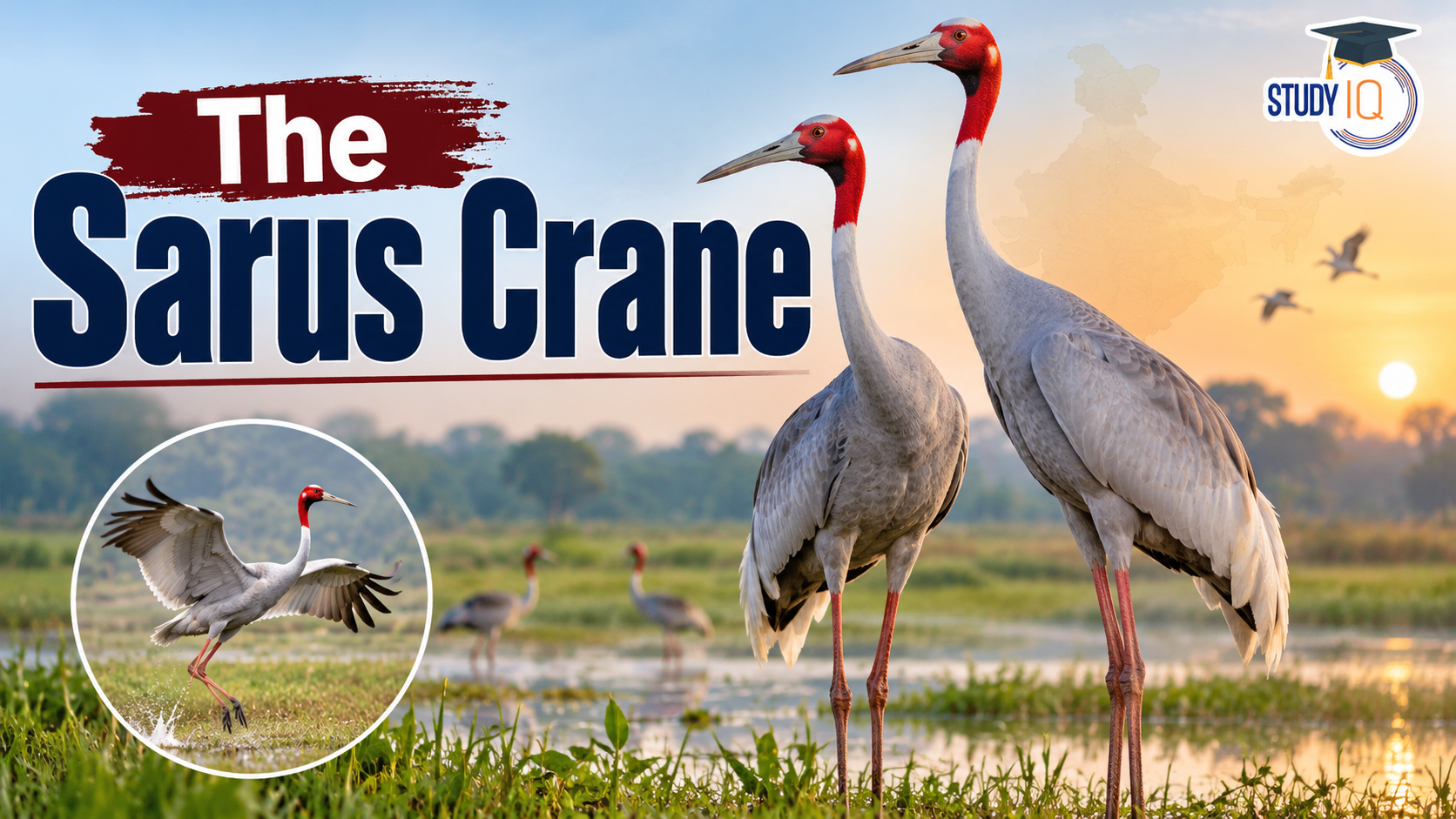
- Physical Features: Can reach approximately 1.5 metres in height, with grey plumage and a distinctive red head and upper neck.
- Behaviour: Forms long-lasting pair bonds and performs elaborate courtship dances and unison calls.
- Diet: Omnivorous; feeds on grains, seeds, aquatic plants, insects, crustaceans, frogs and small reptiles.
- Distribution: Found in parts of the Indian subcontinent and Southeast Asia, with populations also occurring in Australia.
Conservation Status
- IUCN Red List: Vulnerable.
- Wildlife (Protection) Act, 1972: Listed under Schedule I.
- CITES: Included in Appendix II.

 PM Dhan-Dhaanya Krishi Yojana (PMDDKY): ...
 Daily Current Affairs PDF 2026: Download...
 Global Innovation Index 2026: India’s ...














 WhatsApp