
Table of Contents
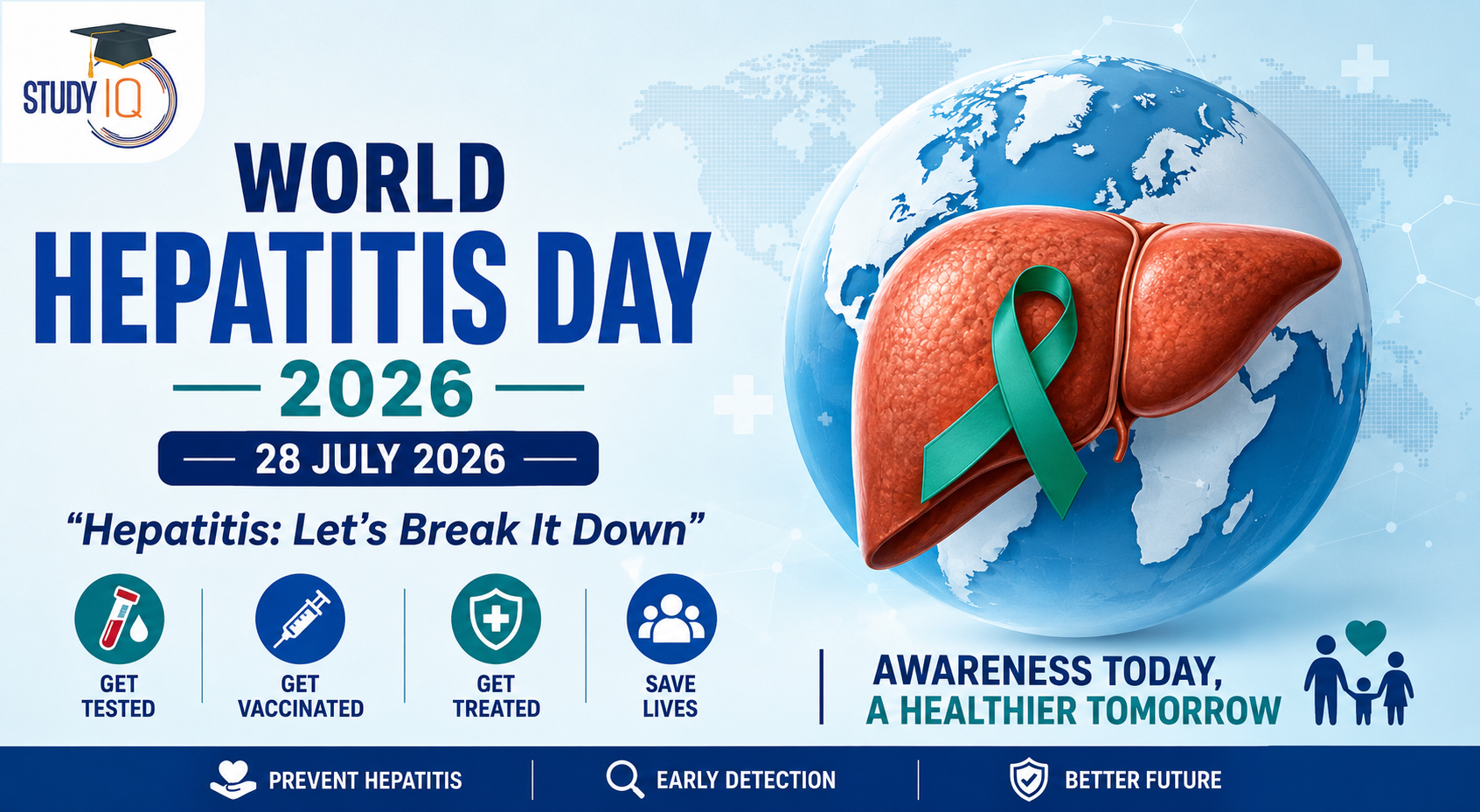
World Hepatitis Day is observed every year on 28 July to raise awareness about viral hepatitis, a major global public health challenge that affects millions of people worldwide. The day highlights the importance of early diagnosis, vaccination, treatment, and prevention to reduce hepatitis-related illnesses and deaths.
The World Hepatitis Day 2026 theme, “Hepatitis: Let’s Break It Down,” focuses on eliminating barriers to testing, vaccination, treatment, and healthcare access. The campaign calls on governments, healthcare providers, and communities to strengthen efforts towards achieving the World Health Organization’s goal of eliminating viral hepatitis as a public health threat by 2030.
World Hepatitis Day 2026 Overview
| Particular | Details |
|---|---|
| Event | World Hepatitis Day 2026 |
| Date | 28 July 2026 |
| Theme | Hepatitis: Let’s Break It Down |
| Organised By | World Health Organization (WHO) and global health partners |
| Objective | Raise awareness about viral hepatitis, promote testing, vaccination, treatment, and prevention |
| First Observed | 2010 (official WHO observance) |
| WHO Goal | Eliminate viral hepatitis as a public health threat by 2030 |
World Hepatitis Day 2026 Theme
The theme for World Hepatitis Day 2026 is:
“Hepatitis: Let’s Break It Down.”
The campaign aims to remove barriers that prevent people from accessing life-saving hepatitis services. It encourages countries to expand healthcare access and ensure that everyone can benefit from timely diagnosis and treatment.
Objectives of the 2026 Theme
- Break stigma and discrimination surrounding hepatitis.
- Improve access to hepatitis screening and diagnosis.
- Increase vaccination coverage.
- Expand affordable treatment services.
- Strengthen political commitment and healthcare investment.
- Promote equitable healthcare access for all communities.
- Accelerate progress towards WHO’s 2030 elimination target.
History of World Hepatitis Day
World Hepatitis Day is celebrated on 28 July, the birth anniversary of Dr. Baruch Samuel Blumberg, who discovered the Hepatitis B virus (HBV) and later developed the first Hepatitis B vaccine. He was awarded the 1976 Nobel Prize in Physiology or Medicine for this groundbreaking work.
The World Health Organization officially recognised World Hepatitis Day in 2010, making it one of the eight official global public health campaigns observed by WHO.
Significance of World Hepatitis Day
Despite being preventable and treatable in many cases, viral hepatitis continues to claim millions of lives every year.
The day is significant because it:
- Raises awareness about different forms of viral hepatitis.
- Promotes early testing and diagnosis.
- Encourages vaccination against Hepatitis A and B.
- Supports access to affordable treatment.
- Reduces stigma associated with hepatitis infection.
- Mobilises governments to strengthen national hepatitis control programmes.
- Promotes public education about liver health.
Latest Global Hepatitis Statistics (2026)
According to the latest global estimates:
- Around 287 million people were living with Hepatitis B or Hepatitis C in 2024.
- Approximately 1.3 million deaths occurred due to chronic Hepatitis B and C in 2024.
- Only 45% of newborns received the Hepatitis B birth-dose vaccine within 24 hours of birth.
- Millions of infected individuals remain undiagnosed despite the availability of effective vaccines, diagnostic tests, and treatments.
These figures highlight the urgent need for expanded testing, vaccination, and treatment services.
What is Hepatitis?
Hepatitis is an inflammation of the liver, an organ responsible for:
- Removing toxins from the body
- Producing essential proteins
- Processing nutrients from food
- Storing energy
- Supporting digestion
Hepatitis may result from:
- Viral infections
- Excessive alcohol consumption
- Autoimmune diseases
- Certain medications
- Exposure to toxic substances
Types of Hepatitis
Acute Hepatitis
- Develops suddenly.
- Usually resolves completely with proper care.
Chronic Hepatitis
- Persists for more than six months.
- May remain symptomless for years.
- Can lead to:
- Liver cirrhosis
- Liver failure
- Liver cancer
Types of Viral Hepatitis
Hepatitis A (HAV)
- Spread through contaminated food and water.
- Usually causes short-term illness.
- Preventable through vaccination and improved sanitation.
Hepatitis B (HBV)
- Spread through infected blood, unprotected sexual contact, and mother-to-child transmission during childbirth.
- Can become chronic.
- Preventable through vaccination.
Hepatitis C (HCV)
- Mainly transmitted through infected blood.
- Major cause of chronic liver disease.
- Curable with modern antiviral medicines.
Hepatitis D (HDV)
- Occurs only in people already infected with Hepatitis B.
- Increases the severity of liver damage.
Hepatitis E (HEV)
- Spread through contaminated drinking water.
- Usually causes acute infection.
- Can be particularly dangerous during pregnancy.
Symptoms of Hepatitis
Many people experience no symptoms during the early stages, making hepatitis a silent disease.
Common symptoms include:
- Fatigue
- Loss of appetite
- Nausea and vomiting
- Pain in the upper right abdomen
- Dark urine
- Pale stools
- Jaundice (yellowing of the skin and eyes)
- Fever
- General weakness
How to Prevent Hepatitis
The risk of hepatitis can be significantly reduced through the following preventive measures:
- Get vaccinated against Hepatitis A and B.
- Drink safe and clean water.
- Maintain proper personal hygiene.
- Use sterile medical equipment.
- Ensure safe blood transfusions.
- Practise safe sex.
- Never share needles, razors, or toothbrushes.
- Undergo regular health check-ups and hepatitis screening if at risk.
Key Facts about World Hepatitis Day 2026
- Observed every year on 28 July.
- Marks the birth anniversary of Nobel Laureate Dr. Baruch Samuel Blumberg.
- WHO aims to eliminate viral hepatitis by 2030.
- Hepatitis B vaccination remains one of the most effective preventive measures.
- Early diagnosis and timely treatment can prevent severe liver complications.
- Millions of hepatitis cases remain undiagnosed worldwide despite available healthcare solutions.
Read Also: UPSC Daily Current Affairs 2026
 Species in News: Asian Wild Pig- Habitat...
 BRICS AI Open-Source Community: China’...
 India’s Artificial Sun: New 82.6 GHz G...














 WhatsApp





