Table of Contents
Context
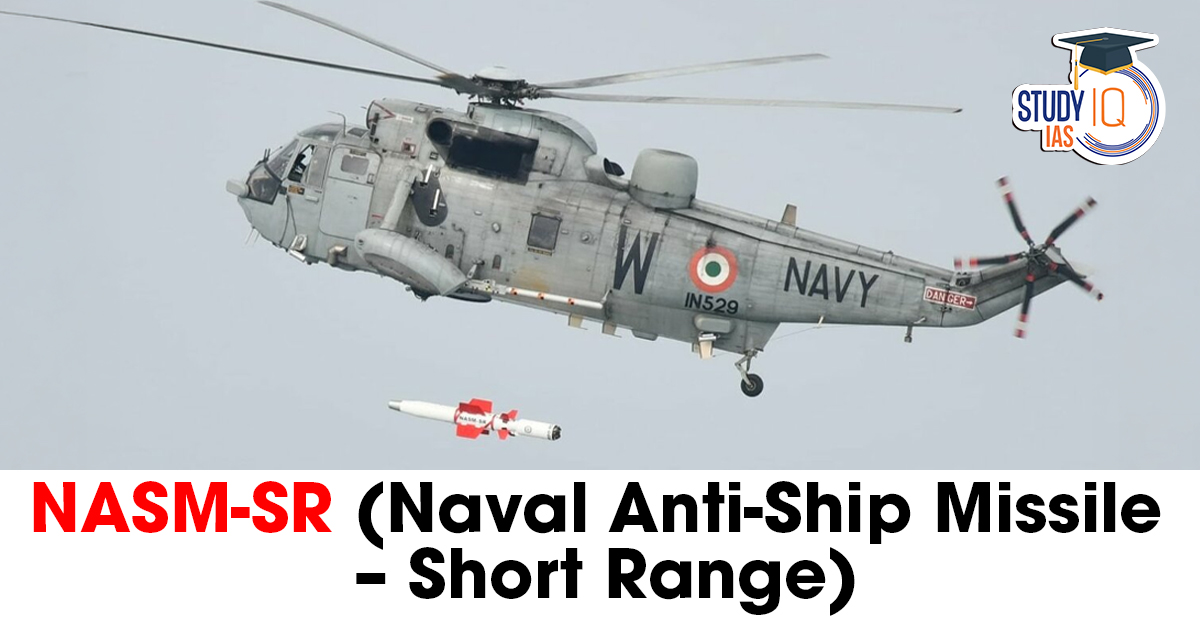
DRDO and the Indian Navy successfully conducted a salvo test of the indigenously developed NASM-SR missile from a helicopter.
About NASM-SR Missile
- Designed for anti-surface warfare, enabling ship-borne helicopters to strike enemy ships from a safe distance (without exposing naval vessels).
- Propulsion System: Solid booster rocket (initial thrust) and Sustainer engine (longer flight duration)
- Key Components:
- Seeker: Detects and tracks targets
- Radio Altimeter: Maintains low-altitude sea-skimming flight
- Two-way Data Link: Enables real-time communication with operator
- Key Features
- Man-in-Loop Capability: Allows operators to change target or trajectory mid-flight (useful in crowded maritime zones; reduces collateral damage and improves accuracy).
- Waterline Hit Capability: Targets the most vulnerable part of a ship (near waterline) (causing flooding and higher chances of sinking).
- Salvo Launch Capability: Multiple missiles fired in quick succession (overwhelms enemy defence systems).
- Sea-skimming trajectory (low radar detection)
- Proximity fuse detonation (explodes near target for maximum damage)
- Difference from Earlier Sea Eagle Missile
- Weight: NASM-SR (380 kg) is lighter than Sea Eagle missile (580 kg) (allows more missiles per helicopter)
- Guidance: NASM-SR has man-in-loop control, unlike Sea Eagle (fire-and-forget)
- Precision: Includes waterline targeting, absent in Sea Eagle
- Range: Lower range (55 km vs 110 km), but improved modern capabilities and flexibility
 Kathakali Festival 2026: Theme, History ...
 Kohat Attack 2026: What Happened in Khyb...
 World Bamboo Day 2026: Date, Theme, Hist...














 WhatsApp