Table of Contents
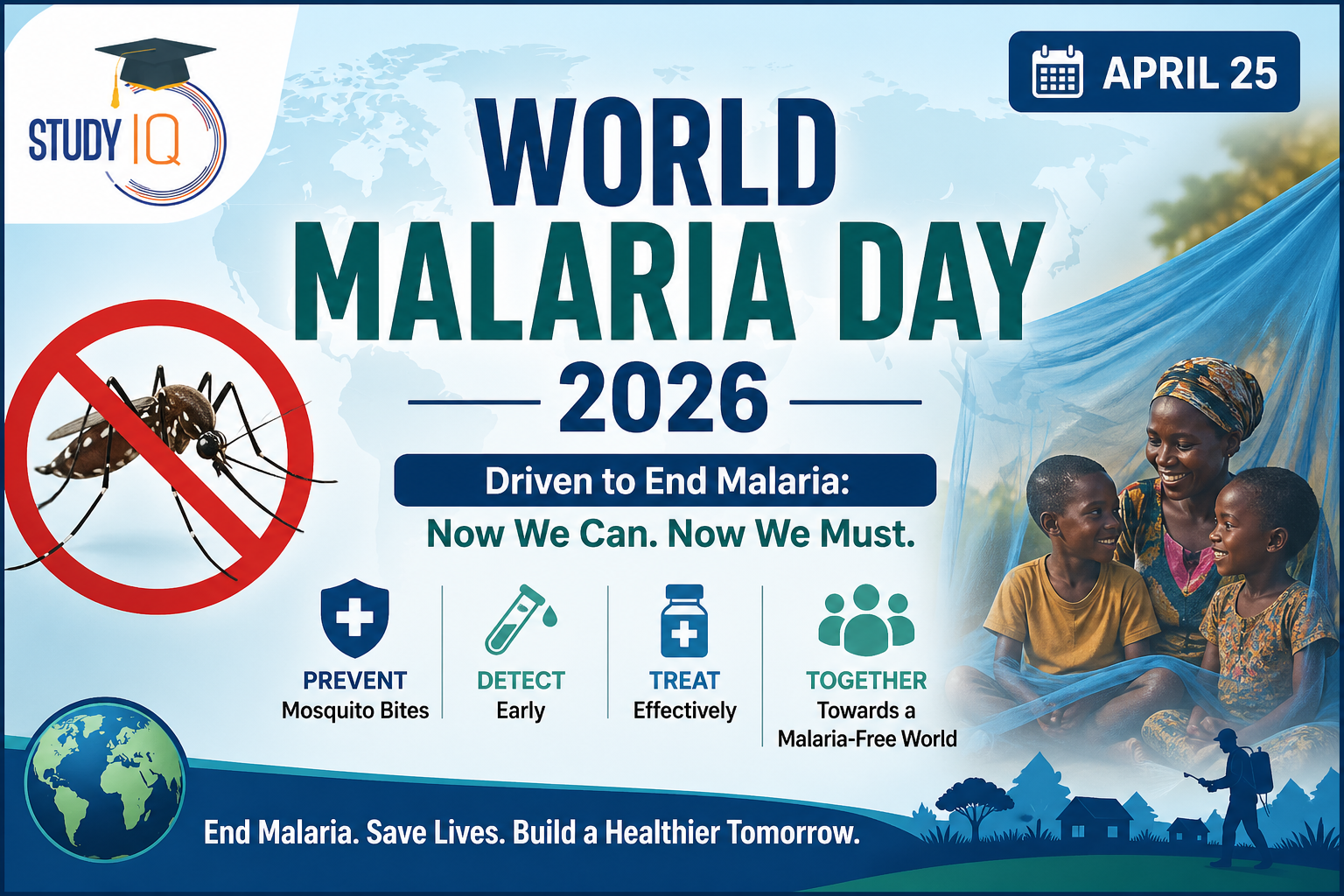
World Malaria Day 2026 is observed on April 25 to raise awareness about malaria and accelerate global efforts toward its elimination. Despite significant progress over the past two decades, malaria continues to pose a major public health challenge, particularly in developing regions. The day serves as a reminder that sustained action, innovation, and international cooperation are essential to achieving a malaria-free world.

UPSC Daily Current Affairs 2026
World Malaria Day 2026: Date and Overview
- Date: April 25, 2026
- Established by: World Health Organization
- First observed: 2008
- Replaced: Africa Malaria Day
World Malaria Day is a global health observance aimed at spreading awareness, mobilizing resources, and promoting coordinated efforts to combat malaria.

World Malaria Day 2026 Theme
Theme: “Driven to End Malaria: Now We Can. Now We Must.”
Theme Significance
- Highlights scientific progress, including vaccines and diagnostics
- Emphasizes urgent global action and funding
- Reinforces that malaria elimination is achievable with collective effort
This theme reflects optimism while stressing accountability among governments, healthcare institutions, and global organizations.
Global Progress in Malaria Control
Over the years, the fight against malaria has yielded encouraging results:
- 47 countries certified malaria-free
- 37 countries reported fewer than 1,000 cases in 2024
- Expansion of vaccination programs in 25+ countries
- Increased use of insecticide-treated mosquito nets (ITNs)
Key Insight
Strong healthcare systems, effective surveillance, and political commitment have been the backbone of successful malaria control strategies.
Understanding Malaria: Causes, Symptoms, and Treatment

Malaria is caused by Plasmodium parasites and transmitted through the bite of infected female Anopheles mosquitoes.
Major Species:
- Plasmodium falciparum – most deadly
- Plasmodium vivax – causes relapsing malaria
Common Symptoms
- High fever with chills
- Headache and fatigue
- Nausea and muscle pain
- Severe cases may lead to organ failure or death
Vaccines and Treatment
- RTS,S vaccine: First malaria vaccine (30–40% effective)
- R21 vaccine: Newer and more scalable
- Early diagnosis and treatment with antimalarial drugs are critical

Global Malaria Statistics and Trends
- Around 610,000 malaria deaths globally in 2024
- Nearly 10 million children targeted annually for vaccination
- 84% of mosquito nets distributed are advanced ITNs
Despite progress, malaria remains a major global health burden, especially in sub-Saharan Africa and parts of Asia.
Global Strategy to Eliminate Malaria
The World Health Organization has outlined a comprehensive roadmap:
WHO Global Technical Strategy (2016–2030)
- Reduce malaria cases and deaths by 90% by 2030
- Eliminate malaria in multiple countries
- Prevent resurgence in malaria-free regions
Key Pillars:
- Vector control (nets, spraying)
- Early diagnosis and treatment
- Surveillance and data-driven policies
- Research and innovation
Status of Malaria in India
Achievements
- 80% reduction in malaria cases (2015–2023)
- Exit from High Burden to High Impact (HBHI) group (2024)
- Over 160 districts reported zero malaria cases
Challenges
- Migration and urbanisation
- Cross-border transmission
- Relapses due to P. vivax
- Limited healthcare access in tribal areas
Government Initiatives
- National Vector Borne Disease Control Programme (NVBDCP)
- Malaria Elimination Research Alliance (MERA) India
Targets
- Zero indigenous cases by 2027
- Complete elimination by 2030
Key Activities on World Malaria Day
On April 25, several global and local initiatives take place:
- Awareness campaigns via media and community outreach
- Free malaria testing camps and treatment drives
- Distribution of mosquito nets and medicines
- Cleanliness campaigns to eliminate mosquito breeding sites
- Policy discussions and global funding commitments
Why Malaria Elimination Still Matters
Malaria is not just a health issue—it impacts:
- Economic productivity
- Child mortality rates
- Healthcare systems in developing countries
Eliminating malaria contributes directly to sustainable development and poverty reduction.
Conclusion
World Malaria Day 2026 is a powerful reminder that while the world has made significant progress, the fight against malaria is far from over. With innovations like vaccines, improved diagnostics, and stronger global collaboration, the goal of a malaria-free world is within reach. However, achieving this requires continued political will, funding, and community participation.
 Species in News: Cheetah | Project Cheet...
 Quantum Computing: RRI Scientists Demons...
 Artificial Intelligence in Warfare: How ...













 WhatsApp